




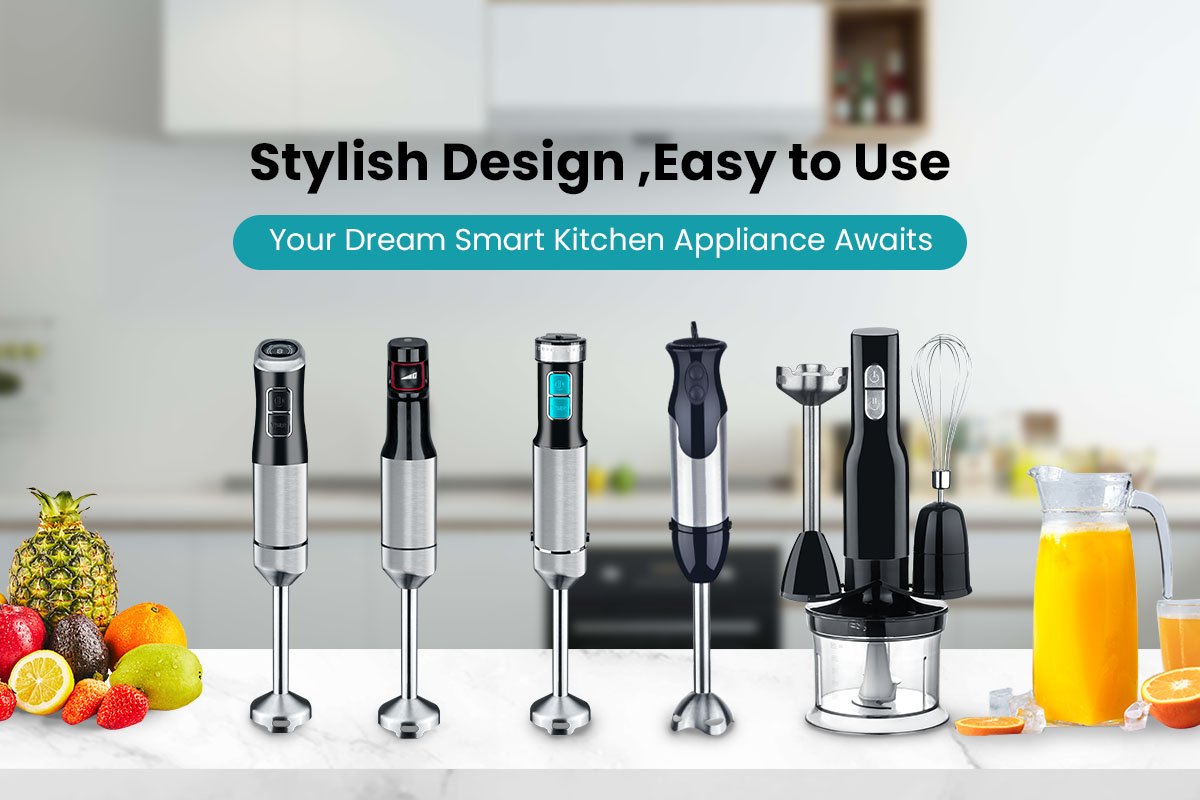
KANGJIA’s public product pages show that its blender range already covers multiple jar directions, including glass jars, stainless steel jars, and food-grade Tritan containers, which makes jar material a real product-planning variable rather than a simple cosmetic choice.
-
2026-04-23
-
2026-04-22KANGJIA’s public product range shows multiple blender platforms across different power bands, including 300W and 500W models, while its nutrition blender content highlights a 1000W platform designed for more demanding blending tasks.
-
2026-04-21KANGJIA’s product range reflects that clearly, covering hand blenders, table blenders, nutrition blenders, and related kitchen appliances, with public product listings that span about 300W hand blender models to 1000W nutrition blender platforms and 500W countertop options.
-
2026-04-20KANGJIA’s public product range includes blenders, mini choppers, and food processors, and the company presents itself as a small home appliance manufacturer integrating development, production, and sales.
-
2026-04-17KANGJIA presents itself as a small home appliance manufacturer with its own injection shop, hardware shop, assembly shop, motor shop, R&D department, and testing room, and it also states that its products have passed GS, CE, CB, LFGB, RoHS, and REACH related certifications.
-
2026-04-16KANGJIA presents itself as a small home appliance manufacturer integrating development, production, and sales, and its public information says it has its own injection shop, hardware shop, assembly shop, motor shop, R&D department, and testing room.
-
2026-04-15KANGJIA presents itself as a small home appliance manufacturer integrating development, production, and sales, and its public company information says it has its own injection shop, hardware shop, assembly shop, motor shop, R&D department, and testing room. The same page says its products have passed GS, CE, CB, LFGB, RoHS, and REACH related certifications, which is useful for buyers reviewing factory capability and export readiness.
-
2026-04-14KANGJIA states that every product undergoes rigorous quality checks, and its factory profile highlights in-house motor and assembly capability, which supports this type of routine blender pre-shipment inspection. In practical sourcing, the running test is essential because it confirms that the assembled machine is operational before any carton is sealed.
-
2026-04-13KANGJIA presents itself as a manufacturer integrating development, production, and sales, with product coverage including hand blenders, table blenders, nutrition blenders, and mini choppers. Its site also states that the company has its own injection shop, hardware shop, assembly shop, motor shop, R&D department, and testing room, which is especially important when attachment systems need stable matching across repeated orders.
-
2026-04-10KANGJIA describes itself as a small home appliance manufacturer with its own injection shop, hardware shop, assembly shop, motor shop, R&D department, and testing room, which is exactly the kind of factory structure buyers often check when reviewing a real manufacturer instead of a trading company.
-
2026-04-09KANGJIA describes itself as a small home appliance manufacturer integrating development, production, and sales, and its site says the company operates its own injection shop, hardware shop, assembly shop, motor shop, R&D department, and testing room.
-
2026-04-08KANGJIA presents itself as a manufacturer specializing in small home appliances and states that it operates its own injection shop, hardware shop, assembly shop, motor shop, R&D department, and testing room. That kind of in-house structure gives buyers a clearer view of real manufacturing strength than a simple product catalog.