




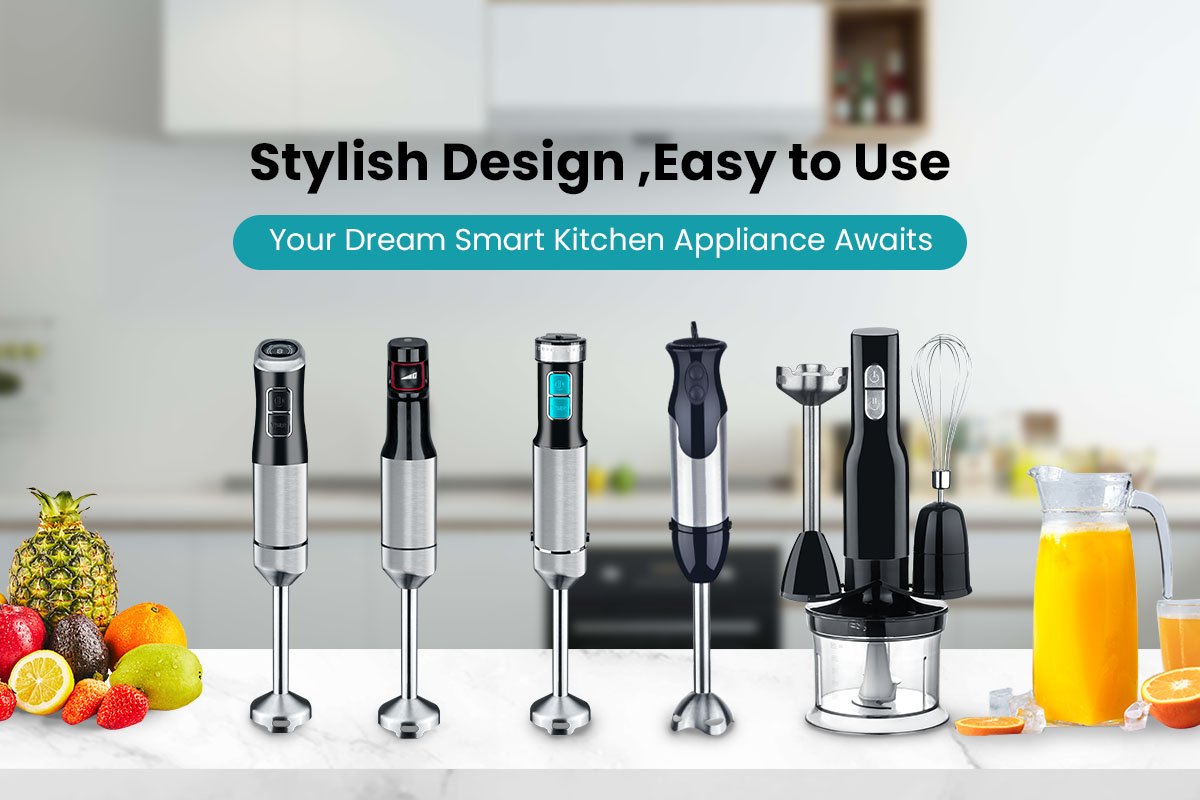
How To Choose A Hand Blender
Understanding What a Hand Blender Does
A hand blender is a compact kitchen tool made for blending, pureeing, mixing, and light chopping. It works directly inside pots, bowls, and cups, making it ideal for soups, sauces, smoothies, and quick food preparation. Choosing the right model ensures smooth performance, durability, and ease of use. For manufacturers with strong motor production and strict quality control such as KANGJIA, selecting the right specifications helps buyers match different cooking needs in global markets.
Motor Power and Performance
Motor power determines whether the blender can handle light or heavy ingredients. A stronger motor produces smoother results and withstands frequent use.
Key Points
Lower power suits soft foods and light daily tasks.
Medium power supports soups, sauces, fruits, and vegetables.
Higher power handles thicker mixtures and longer blending sessions.
A stable, well-built motor ensures consistent blending without overheating.
Blade and Shaft Construction
The blade and shaft define blending efficiency. High-quality stainless-steel blades cut through ingredients smoothly, while a reinforced shaft maintains stability during use.
What to Look For
Durable metal blade with a wide cutting angle
Protective guard to reduce splashing
Detachable shaft for easy cleaning
Strong internal coupling for secure locking
Consistent blade sharpness and firm alignment improve blending results.
Speed Settings and Control
Different recipes require different speeds. Adjustable speed gives better control over texture and prevents over-processing.
Benefits of Proper Speed Control
Low speed for soft foods and delicate mixtures
Medium speed for sauces and soups
High speed for smoothies and purees
Smooth transitions between speeds provide more precision in daily use.
Attachments and Versatility
A versatile hand blender saves space and replaces several kitchen tools. Additional attachments expand its functionality.
Useful Attachments
whisk for cream or eggs
chopper cup for nuts, herbs, or vegetables
Beaker for mixing and portion control
A detachable system allows easy switching between accessories while maintaining stability.
Ergonomics and Ease of Use
Comfortable handling is essential because hand blenders require manual control. An ergonomic design reduces fatigue and enhances operation.
Important Features
Non-slip grip for secure handling
Lightweight body for long blending tasks
Easy assembly and release buttons
Simple cleaning structure with smooth surfaces
Good ergonomics encourage efficient, safe, and enjoyable use.
Durability and Manufacturing Quality
A well-constructed hand blender lasts longer and performs more reliably. Materials, assembly, and testing standards all influence durability.
Manufacturers like KANGJIA, with integrated workshops for motors, injection molding, hardware, and full assembly, ensure product consistency from raw components to finished appliances. This guarantees performance stability for global buyers and distributors.
Safety Considerations
Safety features protect both the user and the appliance.
Recommended Safety Features
Overheat protection
Secure locking between shaft and motor
High-temperature-resistant materials
Splash-controlled blade guard
Reliable safety design reduces malfunction risks and improves long-term performance.
Final Guidance
Choosing a hand blender requires evaluating power, blade construction, speed settings, attachments, ergonomics, and overall manufacturing quality. A model made with strong motors, durable shafts, efficient blades, and well-tested components will deliver consistent performance for soups, sauces, smoothies, and everyday recipes. By selecting a hand blender that fits your cooking style and durability expectations, you ensure efficient operation and long service life—ideal for both home kitchens and commercial food preparation environments.
Previous: How To Wash Hand Blender