




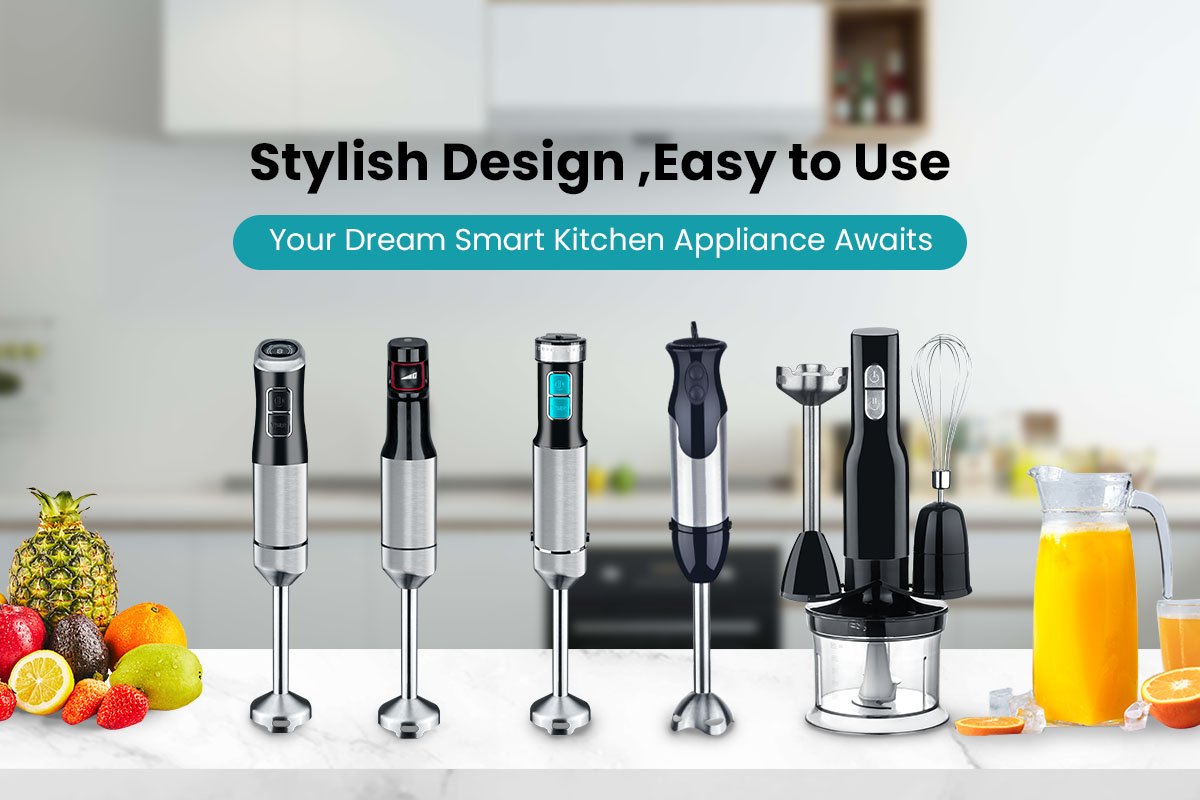
Are Hand Blender Blades Lead Free
In most modern kitchen appliances, Hand Blender blades are designed to be lead free. This is not only a product quality expectation but also a mandatory requirement for appliances intended for food contact in international markets. However, whether a blade is truly lead free depends on material selection, manufacturing process, and compliance with food-contact regulations.
Short Answer
Yes, hand blender blades are generally lead free when they are manufactured for household or commercial food use and comply with international safety standards. Lead-containing materials are not permitted in food-contact components.
What Materials Are hand blender Blades Made From
Stainless Steel Is the Standard
Most hand blender blades are made from food-grade stainless steel, typically from the 300-series range.
These materials are chosen because they offer:
High corrosion resistance
Mechanical strength at high rotation speeds
Stability under repeated washing
No need for lead additives
Food-grade stainless steel does not require lead to improve machinability when used for blades.
Why Lead Is Not Used in Blender Blades
Lead is sometimes found in:
Brass alloys
Low-grade metal castings
Non-food mechanical components
However, lead is toxic and strictly restricted in any part that contacts food. For this reason, it is not used in blade manufacturing for hand blenders intended for kitchen use.
Food Contact Safety Regulations
Hand blender blades sold in overseas markets must comply with food safety regulations that explicitly limit or prohibit lead.
Common regulatory requirements include:
Heavy metal migration limits
Lead content below detectable thresholds
Testing under acidic and high-temperature conditions
Blades that fail these requirements cannot legally enter regulated markets.
How Lead-Free Compliance Is Verified
Material Certification
Manufacturers typically use:
Certified stainless steel suppliers
Material composition reports
Incoming raw material inspections
These ensure that no lead-containing alloys enter production.
Laboratory Testing
Finished products are commonly tested for:
Lead migration
Heavy metal residue
Food contact safety under simulated use
Only products that pass testing are approved for export and sale.
Are There Any Exceptions
In normal consumer markets, there should be no exceptions.
If a hand blender blade contains lead, it usually indicates:
Non-food-grade materials
Unregulated manufacturing
Products not intended for food use
Extremely low-cost or counterfeit products
Such products pose health risks and should be avoided.
Can Lead Appear Over Time Through Wear
Lead does not form naturally through blade wear or corrosion.
If discoloration or surface wear appears:
It is usually oxidation, not lead
It may be caused by detergent residue or mineral deposits
Proper cleaning restores appearance
Lead contamination would originate from the material itself, not from normal use.
How Consumers Can Reduce Risk Further
Although compliant products are already safe, users can take additional precautions:
Avoid abrasive cleaners that damage protective surfaces
Wash blades promptly after acidic foods
Do not use damaged or deeply scratched blades
Proper care maintains the integrity of the food-contact surface.