




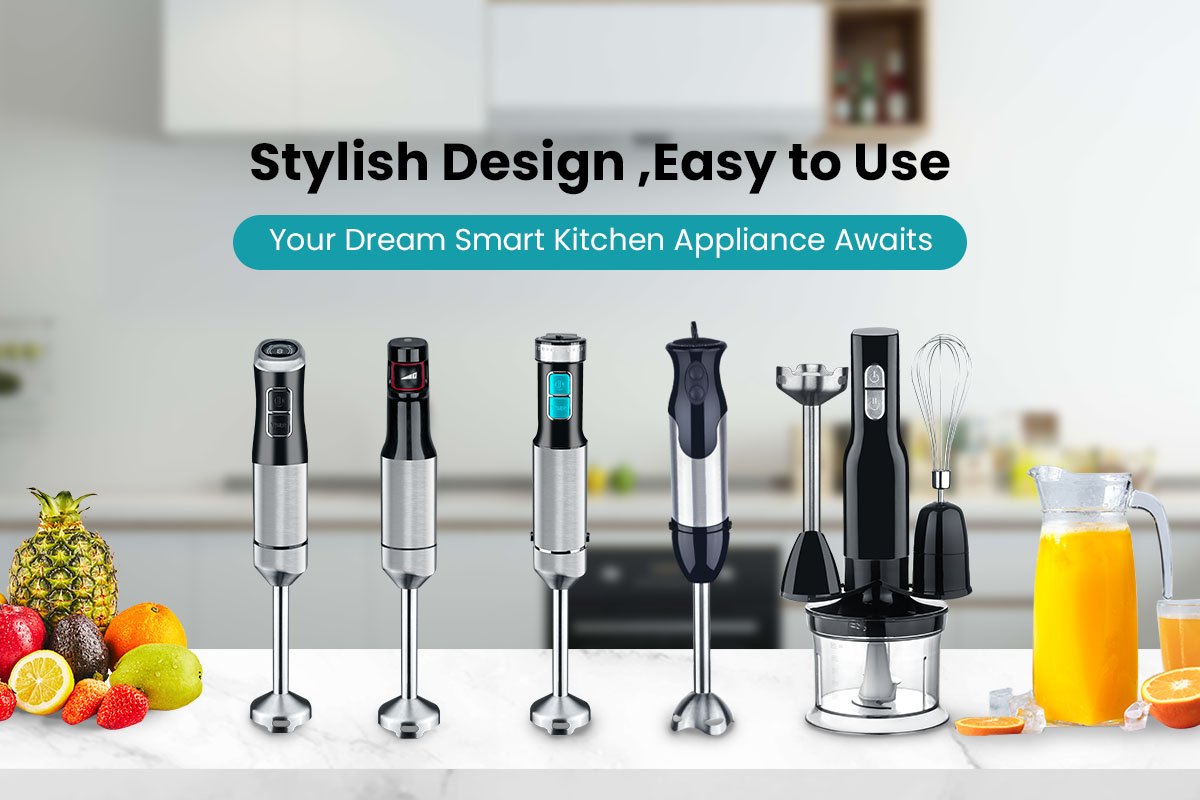
Yes, a Hand Blender can be used for baking, but only for specific preparation tasks. It is a support tool, not a replacement for a hand mixer or stand mixer. Using it correctly can save time, while using it incorrectly can ruin texture and affect final results.
Short Answer
A hand blender can help with baking prep, especially for liquid or semi-liquid steps, but it cannot replace a hand mixer for most baking processes that require aeration or controlled mixing.
How a Hand Blender Works in Baking
A hand blender uses:
• High-speed cutting blades
• Vertical blending motion
• Minimal air incorporation
This makes it suitable for blending and smoothing, not for whipping or creaming.
Baking Tasks a Hand Blender Can Do Well
Mixing Liquid Ingredients
A hand blender works well for:
• Mixing eggs and milk
• Combining oil and liquids
• Smoothing liquid batters
This is useful in early recipe stages where uniform liquids are required.
Making Smooth Batters and Bases
It can handle:
• Pancake batter
• Crepe batter
• Waffle batter
• Cheesecake fillings
These mixtures benefit from smoothness, not air incorporation.
Pureeing Ingredients for Baking
Hand blenders are effective for:
• Pumpkin puree
• Fruit purees
• Vegetable bases for cakes
This is common in recipes like banana bread, pumpkin bread, or vegetable muffins.
Emulsifying Wet Components
A hand blender can emulsify:
• Oil and eggs
• Butter substitutes and liquids
• Syrups and flavor infusions
This helps maintain consistency before dry ingredients are added.
Baking Tasks a Hand Blender Is NOT Suitable For
Creaming Butter and Sugar
A hand blender:
• Does not trap air efficiently
• Overworks butter
• Produces dense texture
This step requires beaters, not blades.
Whipping Eggs or Cream
A hand blender:
• Breaks foam structure
• Cannot maintain stable air bubbles
• Results in flat or runny mixtures
Whipping requires a mixer or whisk.
Kneading Dough
Dough requires:
• Controlled torque
• Folding action
• Structural gluten development
A hand blender cannot perform this safely or effectively.
Common Baking Mistakes When Using a Hand Blender
• Over-blending batter after flour is added
• Using high speed continuously
• Blending in wide, shallow bowls
• Expecting light, airy textures
These mistakes often lead to dense or tough baked goods.
Best Practices for Using a Hand Blender in Baking
To get good results:
Use it only for wet ingredients
Blend before adding flour
Use short pulses
Switch to manual mixing after dry ingredients
Stop as soon as smooth
This protects texture and avoids overdevelopment.
Manufacturer Perspective on Baking Use
From a design standpoint, hand blenders are intended for:
• Liquids
• Purees
• Emulsions
They are not designed for aeration, which is critical in many baking recipes.
When a Hand Blender Is a Good Baking Tool
A hand blender is useful if:
• You bake quick breads
• You make batters that do not require whipping
• You need smooth purees quickly
• You want minimal cleanup
It complements other tools rather than replacing them.
Summary
You can use a hand blender for baking, but with clear limits.
Key points:
• Suitable for liquids, purees, and smooth batters
• Not suitable for creaming, whipping, or kneading
• Best used in early preparation stages
• Must be used gently and briefly
Used correctly, a hand blender is a helpful auxiliary tool in baking, not a primary mixing appliance.