




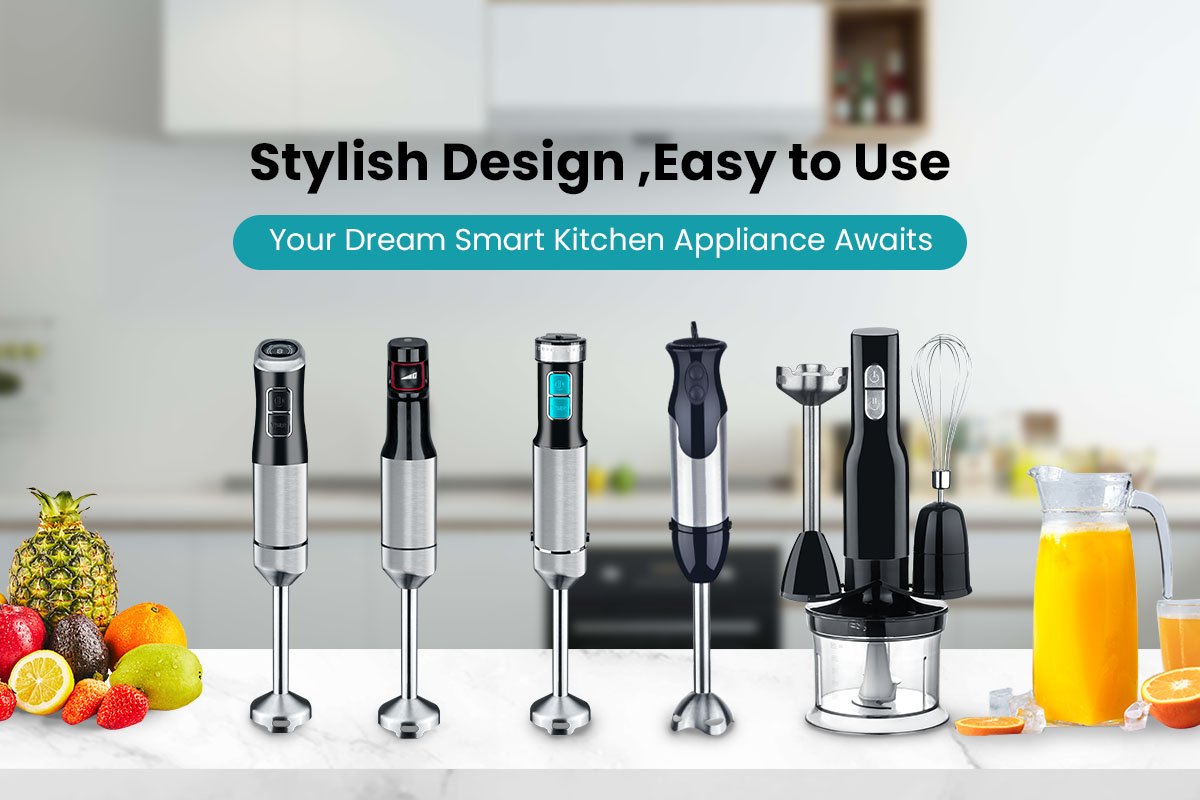
Can We Make Chutney in Hand Blender
Yes—chutney can be made in a Hand Blender, but results depend on motor torque, blade geometry, container depth, ingredient prep, and duty-cycle control. For importers and project buyers sourcing hand blenders for retail or food-service channels, the real question is not “can it blend,” but whether the product platform can deliver repeatable texture, safe operation, and stable quality at scale.
KANGJIA ELECTRICAL APPLIANCES CO., LTD positions itself as a factory-based small home appliance manufacturer established in 2017 in Jiangmen, Guangdong, with in-house injection, hardware, assembly, and motor shops, plus an R&D department and testing room, and products listed as passing GS, CE, CB, LFGB, ROHS, REACH certifications.
What Chutney Processing Demands From A Hand Blender
Chutney is tougher than smoothies because it often includes:
Fibrous herbs and stems
High-acid ingredients like vinegar and citrus
Hard spices and sometimes nuts
Sticky sugars (tamarind, jaggery-style sweetness)
Low liquid ratio, which increases load on the motor and increases splashing risk
This means buyers should evaluate hand blenders on torque stability, overheat protection strategy, and food-contact material compliance, not only wattage marketing.
Manufacturer vs Trader: Why It Matters For Chutney-Capable Performance
A trader can source a finished hand blender, but usually has limited control over:
Motor specification consistency across batches
Blade hardness and edge retention
Coupler wear life under high-load recipes
Injection-molded housing tolerance and sealing
Test standards and traceability
A manufacturer with integrated shops and testing capability can tune the motor + gearbox/coupler + blade system as a platform, then validate it under repeatable load tests. KANGJIA explicitly states in-house production shops and a testing room, which is the type of setup buyers look for when they want stable performance for demanding use cases like thick chutneys.
OEM/ODM Process Considerations For “Chutney-Ready” Hand Blenders
If your market expects chutney, salsa, pesto, or paste-style blending, OEM/ODM should focus on functional upgrades instead of cosmetic changes:
Core OEM/ODM specs to lock
Motor selection and thermal margin
Blade material and heat-treatment target
Shaft runout tolerance and vibration limit
Coupler material and wear test method
Attachment system compatibility (chopper bowl, whisk, beaker)
Proof points to request during development
Prototype validation under thick-load recipes
Repeated start-stop cycle testing
Heat rise testing at worst-case viscosity
Splash control evaluation with real containers
A supplier with its own R&D and testing room can typically move faster on these validation loops and keep the specification under engineering control.
Manufacturing Process Overview: What A Real Factory Should Control
A robust hand blender program generally includes:
Injection molding of housings and internal supports
Hardware processing for shaft, blade mount, fasteners
Motor production or motor-shop assembly and incoming inspection
Assembly line torque control, alignment checks, wiring routing
Functional tests including no-load speed, noise, vibration
Safety checks (insulation/grounding where applicable)
Final QA and packing verification
KANGJIA describes having injection, hardware, assembly, and motor shops, which maps well to this control chain and reduces dependency risk during bulk programs.
Quality Control Checkpoints Buyers Should Require
For chutney-style usage, insist on QC checkpoints that target high-load reliability:
Incoming motor QC: winding consistency, abnormal noise screening
Blade/shaft QC: hardness verification, runout measurement
Coupler endurance: wear test under repeated pulse cycles
Thermal protection behavior: controlled shutoff and recovery
Final functional test: vibration/noise, speed stability under load simulation
Attachment fit: beaker/chopper lock stability and leakage checks
These are the checks that separate “works in a demo” from “survives real kitchen paste use.”
Material Standards Used: What To Verify For Food Safety And Durability
When chutney includes acidic ingredients, material choices become more important:
Food-contact plastics: confirm odor resistance and compliance documentation
Blade and shaft: corrosion resistance and edge retention
Seals and gaskets: resistance to acid, detergent, and heat
Beaker/chopper bowl plastics: impact resistance and stain resistance
KANGJIA states compliance-related certifications including LFGB, which is commonly used as a food-contact benchmark in many import programs, plus other market-facing compliance marks.
Export Market Compliance: Reduce Customs And Retail Risk
For international trade, buyers should confirm:
Product test files aligned to destination rules
Safety labeling, instructions, and warnings
Material compliance declarations for food-contact parts
Batch traceability (date code + lot mapping)
Packaging drop protection for motor head and attachments
KANGJIA’s listed certification set indicates it is organizing products around multi-market compliance expectations, which helps reduce clearance and retailer onboarding friction.
Bulk Supply Considerations For Importers And Project Buyers
Hand blenders are simple-looking but sensitive to batch consistency. For bulk orders, evaluate:
Capacity planning: stable lead times during peak seasons
Spare parts strategy: blades, couplers, gear sets, switches
Packaging standardization: accessory completeness and drop protection
AQL plan: clear defect definitions for noise, vibration, overheating, scratches
A factory with integrated production and testing is better positioned to keep performance consistent across repeated shipments.
Project Sourcing Checklist For “Chutney-Capable” Hand Blenders
Use this checklist before placing a bulk PO:
Confirm supplier is manufacturer with in-house production steps (not only trading).
Validate thick-load performance using your target chutney recipe.
Require thermal and endurance testing records for motor + coupler.
Verify food-contact compliance documentation for all attachments.
Lock critical tolerances: shaft runout, attachment fit, vibration.
Define QC checkpoints and acceptance criteria in writing.
Confirm export documentation readiness and labeling requirements.
Bottom Line
A hand blender can absolutely make chutney, but commercial success depends on engineering control, repeatable QC, verified food-contact standards, and export-ready compliance—especially when you plan bulk distribution. A manufacturer like KANGJIA that describes integrated production shops, R&D, and a testing room, plus a multi-market certification approach, aligns with what professional buyers typically require for stable long-term sourcing.