




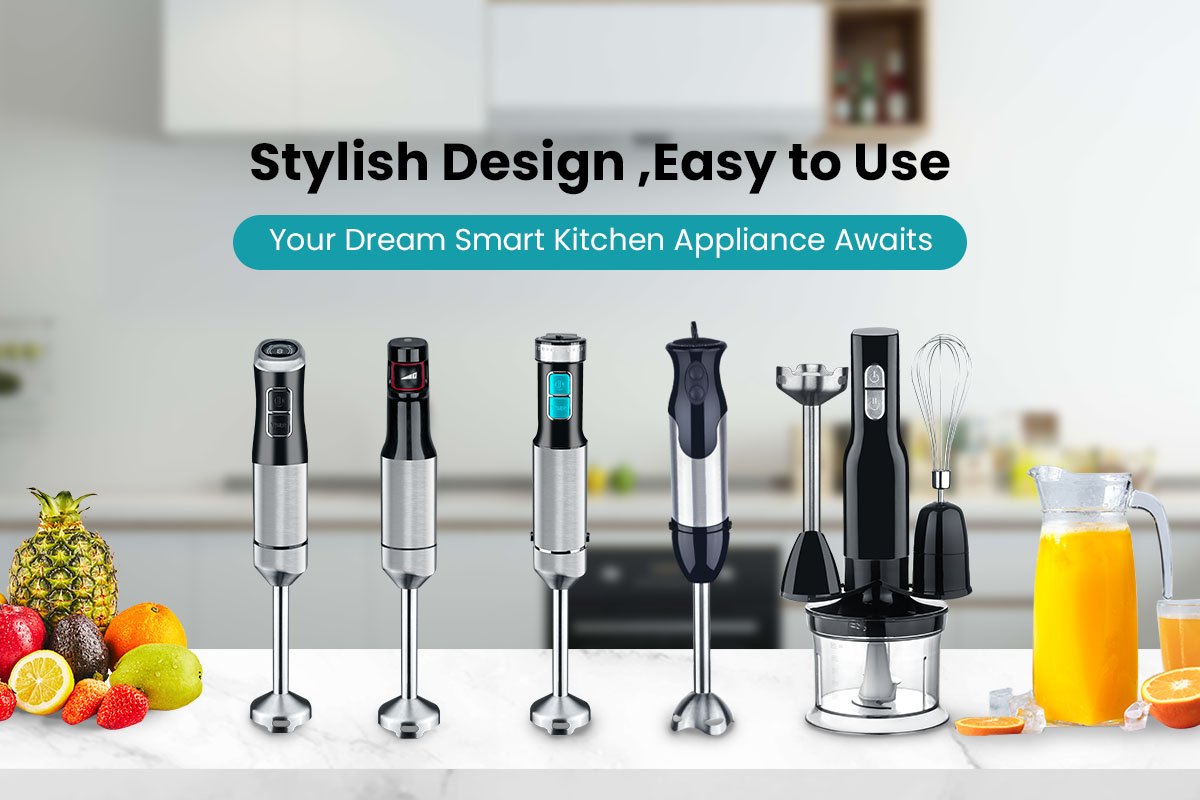
Can We Use Hand Blender for Making Cake
Yes, a Hand Blender can be used for making cake, but performance depends on motor capacity, speed control, attachment design, and ingredient type. While hand blenders are primarily designed for pureeing and emulsifying, many modern units—especially those with whisk or beater attachments—can handle light cake batters effectively.
For distributors and project buyers, the real evaluation is not simply whether it can mix cake batter, but whether the product platform is engineered for consistent mixing performance, durability under repetitive use, and compliance with international standards.
1. Understanding The Mixing Requirement For Cake Batter
Cake batter requires:
Even mixing of flour and liquid
Proper air incorporation
Stable motor torque under medium viscosity
Controlled speed variation
Light sponge or chiffon cakes require more aeration, while dense butter cakes demand stronger torque and longer mixing cycles.
A hand blender without whisk or beater attachments is generally less suitable for cake batter because standard blending blades are optimized for liquids rather than aerated mixtures.
2. Motor Power And Torque Stability
For cake preparation, buyers should assess:
Motor wattage and torque consistency
Overheat protection design
Speed control levels
Duty cycle rating
Cake mixing places intermittent but moderate load on the motor. Units with stable torque output and thermal protection prevent overheating during repeated mixing cycles.
Manufacturers with in-house motor shops and testing rooms can validate performance under batter-load simulation rather than relying solely on no-load speed claims.
3. Attachment System Design
Hand blenders capable of cake mixing typically include:
Whisk attachment
Dual beater attachment
Stainless steel mixing shaft
Detachable accessory system
Attachment locking stability is critical. Poorly aligned couplers or low-tolerance fittings can cause vibration and premature wear.
For OEM programs, buyers should confirm:
Coupler material durability
Attachment wear-cycle testing
Shaft runout tolerance
Noise and vibration control during medium-load operation
4. Manufacturer vs Trader Considerations
When sourcing hand blenders for multi-function usage (blending + cake mixing), supplier structure matters.
A factory-based manufacturer with integrated:
Injection molding
Hardware processing
Motor production
Assembly line testing
R&D and performance validation
can optimize motor + attachment matching for cake batter performance.
Traders typically lack engineering control over motor calibration, attachment fit tolerance, and endurance testing.
5. Manufacturing Process Overview
A well-controlled production process includes:
Injection molding of housing components
Motor winding inspection and assembly
Shaft and blade machining
Coupler installation
Functional no-load testing
Load simulation testing
Final electrical safety inspection
Packaging verification
For cake mixing applications, endurance testing under medium viscosity loads is particularly important.
6. Quality Control Checkpoints
Buyers should require:
Motor heat-rise testing under batter load
Attachment fit and locking inspection
Noise and vibration measurement
Electrical insulation testing
Speed control function verification
Repeated start-stop cycle testing
These checkpoints ensure consistent performance in both household and commercial distribution programs.
7. Material Standards Used
For food-contact and durability considerations, confirm:
Food-grade stainless steel shafts
Food-contact plastic compliance documentation
Corrosion-resistant blade materials
Heat-resistant coupler materials
Products intended for export should provide documentation supporting compliance with relevant safety and material standards.
8. Bulk Supply And Project Sourcing Checklist
Before placing bulk orders, verify:
Confirm supplier is a true manufacturer with in-house production control.
Validate cake batter mixing performance via sample testing.
Confirm attachment durability through endurance testing.
Review electrical safety certification for target market.
Check spare attachment availability.
Define acceptable noise and vibration thresholds.
Lock lead time stability for seasonal demand.
Structured sourcing reduces performance inconsistency across shipments.
Conclusion
A hand blender can be used for making cake, especially when equipped with whisk or beater attachments and supported by a stable motor platform. However, consistent cake mixing performance depends on torque stability, attachment design, material quality, and structured quality control.
For importers and project buyers, partnering with a manufacturer that integrates motor production, attachment engineering, structured testing processes, and export compliance systems ensures reliable multi-function performance and long-term supply stability in international markets.