




Can We Use Hand Blender Instead Of Beater
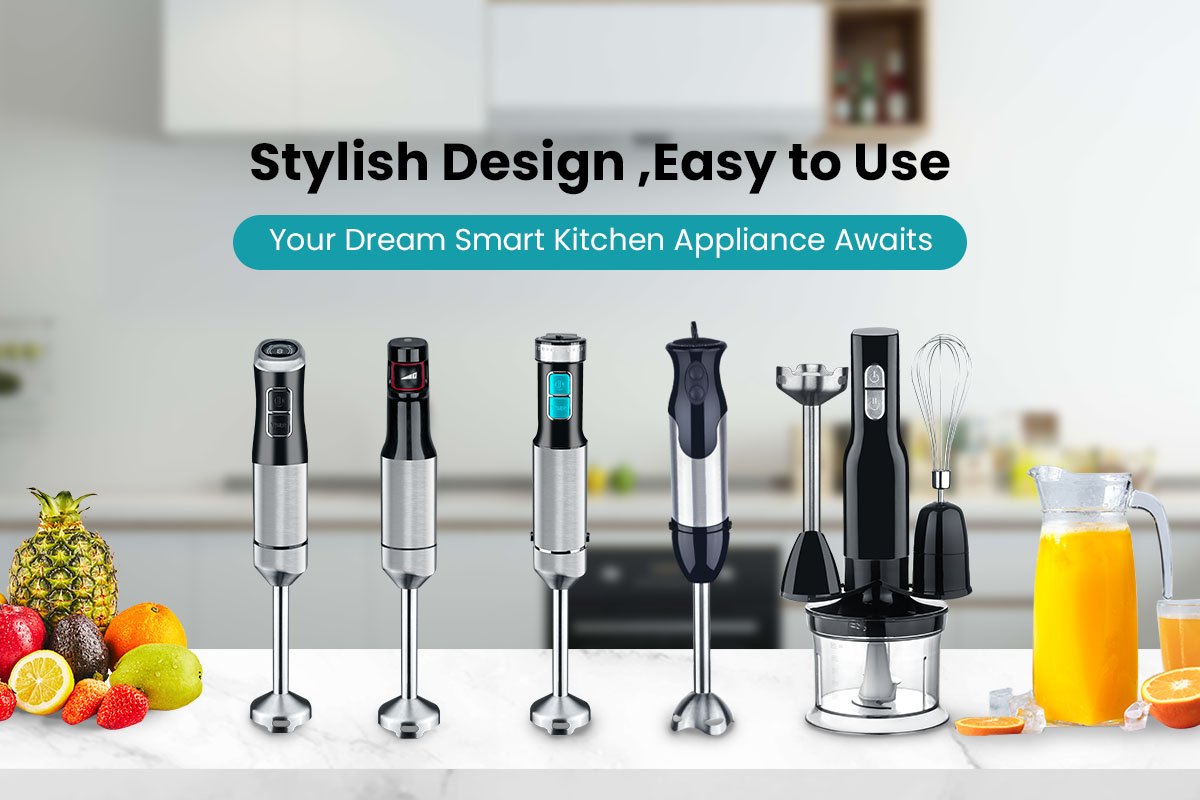
Yes, a Hand Blender can sometimes be used instead of a beater, but the suitability depends on the recipe, motor torque, attachment system, and intended texture outcome. A standard Immersion Hand Blender with only a blade shaft is not engineered for aeration tasks such as whipping cream or creaming butter and sugar. However, multi-function hand blenders equipped with whisk or dual-beater attachments can perform many of the same mixing tasks as a traditional hand mixer.
For buyers sourcing small kitchen appliances for export markets, the more important evaluation is whether the hand blender platform is engineered for multi-task functionality with consistent torque control and structural durability.
1. Functional Differences Between Hand Blender And Beater
A traditional beater (hand mixer) is designed for:
Aerating batters
Whipping cream or egg whites
Creaming butter and sugar
Mixing medium-to-thick doughs
A hand blender is designed primarily for:
Pureeing soups
Blending sauces
Emulsifying liquids
Crushing soft solids
Without whisk or beater attachments, a hand blender cannot properly introduce air into mixtures, which affects cake volume and texture.
2. When A Hand Blender Can Replace A Beater
Replacement is possible when:
The unit includes a whisk or beater attachment
Motor torque remains stable under medium viscosity loads
Speed control allows gradual acceleration
Overheat protection prevents motor stress
For light cake batters, pancake mixes, or whipped eggs, a multi-function hand blender with proper accessories can perform adequately.
For dense doughs or heavy cream whipping, a dedicated beater typically delivers better performance and durability.
3. Motor And Torque Considerations
Beating requires sustained rotation under resistance. Buyers should assess:
Motor wattage and real torque output
Thermal protection mechanism
Speed level consistency
Gear and coupler durability
Manufacturers with in-house motor production and testing facilities can calibrate motor speed and torque to support both blending and beating applications more reliably than traders sourcing generic motor modules.
4. Attachment Engineering And Structural Stability
Critical design elements include:
Secure locking system for whisk attachment
Reinforced coupler material
Stainless steel beaters or whisks
Vibration control during medium-load mixing
Attachment durability is essential when replacing a dedicated beater.
OEM programs should validate:
Coupler wear-cycle testing
Shaft alignment tolerance
Noise and vibration standards
Start-stop endurance under batter simulation
5. Manufacturing Process And Quality Control
A reliable multi-function hand blender should pass:
Motor heat-rise testing under load
Attachment endurance testing
Speed switch reliability testing
Electrical insulation verification
Final vibration and noise inspection
Factories with integrated injection molding, hardware processing, assembly lines, and testing rooms are better positioned to maintain consistency across bulk production batches.
6. Manufacturer vs Trader Considerations
When sourcing hand blenders intended to replace beaters, buyers should confirm:
Does the supplier control motor assembly internally?
Are attachments designed in-house?
Are functional load tests conducted before shipment?
Are spare attachments available for after-sales support?
Factory-based manufacturers typically provide stronger engineering control and batch consistency than intermediaries without integrated production.
7. Export Market Compliance
For international distribution, ensure:
Electrical safety certification aligns with destination market
Food-contact materials meet regulatory standards
Product labeling and manuals match local compliance requirements
Batch traceability is maintained
Compliance readiness reduces customs delays and retailer onboarding issues.
Bulk Project Sourcing Checklist
Before placing a bulk order:
Validate real mixing performance with batter testing.
Confirm whisk durability under repeated cycles.
Review motor load test documentation.
Define acceptable vibration limits.
Verify spare attachment availability.
Confirm certification documentation for target markets.
Structured sourcing ensures stable long-term supply and performance reliability.
Conclusion
A hand blender can replace a beater in certain light mixing applications when equipped with proper whisk attachments and supported by stable motor torque and durable coupler design. However, it may not fully match the performance of a dedicated beater for heavy-duty whipping or dense dough mixing.
For importers and distributors, selecting a manufacturer with integrated motor production, structured OEM/ODM capability, defined quality control checkpoints, certified material standards, and export-compliant production systems ensures reliable multi-function performance in international trade.