




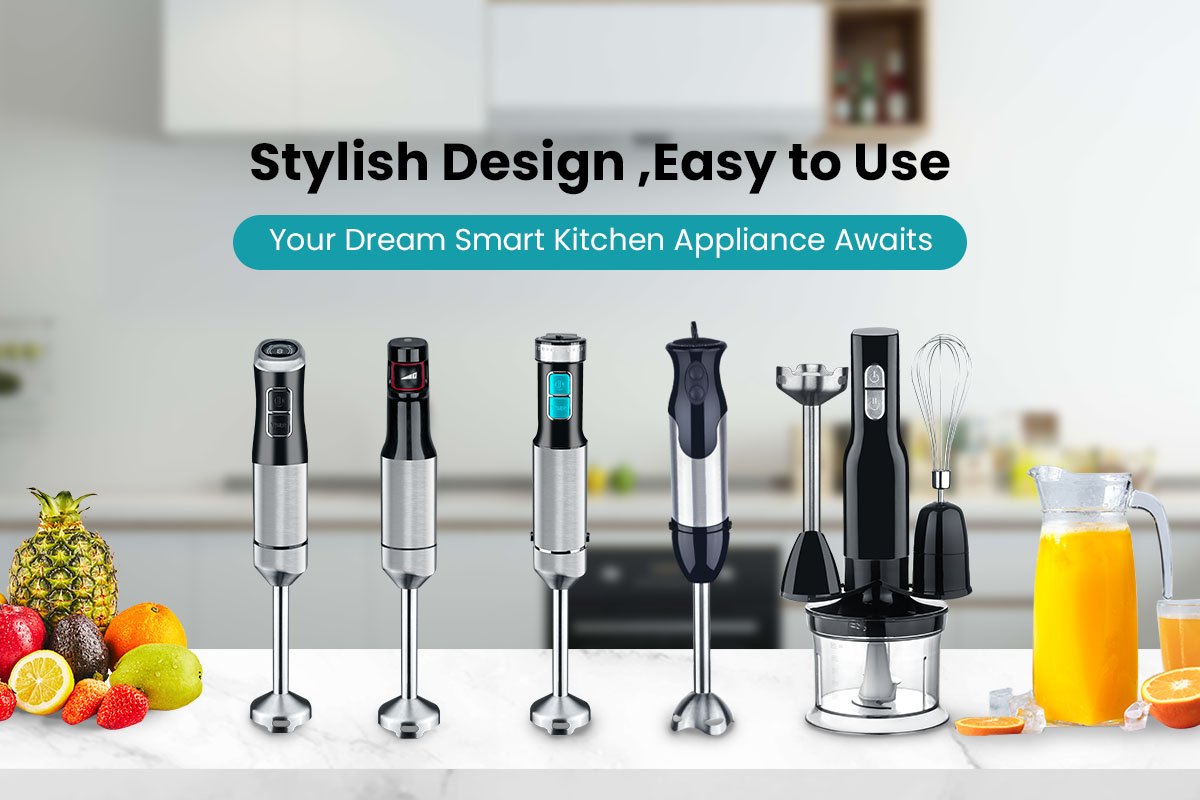
Yes, you can blend soft “mush” with a hand mixer in certain situations—but performance depends on texture, moisture content, and the mechanical limits of the mixer. A hand mixer (beater) is designed for whipping and mixing rather than pureeing. It works well for soft, semi-liquid mixtures but is not engineered for smooth emulsification like a blender or immersion Hand Blender.
For distributors and appliance buyers, understanding the functional boundaries between mixing and blending is essential when positioning products for multi-use marketing.
1. What Type Of “Mush” Are We Talking About?
Hand mixers can handle:
Soft mashed potatoes
Banana mash
Cooked pumpkin mash
Soft cooked beans
Cake batter or pancake mix
They are less suitable for:
Thick, sticky paste
Dense nut mash
Very low-moisture mixtures
Smooth puree requiring fine texture
A hand mixer agitates and aerates. It does not shear ingredients at high speed like a blade-based system.
2. Mechanical Difference: Mixer vs Blender
A hand mixer:
Uses rotating beaters or whisks
Introduces air into mixtures
Designed for medium viscosity loads
Does not crush or cut solid particles
A hand blender:
Uses a high-speed rotating blade
Purees and emulsifies
Handles thicker mixtures with proper torque
If the goal is smooth, lump-free puree, a blade system is generally more effective.
3. Motor Load Considerations
When blending mush-like textures with a hand mixer, motor durability matters.
Buyers should assess:
Torque consistency under semi-thick load
Gearbox durability
Overheat protection
Speed control precision
Thicker mash increases resistance and may strain entry-level mixers without reinforced gear structures.
Manufacturers with in-house motor and gearbox assembly can better match torque output to mixing applications.
4. Attachment And Gear Durability
Critical components include:
Stainless steel beaters
Reinforced shaft connection
Wear-resistant internal gears
Stable speed selector mechanism
Repeated mixing of thick mush can accelerate coupler and gear wear if materials are not properly specified.
For OEM programs, endurance cycle testing under medium-viscosity simulation should be validated.
5. Manufacturer vs Trader Evaluation
When sourcing hand mixers for multi-function usage, supplier capability matters.
A factory-based manufacturer typically controls:
Motor calibration
Gearbox assembly tolerance
Injection-molded housing alignment
Final load simulation testing
Safety certification documentation
Traders often cannot adjust internal specifications or conduct application-specific validation testing.
6. Manufacturing Process Overview
A robust hand mixer production system should include:
Motor winding inspection
Gear alignment assembly control
Beater shaft straightness inspection
Functional speed testing
Noise and vibration measurement
Electrical insulation verification
Final quality audit
Structured process control reduces batch variation in torque and durability.
7. Export And Compliance Considerations
For international trade, confirm:
Electrical safety certification for destination market
Food-contact material documentation
Speed control durability testing
Batch traceability
Spare beater availability
Compliance readiness protects retail programs and reduces post-shipment claims.
Bulk Sourcing Checklist
Before placing bulk orders:
Test mixer with real semi-thick mash recipes.
Verify gearbox durability through cycle testing.
Review motor heat-rise test data.
Confirm beater hardness and corrosion resistance.
Lock acceptable noise/vibration limits.
Confirm lead time stability during peak season.
Structured sourcing ensures consistent product performance.
Conclusion
Yes, you can blend soft mush with a hand mixer when the texture is moist and not overly dense. However, a hand mixer is designed for agitation and aeration, not fine pureeing. Performance depends on motor torque, gearbox durability, and attachment stability.
For importers and distributors, selecting a manufacturer with integrated motor production, gearbox assembly control, structured quality checkpoints, certified material standards, and export-compliant production systems ensures stable multi-use performance and reliable long-term supply.