




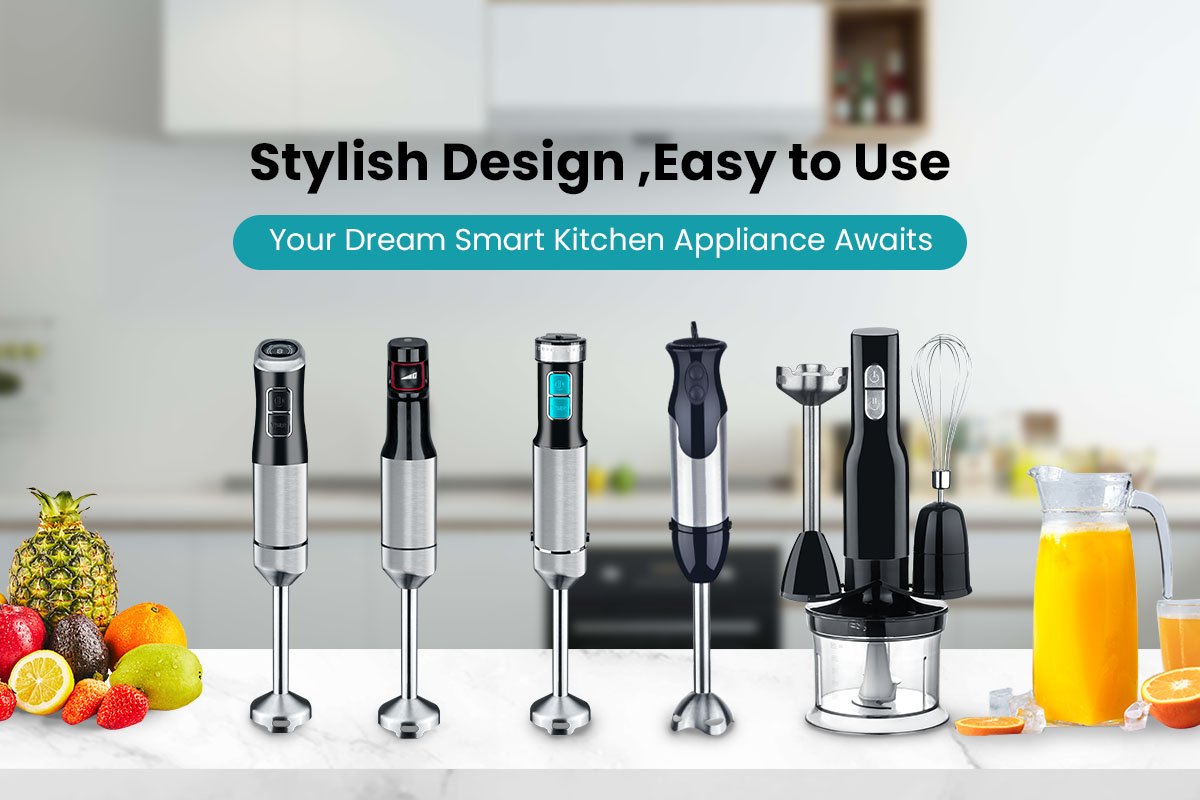
Can You Blend Soup With A Hand Blender
Yes, you can blend soup with a Hand Blender—and this is one of its primary applications. Immersion Hand Blenders are specifically engineered for pureeing hot liquids directly inside the cooking pot, eliminating the need to transfer soup into a countertop blender.
However, performance, safety, and durability depend on motor torque, shaft design, blade geometry, heat resistance, and electrical protection systems. For importers and distributors, validating these technical elements is critical before positioning a model for soup-blending applications in international markets.
1. Why hand blenders Are Ideal For Soup
hand blenders are designed to:
Puree cooked vegetables directly in pots
Emulsify creamy soups
Blend sauces without transferring containers
Reduce cleaning steps
Operate in high-moisture environments
The immersion design allows vertical blending, making it practical for hot liquids.
2. Motor And Torque Requirements
Soup blending is typically lower resistance than ice crushing, but still requires:
Stable torque output
Consistent speed control
Thermal protection for extended use
Motor insulation resistant to steam exposure
Buyers should not rely solely on wattage ratings. Real torque under load and heat-rise testing provide more meaningful indicators of performance.
Manufacturers with in-house motor workshops and testing rooms can simulate extended hot-liquid blending cycles to validate reliability.
3. Blade And Shaft Engineering
For effective soup blending, the following are important:
Stainless steel blade hardness
Anti-splash blade guard design
Shaft alignment precision
Corrosion resistance against steam and acids
Soup ingredients may include tomato, vinegar, or other acidic components. Corrosion-resistant materials reduce long-term degradation.
OEM programs should include endurance testing in hot liquid environments to evaluate seal integrity and shaft stability.
4. Heat And Steam Safety
Blending hot soup introduces thermal stress.
Buyers should confirm:
Maximum recommended operating temperature
Seal resistance to steam exposure
Electrical insulation rating
Overheat auto-shutoff functionality
Improper insulation or low-grade materials may lead to premature failure when repeatedly exposed to steam.
5. Manufacturer vs Trader Considerations
When sourcing hand blenders for soup use, supplier structure directly impacts product consistency.
A factory-based manufacturer with:
Injection molding workshops
Hardware processing lines
Motor production capability
Assembly control
Functional testing rooms
can validate structural durability and thermal performance under real-use conditions.
Traders often cannot modify internal motor insulation grade or seal material specifications.
6. Manufacturing Process Overview
A controlled production process should include:
Motor winding inspection
Shaft straightness testing
Blade hardness verification
Coupler alignment control
Load simulation blending test
Electrical insulation testing
Final noise and vibration inspection
Integrated production reduces tolerance variation and long-term reliability risks.
7. Material Standards And Food Safety
For soup blending applications, verify:
Food-grade stainless steel shafts and blades
BPA-compliant plastic components
Heat-resistant housing materials
Compliance documentation for food-contact parts
Export markets often require formal safety documentation before retail distribution.
8. Bulk Supply Considerations
Before placing large orders, buyers should:
Test performance with real hot soup samples.
Review heat-rise testing records.
Confirm corrosion resistance validation.
Define acceptable vibration thresholds.
Verify electrical certification alignment with target market.
Lock spare shaft and blade availability.
Structured validation prevents high return rates in consumer markets.
Conclusion
Yes, a hand blender is well-suited for blending soup, especially hot soups prepared directly in cooking pots. Reliable performance depends on motor torque stability, corrosion-resistant materials, proper insulation, and structured quality control.
For importers and distributors, partnering with a manufacturer that controls motor production, blade engineering, structured load testing, certified material standards, and export compliance systems ensures consistent performance and long-term supply reliability in international trade.