




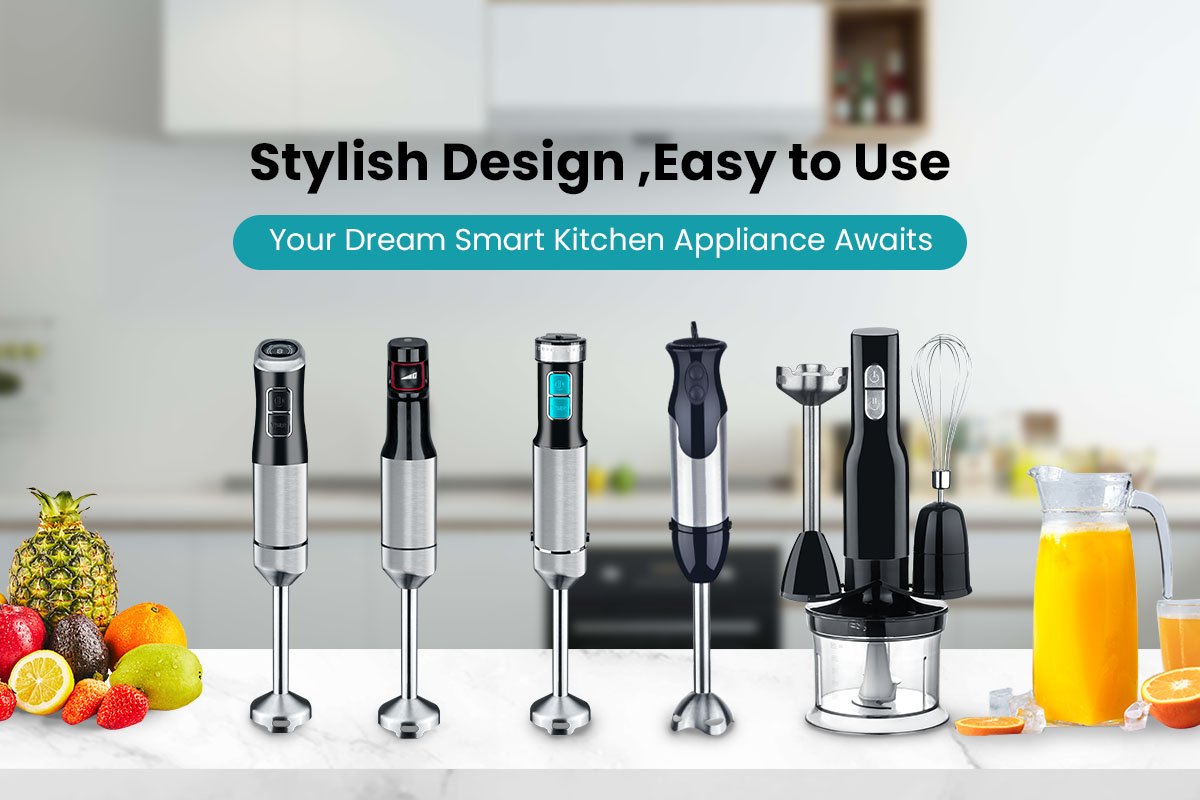
Yes, you can chop nuts with a Hand Blender—but only under specific conditions. Standard Immersion Hand Blenders with a single blade shaft are not optimized for dry, hard materials like almonds, walnuts, or peanuts. However, models equipped with a dedicated chopper bowl attachment can process nuts effectively when motor torque and blade geometry are properly engineered.
For importers and project buyers, the key issue is not whether nuts can be chopped once, but whether the appliance platform is designed to handle repetitive hard-load processing without motor strain, coupler wear, or blade damage.
1. Why Nuts Are Mechanically Demanding
Nuts present a unique mechanical load:
Hard outer structure
Low moisture content
High oil content
Irregular particle size
Unlike soups or sauces, nuts create impact stress and intermittent resistance. This increases torque spikes during startup and chopping cycles.
2. When A hand blender Can Chop Nuts
Chopping is feasible when:
The unit includes a sealed chopper bowl attachment
The blade is hardened stainless steel
Motor torque is stable under short bursts
The gearbox and coupler are reinforced
Pulse control is available
Directly inserting a standard immersion shaft into dry nuts is not recommended. It may scatter ingredients and overload the motor.
3. Motor And Torque Stability
Nut chopping requires:
Strong startup torque
Short, controlled pulse operation
Overheat protection
Stable gear transmission
Wattage alone is not enough. Real-world load testing under dry conditions is more important than no-load speed ratings.
Manufacturers with in-house motor production and testing capability can simulate dry chopping cycles to validate torque and heat-rise performance.
4. Blade And Coupler Durability
Common failure points during nut chopping include:
Blade dulling or deformation
Coupler stripping
Gear wear
Excessive vibration
Buyers should confirm:
Blade hardness specification
Shaft alignment tolerance
Coupler material grade
Repeated impact-cycle testing
Endurance validation under dry, hard-material conditions significantly reduces after-sales issues.
5. Manufacturing Process Control
A robust production process should include:
Motor torque inspection
Gear alignment testing
Blade hardness verification
Coupler endurance validation
Functional load simulation
Noise and vibration measurement
Electrical insulation safety testing
Integrated production lines reduce tolerance variation and ensure consistency across shipments.
6. Manufacturer vs Trader Risk
When sourcing nut-capable hand blenders:
A true manufacturer typically controls:
Motor winding specification
Gearbox material selection
Blade engineering
Assembly tolerance
Functional load testing
A trader usually cannot adjust mechanical specifications or conduct structured endurance testing, increasing inconsistency risk in bulk supply.
7. Material Standards And Food Safety
For nut processing applications, confirm:
Food-grade stainless steel blades
BPA-compliant chopper bowl materials
Oil-resistant seals
Corrosion resistance against natural nut oils
Documentation for food-contact compliance is necessary for many export markets.
8. Bulk Project Sourcing Checklist
Before placing a bulk order:
Test real nut-chopping performance with sample units.
Request dry-load endurance test data.
Confirm motor heat-rise limits.
Verify blade hardness and wear resistance.
Define acceptable vibration thresholds.
Confirm spare chopper attachment availability.
Review export compliance documentation.
Structured evaluation minimizes warranty claims and returns.
Conclusion
Yes, a hand blender can chop nuts—provided it includes a properly engineered chopper attachment and a motor platform capable of handling dry impact loads. Standard immersion shafts alone are not recommended for dry nut processing.
For importers and distributors, partnering with a manufacturer that integrates motor production, gearbox engineering, blade durability testing, structured quality control checkpoints, and export-compliant material standards ensures reliable performance and long-term supply stability in international markets.