




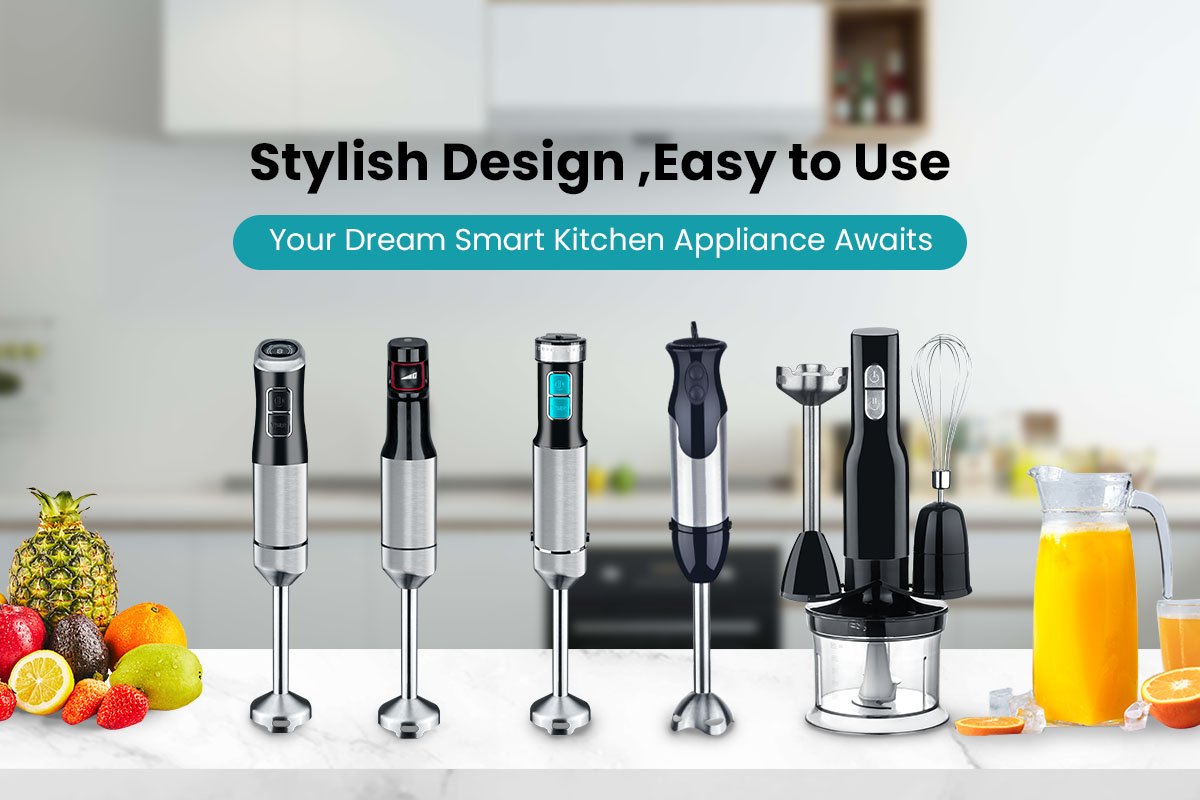
Can You Cream Butter And Sugar With A Hand Blender
Yes, you can cream butter and sugar with a Hand Blender—but only under certain conditions. A standard immersion shaft with a blade head is not suitable for creaming. However, a multi-function hand blender equipped with a whisk or dual-beater attachment can perform light to medium creaming tasks if the motor torque and gearbox structure are properly engineered.
For importers and distributors, the key issue is whether the appliance platform is designed for sustained medium-load mixing rather than liquid blending only.
1. Why Creaming Is Mechanically Demanding
Creaming butter and sugar requires:
Mechanical aeration
Stable rotational speed
Moderate but sustained torque
Gear durability under resistance
Butter is dense at room temperature, and sugar crystals add friction. This creates higher load compared to whipping cream or blending liquids.
2. When A hand blender Can Work
Creaming is feasible when:
The unit includes whisk or beater attachments
Speed control allows gradual start-up
Motor torque remains stable under medium viscosity
Overheat protection is integrated
Gear and coupler components are reinforced
A blade-only immersion shaft is not appropriate for creaming because it cuts rather than aerates.
3. Motor And Gearbox Considerations
Buyers should evaluate:
True torque output, not only wattage
Heat-rise performance during 3–5 minute mixing cycles
Gear material grade and alignment
Pulse and speed control stability
Creaming often requires several minutes of continuous operation. Lower-grade motors may overheat or reduce speed under load.
Manufacturers with in-house motor assembly and testing facilities can simulate real batter-load cycles to validate endurance.
4. Attachment Engineering
Critical durability factors include:
Stainless steel beaters or whisk wires
Reinforced coupler connection
Shaft straightness tolerance
Low vibration during medium-load mixing
Repeated creaming cycles can accelerate wear if coupler material or gear tolerances are not tightly controlled.
OEM development programs should include endurance testing for creaming simulation.
5. Manufacturing Process Control
A well-structured production process should include:
Motor winding inspection
Gearbox alignment control
Beater shaft straightness testing
Functional load simulation
Heat-rise validation
Noise and vibration measurement
Electrical safety testing
Integrated production systems reduce batch inconsistency and long-term failure risk.
6. Manufacturer vs Trader Evaluation
When sourcing multi-function hand blenders intended for creaming:
A factory-based manufacturer typically controls:
Motor calibration
Gear material selection
Attachment design
Functional load testing
Safety certification documentation
A trader may lack engineering authority to adjust torque profile or gearbox durability, increasing risk in bulk programs.
7. Material Standards And Compliance
For export markets, confirm:
Food-grade stainless steel attachments
BPA-compliant plastic components
Electrical safety certification
Batch traceability system
User manual compliance for mixing instructions
Compliance readiness reduces customs and retail onboarding delays.
Bulk Sourcing Checklist
Before placing a bulk order:
Validate real creaming performance with butter at room temperature.
Request endurance testing data for 3–5 minute continuous mixing cycles.
Confirm gearbox durability documentation.
Define acceptable vibration thresholds.
Verify attachment replacement availability.
Lock certification documentation for target markets.
Structured validation minimizes after-sales claims.
Conclusion
Yes, you can cream butter and sugar with a hand blender if it includes proper whisk or beater attachments and is supported by stable motor torque and reinforced gearbox design. A blade-only immersion shaft is not suitable for this task.
For importers and distributors, partnering with a manufacturer that integrates motor production, gearbox engineering, structured load testing, certified food-contact materials, and export-compliant production systems ensures consistent performance and long-term supply reliability in international trade.