




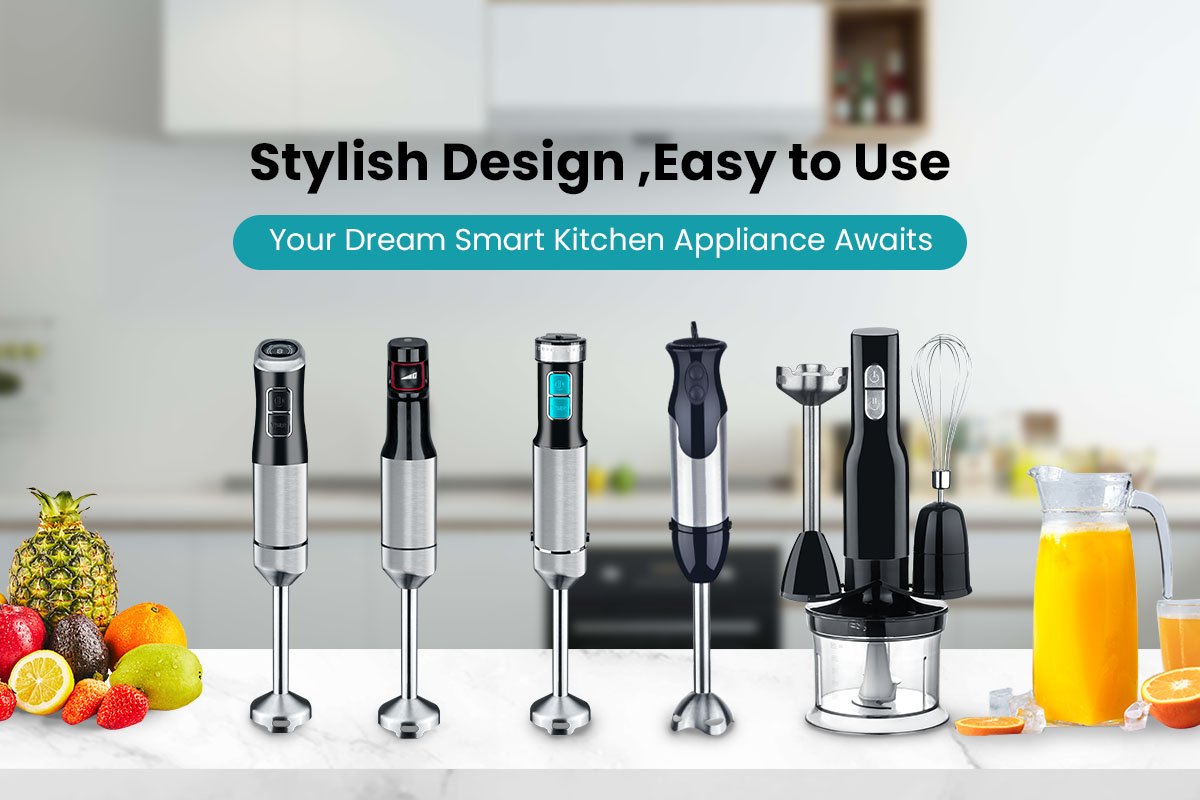
Yes, you can froth milk with a hand held blender—but the quality of foam depends on the attachment type, motor speed control, and blade or whisk design. A standard immersion blade can create foam through agitation, but a whisk attachment typically produces better aeration and finer bubbles.
For importers and distributors, the important question is whether the appliance platform is engineered for stable high-speed rotation, low vibration, and consistent aeration performance.
1. How Milk Frothing Works
Milk frothing requires:
Rapid air incorporation
Controlled agitation
Stable rotational speed
Fine bubble formation
Unlike heavy batter mixing, frothing is a low-resistance application. However, it demands consistent speed control to prevent splashing and uneven foam texture.
2. Blade Shaft vs whisk Attachment
Blade Shaft:
Creates turbulence
Produces larger bubbles
May overheat milk if overused
Less precise for microfoam
Whisk Attachment:
Designed for aeration
Produces finer, more stable foam
Better for cappuccino-style drinks
More controlled splashing
For beverage-focused markets, including a whisk attachment significantly improves functionality.
3. Motor Speed And Control Stability
Milk frothing requires:
High rotational speed
Low vibration
Stable startup torque
Multi-speed or variable-speed control
If speed surges are inconsistent, foam texture becomes uneven.
Manufacturers with in-house motor calibration and load testing can fine-tune speed consistency for light-load applications like frothing.
4. Material And Heat Considerations
When frothing warm milk, confirm:
Food-grade stainless steel whisk
Heat-resistant shaft design
Steam-resistant housing materials
Electrical insulation protection
Repeated exposure to steam and moisture requires corrosion-resistant materials and proper sealing.
5. Manufacturing Process And Quality Control
A well-controlled production system should include:
Motor no-load speed testing
Vibration measurement under high-speed operation
Shaft alignment inspection
Attachment fit tolerance testing
Electrical insulation safety verification
Final functional testing
Integrated production reduces noise, vibration, and speed inconsistency.
6. Manufacturer vs Trader Considerations
When sourcing hand held blenders for beverage use, buyers should confirm:
Does the supplier control motor production internally?
Are whisk attachments engineered and tested in-house?
Is speed calibration validated during production?
Are endurance tests conducted for high-speed rotation?
Factory-based manufacturers typically offer better engineering consistency than intermediaries.
7. Export Compliance And Documentation
For international markets, ensure:
Electrical safety certification matches destination country
Food-contact materials meet regulatory standards
Labeling and instruction manuals comply with import requirements
Batch traceability is maintained
Proper documentation supports smooth customs clearance and retail distribution.
Bulk Sourcing Checklist
Before placing bulk orders:
Test real milk frothing performance.
Validate foam consistency across speed levels.
Confirm vibration limits during high-speed rotation.
Review motor heat-rise testing data.
Ensure whisk durability documentation.
Confirm certification for target markets.
Structured evaluation reduces post-sale performance complaints.
Conclusion
Yes, you can froth milk with a hand held blender, especially when using a whisk attachment designed for aeration. Performance quality depends on stable motor speed, low vibration, corrosion-resistant materials, and controlled attachment engineering.
For importers and distributors, partnering with a manufacturer that integrates motor production, attachment design, structured quality control checkpoints, certified food-contact materials, and export-compliant systems ensures reliable frothing performance and consistent long-term supply in international trade.