




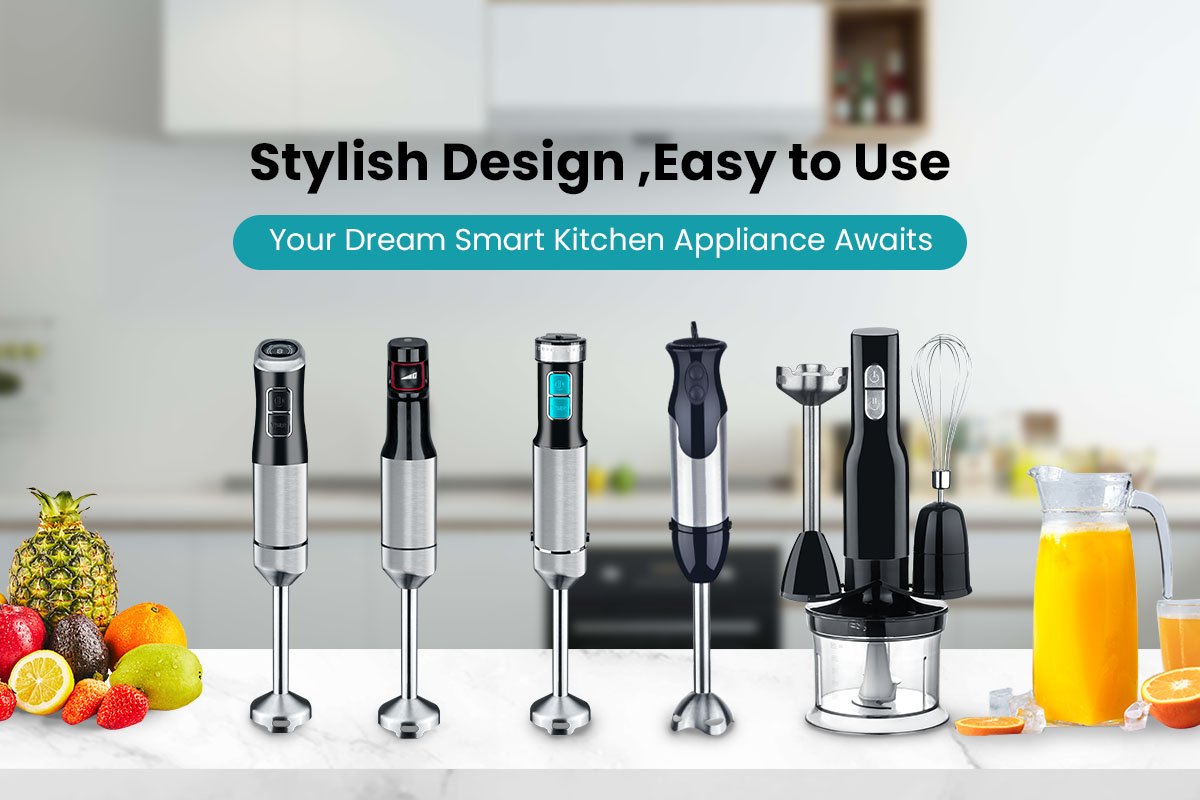
Yes, you can make green smoothies with a Hand Blender, and this is one of the common applications for immersion blenders. However, performance quality depends on motor torque, blade geometry, speed control, and container depth—especially when blending fibrous leafy greens such as spinach, kale, or celery.
For importers and distributors, positioning a hand blender for smoothie use requires validation of blending smoothness, vibration control, and motor durability under fibrous load conditions.
1. Why Green Smoothies Are More Demanding Than Fruit Smoothies
Green smoothies typically include:
Leafy vegetables (spinach, kale)
Fibrous stems
Frozen fruits
Seeds or nut butters
Ice in some recipes
Leafy greens are fibrous and may wrap around blades if cutting efficiency is poor. Frozen ingredients increase startup torque demand.
2. Motor And Torque Stability
Smooth blending requires:
Stable torque under fibrous resistance
Consistent speed control
Overheat protection
Controlled startup surge
While green smoothies are not as demanding as nut crushing, they place more stress on the motor than soft fruit purees.
Buyers should request:
Load simulation testing data with fibrous vegetables
Heat-rise performance records
Continuous blending endurance validation
Manufacturers with in-house motor assembly and testing facilities can better validate performance under realistic smoothie conditions.
3. Blade Geometry And Cutting Efficiency
Effective green smoothie blending depends on:
Sharp stainless steel blades
Balanced blade design
Anti-splash guard
Proper shaft alignment
Blade geometry must efficiently cut leafy fibers rather than simply agitate them.
OEM programs should include fibrous-vegetable puree validation during product development.
4. Texture And Container Considerations
For smoother results:
Cut greens into smaller pieces before blending
Add sufficient liquid base
Use a tall, narrow container for immersion efficiency
Blend in short pulses before continuous operation
Texture smoothness is influenced by both mechanical power and blending technique.
5. Coupler And Gear Durability
Green smoothies may involve intermittent load spikes from frozen fruit.
Buyers should confirm:
Reinforced coupler material
Gear alignment precision
Vibration control under medium load
Wear-cycle endurance testing
Inconsistent coupler tolerances can lead to early mechanical failure in bulk retail programs.
6. Manufacturing Process And Quality Control
A structured production system should include:
Motor torque validation
Shaft straightness inspection
Blade hardness verification
Fibrous-load functional testing
Noise and vibration measurement
Electrical insulation testing
Final quality inspection
Integrated manufacturing reduces performance variability across batches.
7. Food-Contact Material Standards
Because smoothies are consumed directly, confirm:
Food-grade stainless steel blades
BPA-free plastic components
Corrosion-resistant shaft
Export compliance documentation
Leafy greens and citrus ingredients can accelerate corrosion if materials are low grade.
8. Manufacturer vs Trader Evaluation
When sourcing for smoothie applications, buyers should confirm:
Does the supplier control motor production?
Are blade specifications engineered in-house?
Is fibrous-load testing included in QA procedures?
Is export compliance documentation complete?
Factory-based manufacturers generally provide stronger engineering consistency than intermediaries.
Bulk Sourcing Checklist
Before placing bulk orders:
Test green smoothie blending with leafy vegetables.
Validate smoothness and fiber breakdown.
Review motor heat-rise data under frozen fruit load.
Confirm coupler wear-cycle testing.
Define acceptable vibration thresholds.
Verify spare shaft and blade availability.
Confirm electrical certification alignment.
Structured validation reduces return rates and improves product positioning.
Conclusion
Yes, you can make green smoothies with a hand blender, provided the motor delivers stable torque, the blade efficiently cuts fibrous greens, and the mechanical structure withstands intermittent frozen loads.
For importers and distributors, partnering with a manufacturer that integrates motor production, blade engineering, structured quality control checkpoints, certified food-contact materials, and export-compliant systems ensures consistent smoothie performance and reliable long-term supply in international markets.