




Why Are Stainless Steel Blades Used in Blenders
Stainless steel blades are widely used in blenders because they provide strength, durability, and reliable cutting performance when processing food ingredients. Blenders must handle a wide range of materials such as fruits, vegetables, ice, and frozen foods, so the blade material must be able to withstand high-speed rotation and repeated impact without losing its sharpness or structural stability.
One of the main advantages of stainless steel is its corrosion resistance. Kitchen appliances are frequently exposed to water, acidic fruit juices, and cleaning agents. Stainless steel can resist rust and chemical reactions, allowing the blades to maintain hygiene and long-term performance during regular use.
Another important factor is strength and hardness. Stainless steel blades maintain sharp edges even when blending harder ingredients such as ice cubes or frozen fruits. This durability helps ensure consistent blending performance and reduces the risk of blade deformation during high-speed operation.
Food safety is also a key consideration in blender manufacturing. Stainless steel materials used in food-contact components are designed to meet hygiene standards and do not easily react with food ingredients. This makes stainless steel an ideal material for kitchen appliances that process beverages, sauces, and other food products.
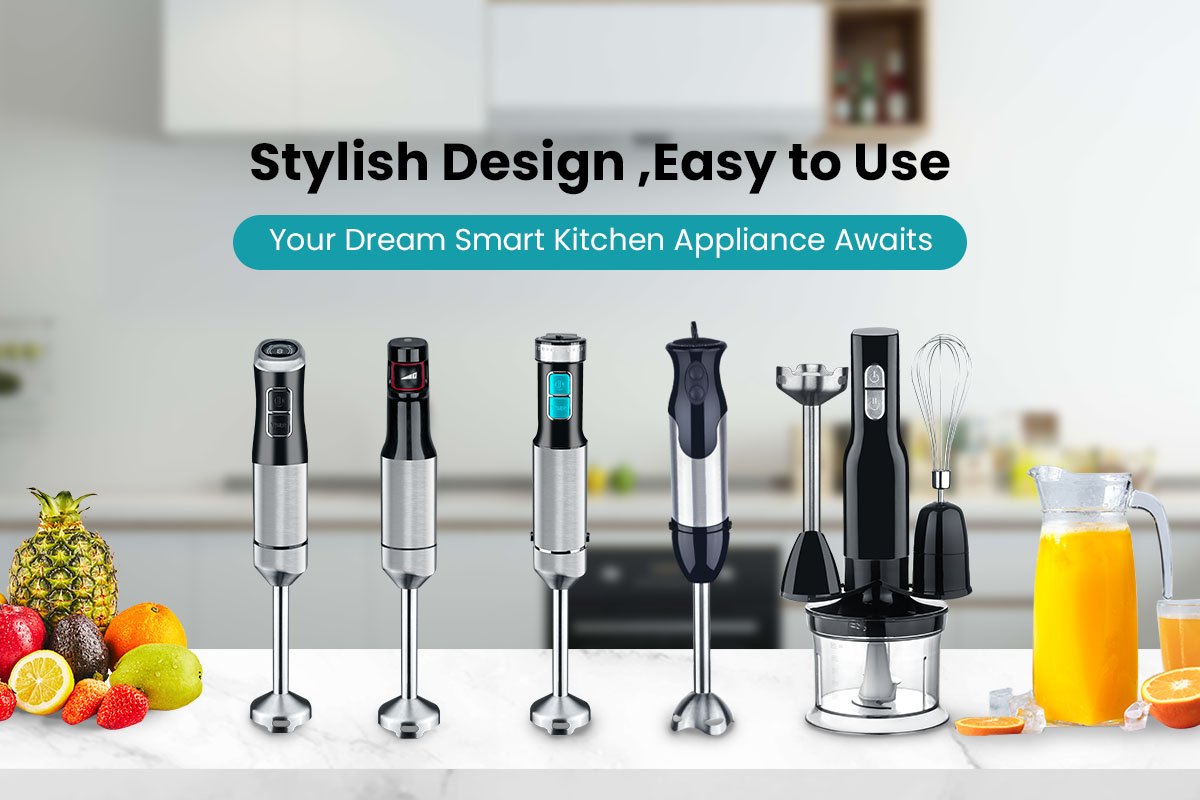
KANGJIA Electrical Appliances Co., Ltd. is a manufacturer specializing in small kitchen appliances including Hand Blenders, countertop blenders, mini choppers, and Food Processors. The company integrates product development, manufacturing, and global supply, providing stable solutions for distributors and appliance brands.
In blender production, stainless steel blades are manufactured through precision metal processing and quality inspection to ensure strength and balance during operation. The blades must be properly shaped and tested so that they rotate smoothly at high speeds without creating vibration or uneven mixing.
Compared with trading companies, sourcing appliances directly from a manufacturer provides better control over materials and production quality. Manufacturers can verify the grade of stainless steel used, control blade production processes, and conduct durability testing before shipment.
KANGJIA supports OEM and ODM cooperation for international buyers, allowing customization of blade structures, motor power, and product design. Quality control procedures such as material inspection, blade durability testing, and final product performance verification help ensure that each appliance meets reliability standards before export.
In summary, stainless steel blades are used in blenders because they provide corrosion resistance, strength, durability, and food safety. These characteristics allow blenders to maintain efficient cutting performance and long service life when processing a variety of ingredients.