




How Can Buyers Identify A Real Blender Manufacturer Instead Of A Trading Company?
In the global kitchen appliance supply chain, many buyers encounter a common challenge: distinguishing between a genuine blender manufacturer and a trading company. For importers, distributors, and OEM brand owners, identifying a real factory is essential because it directly affects product consistency, customization capability, quality control, and long-term supply stability.
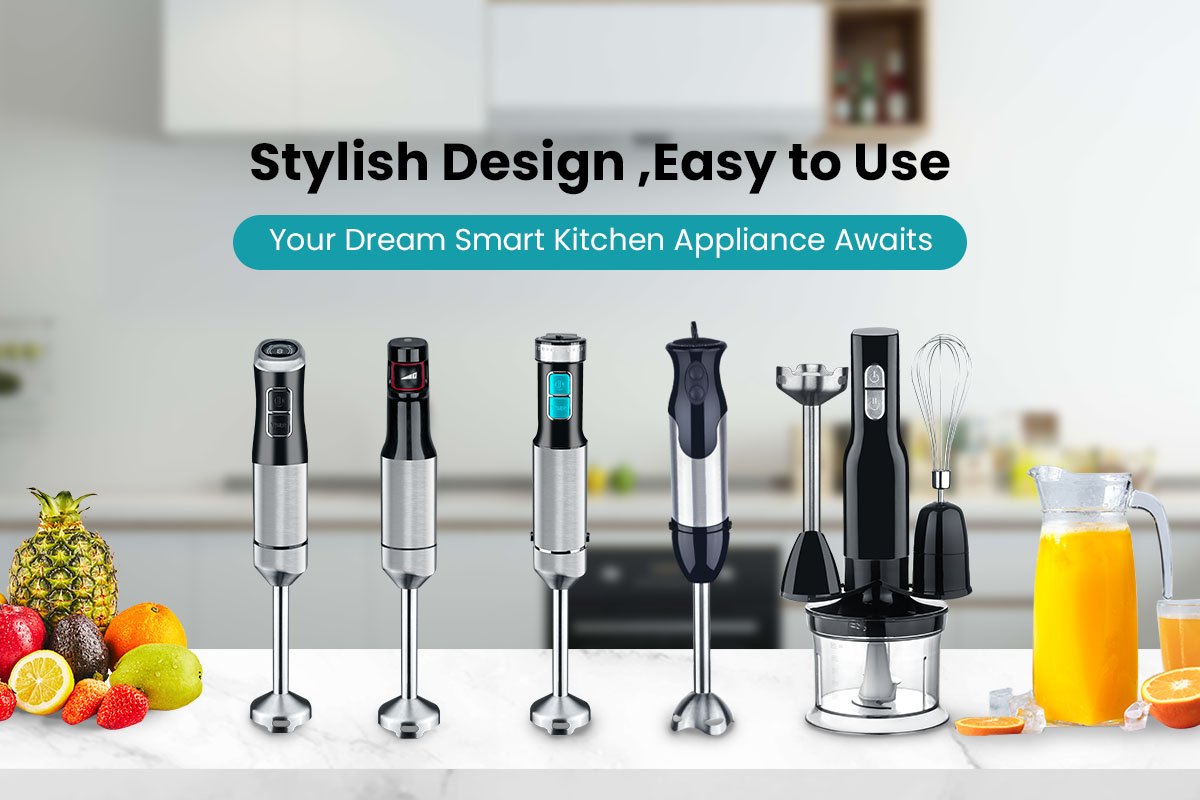
A reliable manufacturing partner typically operates integrated production facilities and controls the full development and manufacturing process. Companies specializing in blender production often provide a wide range of products such as Hand Blenders, Table Blenders, Nutrition Blenders, and mini choppers, supported by internal production workshops and engineering teams.
Understanding the differences between manufacturers and traders helps buyers avoid supply risks and choose the right partner for long-term cooperation.
Manufacturer Vs Trading Company
One of the clearest ways to identify a real blender manufacturer is to examine whether the company operates its own production infrastructure.
A true factory normally integrates product development, production, and sales into a unified system. It manages multiple internal workshops such as injection molding, hardware processing, motor assembly, and final product assembly. This type of integrated manufacturing structure allows the supplier to maintain tighter quality control and better cost efficiency.
Trading companies usually do not own production facilities. Instead, they purchase finished products from multiple factories and resell them to overseas buyers. Because they do not control manufacturing operations, traders typically have limited ability to adjust product structures, optimize materials, or resolve production issues quickly.
Buyers working with manufacturers benefit from direct communication with engineers and production managers, which significantly improves problem-solving efficiency during project development.
OEM And ODM Process Capability
OEM and ODM capability is one of the most reliable indicators of a real manufacturer.
Factories that specialize in blender production usually maintain dedicated R&D departments and testing laboratories. These teams are responsible for product design, prototype development, mold adjustment, and performance testing.
The OEM process typically includes several stages:
Product requirement analysis based on customer market positioning
Structural design adjustment such as motor configuration or blade system
Prototype development and testing
Tooling or mold preparation
Pilot production and sample verification
Mass production and packaging customization
ODM development goes further by allowing manufacturers to create entirely new blender models for brand owners. This includes developing customized housings, optimizing motor systems, or designing exclusive accessories.
Such development capabilities rarely exist within trading companies because they depend on external factories for production.
Manufacturing Process Overview
Understanding the manufacturing workflow can also help buyers identify whether a supplier is a real factory.
Blender production normally includes the following stages:
Raw Material Preparation
Key components such as motors, stainless steel blades, electronic switches, and plastic housings are inspected before entering the production line.
Component Manufacturing
Injection workshops produce plastic housings and structural components, while hardware workshops manufacture metal parts and blade systems.
Motor Assembly
Copper-wound motors are assembled and tested for electrical stability and rotational performance.
Product Assembly
Components such as blending shafts, jars, control systems, and motors are installed in the assembly line.
Performance Testing
Each blender undergoes operational testing to verify speed control, vibration stability, and safety locking mechanisms.
Factories with in-house injection shops, hardware workshops, motor workshops, and assembly lines can maintain consistent production standards across large orders.
Quality Control Checkpoints
A real blender manufacturer typically implements multi-stage quality inspection systems throughout the production process.
Incoming Material Inspection
Motors, stainless steel blades, and electrical components are inspected to ensure they meet technical standards.
Production Process Inspection
During assembly, engineers check wiring integrity, component alignment, and mechanical stability.
Finished Product Testing
Completed units are tested for blending performance, safety locking systems, vibration levels, and continuous operation reliability.
Factories with internal testing laboratories can perform detailed product evaluation before shipment, ensuring stable quality across bulk orders.
Material Standards Used In Blender Production
Material selection plays a crucial role in blender durability and performance.
High-quality blender blades are typically made from stainless steel to provide corrosion resistance and long-term cutting efficiency. These blades can handle tough ingredients such as frozen fruit, nuts, or seeds without deformation.
Motor systems commonly range between 300W and 500W depending on the product model, providing sufficient power for daily blending tasks while maintaining energy efficiency.
Housing structures may combine stainless steel and reinforced plastic materials to achieve both durability and lightweight design.
Factories controlling their own material sourcing and production processes can maintain consistent standards across different product batches.
Bulk Supply Considerations
For distributors and retail buyers, bulk supply reliability is a major concern.
Manufacturers with integrated production systems can maintain consistent product specifications across large orders. Because they control production scheduling internally, they can coordinate manufacturing timelines more efficiently and adjust output during peak demand seasons.
Another advantage of factory sourcing is packaging customization and product configuration flexibility. Manufacturers can adjust packaging design, accessories, or labeling to match different market requirements.
This level of supply stability is difficult to achieve through trading companies that rely on external factories.
Project Sourcing Checklist For Blender Buyers
When evaluating blender suppliers, buyers should verify several key factors to confirm whether the company is a real manufacturer:
Production Facilities
Check whether the supplier operates injection workshops, hardware processing workshops, motor workshops, and assembly lines.
Engineering Capability
Confirm the presence of an R&D team capable of supporting OEM or ODM development.
Product Portfolio
Manufacturers usually provide extensive product lines including hand blenders, table blenders, and multifunction kitchen appliances.
Quality Certifications
Export-oriented manufacturers typically hold certifications such as CE, GS, CB, LFGB, ROHS, and REACH to meet international compliance standards.
Quality Testing System
A professional factory maintains testing rooms and strict quality inspection procedures.
Export Market Compliance
Blender manufacturers targeting international markets must comply with strict safety and material regulations.
Electrical appliances exported to Europe and other regions often require certifications such as CE, GS, CB, and ROHS. These certifications confirm that the products meet electrical safety standards, environmental regulations, and material compliance requirements.
Manufacturers familiar with export compliance typically integrate these standards into their design and testing processes. This ensures smoother customs clearance and reduces regulatory risks for overseas buyers.
Conclusion
Identifying a real blender manufacturer requires evaluating production capability, engineering support, quality control systems, and export compliance standards.
Factories that operate integrated production facilities, maintain internal R&D departments, and implement strict testing procedures provide stronger supply reliability and customization flexibility. In contrast, trading companies usually lack direct control over manufacturing processes.
For distributors, brand owners, and project buyers, working directly with a manufacturing partner creates a more stable supply chain and ensures better product consistency for long-term market development.