




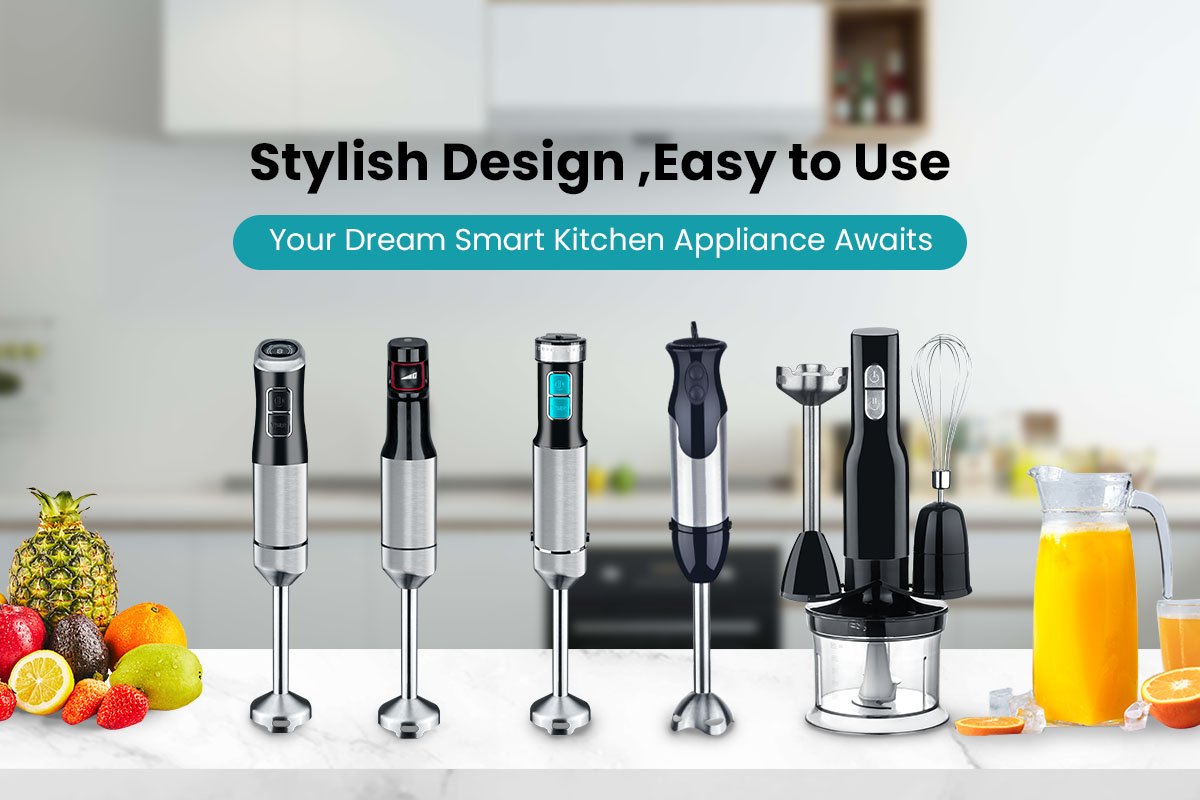
In the kitchen appliance sourcing market, buyers often face two options: purchasing Hand Blenders from a trading company or cooperating directly with a manufacturer. For distributors, wholesalers, and project buyers, sourcing directly from a factory provides stronger control over product quality, customization capability, and supply stability.
Manufacturer Vs Trading Company
A real blender manufacturer operates its own production facilities, engineering teams, and assembly lines. This allows the factory to control product design, production processes, and quality inspection systems. Buyers can communicate directly with engineers and production managers, which improves efficiency when adjusting product specifications or solving technical issues.
Trading companies usually purchase finished products from different factories and resell them. Because they do not control the production process, their ability to customize products or manage quality consistency is often limited.
OEM And ODM Capability
Factories specializing in hand blenders usually support OEM and ODM development. Manufacturers can adjust motor power, blade structures, housing materials, and product configurations according to customer requirements.
For brand owners, ODM services allow the development of customized blender models with unique designs and functional structures, helping companies create differentiated products in competitive markets.
Manufacturing Process And Quality Control
Professional manufacturers follow structured production procedures. The process typically includes raw material inspection, motor assembly, blade installation, product assembly, and performance testing.
Quality control checkpoints are implemented throughout production. Incoming materials such as motors and stainless steel blades are inspected before production, while finished products undergo performance testing to ensure stable blending performance and operational safety.
Material Standards Used
High-quality hand blenders usually use stainless steel blades and durable blending shafts to ensure corrosion resistance and long-term performance. Stable motor systems and reinforced housing materials help maintain reliable operation during daily kitchen use.
Factories that control their own material sourcing and production lines can maintain consistent material standards across large production batches.
Bulk Supply And Export Compliance
Direct factory sourcing also provides stronger bulk supply capability. Manufacturers with integrated production lines can maintain consistent product specifications and coordinate delivery schedules for large orders.
In addition, export-oriented factories typically produce products that meet international compliance requirements, helping buyers ensure smoother entry into overseas markets.
Conclusion
Sourcing hand blenders directly from a manufacturer offers clear advantages in customization capability, production transparency, quality control, and supply reliability. For wholesalers, distributors, and brand owners, working directly with a factory creates a more stable and efficient supply chain for long-term market development.