




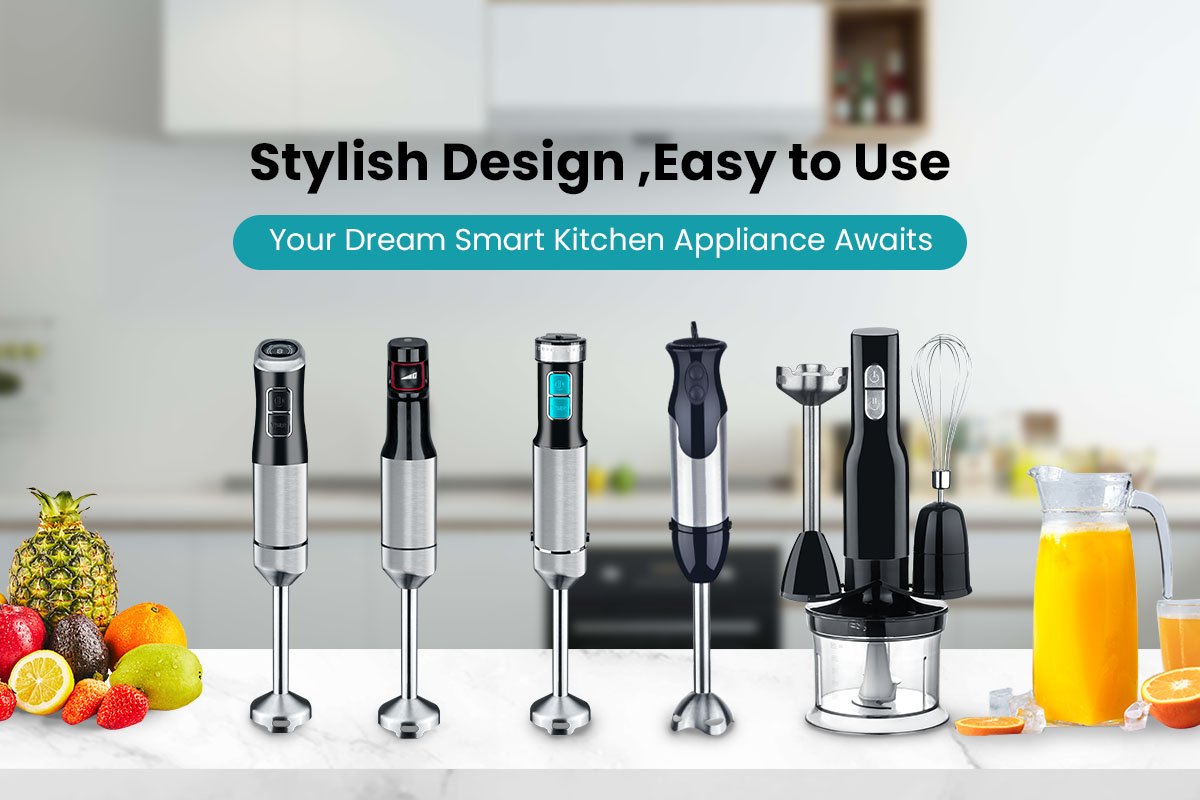
For distributors, retailers, and brand owners entering the kitchen appliance market, private label blenders are commonly produced through an OEM manufacturing process. OEM production allows buyers to sell blenders under their own brand while the manufacturer handles product design adjustments, manufacturing, and quality control. Understanding how this process works helps buyers manage product development and bulk sourcing more efficiently.
Product Requirement Confirmation
The OEM process usually begins with confirming the buyer’s product requirements. Importers provide specifications related to product type, motor power, blending capacity, housing material, and accessory configuration.
Manufacturers evaluate these requirements and recommend suiTable Blender models or structural adjustments. At this stage, discussions may include product positioning, target market regulations, packaging design, and expected order quantities.
Clear requirement confirmation ensures that the final product matches the buyer’s brand strategy and market needs.
Product Design And Customization
After confirming the product requirements, the manufacturer proceeds with product customization. This stage may include adjustments to the blender’s appearance, control system, blade structure, or motor configuration.
Private label projects typically involve adding brand logos, modifying housing colors, adjusting packaging design, and selecting accessory combinations such as blending jars or attachments.
Manufacturers with in-house engineering teams can also support deeper customization, including structural design adjustments or new product mold development.
Sample Development And Testing
Once the product design is finalized, the manufacturer prepares sample units for evaluation. Samples allow buyers to test the blender’s performance, blending efficiency, noise levels, and structural durability.
During this stage, manufacturers may perform internal testing procedures such as motor endurance testing, blade durability testing, and operational stability evaluation. These tests ensure that the product meets performance expectations before mass production begins.
Buyers typically review the sample carefully and confirm whether any adjustments are required.
Mold Preparation And Production Setup
If the project requires customized product structures or new external designs, the manufacturer prepares the necessary molds and production tools. Mold preparation is essential for producing consistent housing components and structural parts.
After molds are finalized, the factory prepares the production line, organizes component sourcing, and schedules manufacturing timelines. This preparation stage ensures that large production batches can be produced efficiently and consistently.
Mass Production And Assembly
Once production preparation is complete, the factory begins mass production. Blender manufacturing typically includes several stages such as component inspection, motor assembly, blade installation, housing assembly, and final product assembly.
Each stage follows structured production procedures to ensure that the product meets technical specifications. Factories specializing in kitchen appliances usually operate multiple production lines to support large OEM orders.
Quality Control And Product Testing
Quality control is a critical part of OEM production. Manufacturers normally implement several inspection checkpoints during production.
Incoming materials such as motors, stainless steel blades, and electronic components are inspected before entering the production line. In-process inspections verify assembly accuracy and electrical safety. Finished products undergo operational testing to confirm blending performance and safety mechanisms.
These inspection systems help maintain consistent product quality across bulk orders.
Packaging And Export Preparation
After production and testing are completed, the factory prepares the products for shipment. This stage includes customized packaging, brand labeling, and export documentation preparation.
Manufacturers experienced in international markets ensure that products comply with electrical safety standards and other regulatory requirements before export. Proper packaging and documentation help ensure smooth transportation and customs clearance.
Conclusion
The OEM process for private label blenders involves several key stages including requirement confirmation, product customization, sample testing, mold preparation, mass production, quality inspection, and export preparation.
By cooperating directly with a professional kitchen appliance manufacturer, brand owners and distributors can develop customized blender products while ensuring stable production quality and reliable bulk supply for their target markets.