




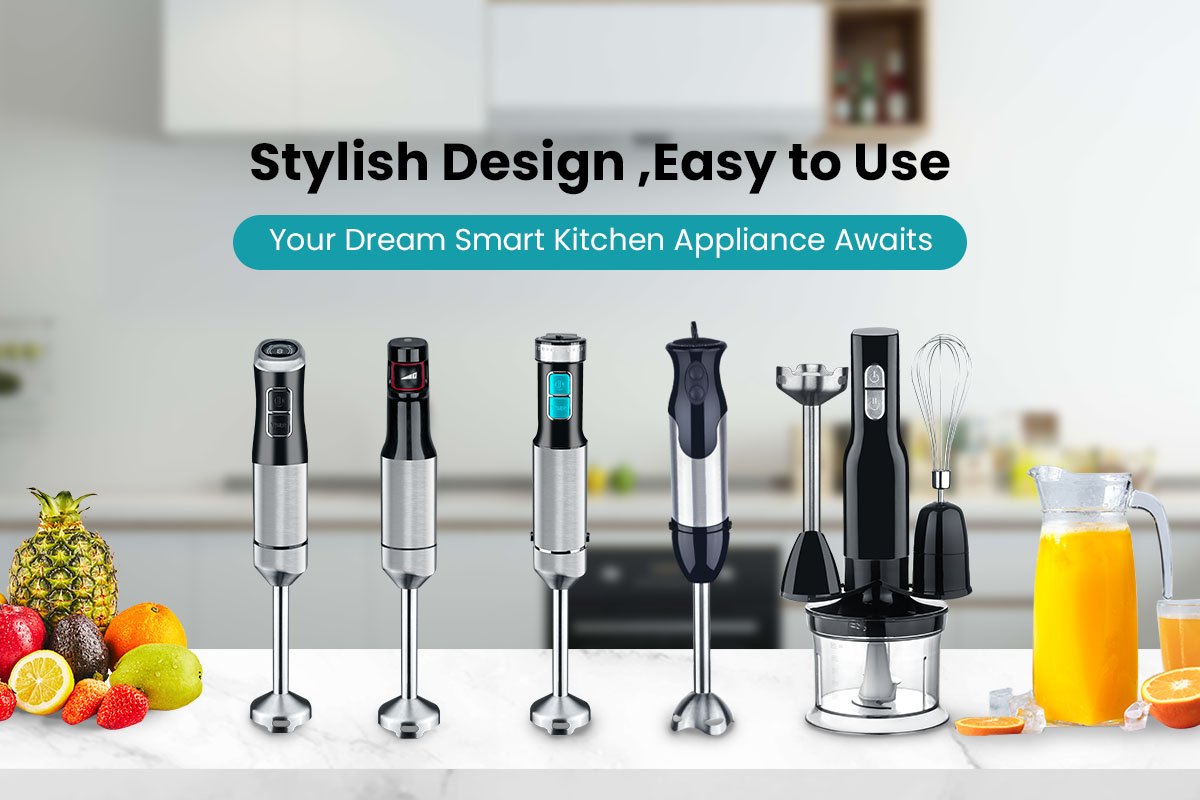
For buyers developing private label kitchen appliances, OEM customization is not limited to adding a logo. A professional manufacturer can usually support product appearance changes, functional adjustments, packaging design, and compliance-oriented modifications. For brands sourcing Hand Blenders, Table Blenders, and related small appliances, this flexibility is important for building differentiated products and matching target market requirements. KANGJIA presents itself as a manufacturer integrating development, production, and sales, with product coverage including hand blenders, table blenders, Nutrition Blenders, and mini choppers, which supports broader OEM project coordination.
Appearance Customization
OEM buyers can usually customize housing color, surface finish, button layout, logo placement, and product appearance details. This helps importers and brand owners align the appliance with their market positioning and retail style.
Functional Configuration
A real factory can often adjust motor power, speed levels, blade structure, attachment combinations, and control functions based on project needs. For hand blenders, this may include whisk attachments, chopper bowls, beakers, or different shaft structures for multi-function use. KANGJIA’s site repeatedly highlights hand blender platforms with attachment options and motor-focused engineering considerations, which is a useful sign for functional OEM development.
Structural And Material Options
OEM projects may also involve changes to stainless steel parts, food-contact plastic components, shaft structure, and container materials. These adjustments matter for durability, food safety, and different price-level strategies. The site also references compliance-related material expectations and certifications such as LFGB, CE, CB, and RoHS for export-facing programs.
Packaging And Branding
Most OEM kitchen appliance projects include customized color boxes, manuals, labels, carton marks, and private label branding. This is essential for distributors, wholesalers, and retail channel buyers who need a complete market-ready product instead of only the appliance itself.
Compliance And Market Adaptation
Professional manufacturers should also support plug standards, labeling details, language versions, and certification alignment for different export markets. KANGJIA states international certifications and export-oriented quality control, which is relevant for buyers planning overseas distribution.
Conclusion
OEM kitchen appliance customization usually covers appearance, functions, materials, accessories, packaging, and export compliance details. For project buyers, the best supplier is not the one offering only logo printing, but the one with real production, testing, and engineering support that can turn a standard appliance into a market-specific product.