




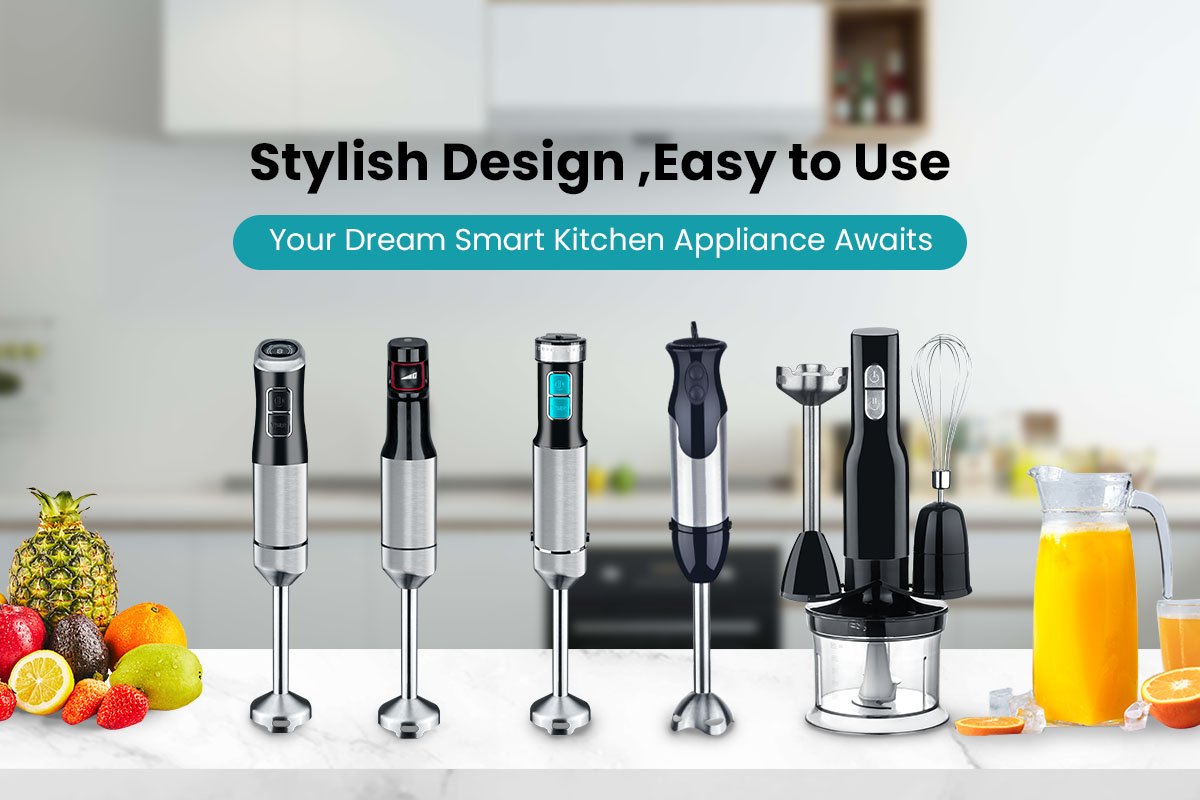
Retail chains and large distributors require stable supply when sourcing kitchen appliances such as blenders. Before establishing long-term partnerships, buyers usually evaluate whether a supplier has sufficient production capacity to support continuous large-volume orders. This evaluation typically focuses on several key aspects including factory infrastructure, production systems, quality management, and bulk supply experience.
Factory Infrastructure And Production Facilities
One of the first indicators retail buyers examine is the supplier’s manufacturing infrastructure. A professional blender manufacturer usually operates multiple production workshops such as injection molding workshops, hardware processing workshops, motor assembly areas, and final assembly lines.
Integrated production facilities allow the factory to control the full manufacturing process. This reduces reliance on external suppliers and improves production stability when handling large orders from retail chains.
Buyers often request factory information, production line details, or factory audit reports to confirm the existence of these facilities.
Production Line Capacity
Retail chains also review the number of production lines and the overall production layout of the factory. Manufacturers with multiple assembly lines can run several product models simultaneously, which is important for large procurement programs.
Production line organization, workforce allocation, and manufacturing efficiency all influence the factory’s output capability. Suppliers with structured assembly lines and standardized workflows usually demonstrate stronger capacity to support large retail orders.
Manufacturing Process Management
A well-organized manufacturing process is another important evaluation factor. blender production typically includes stages such as raw material inspection, motor assembly, blade installation, housing assembly, and final product testing.
Retail buyers look for factories that divide these stages into clear production zones and maintain standardized operating procedures. Efficient production workflows help maintain consistent output and reduce manufacturing errors.
Quality Control Systems
Large retail chains place strong emphasis on quality control. High production capacity must be supported by reliable inspection procedures to ensure product consistency across large batches.
Manufacturers normally implement several inspection checkpoints during production. Incoming materials such as motors and stainless steel blades are inspected before production begins. In-process inspections verify assembly accuracy and electrical safety, while finished products undergo operational testing.
Factories with structured quality management systems are more capable of maintaining stable quality during high-volume production.
Bulk Order Experience
Retail chains also consider the supplier’s experience handling bulk export orders. Manufacturers that regularly supply large distributors, wholesalers, or international markets typically have stronger production scheduling and supply chain coordination.
Experience with large orders demonstrates that the factory can maintain stable production output while managing logistics and delivery timelines.
Export Compliance And Documentation
For international retail chains, compliance with safety and regulatory standards is also critical. Blender suppliers must produce appliances that meet relevant electrical safety and material regulations for the target markets.
Manufacturers experienced in export markets usually maintain the necessary documentation and testing procedures to support international product compliance.
Conclusion
Retail chains evaluate blender suppliers by examining production infrastructure, assembly line capacity, manufacturing workflow organization, quality control systems, and bulk order experience.
Suppliers that operate integrated production facilities and maintain structured manufacturing management systems are better positioned to support large retail procurement programs. For retail buyers, selecting a supplier with strong production capability ensures reliable long-term supply and consistent product quality.