




How Do Factories Assemble Multi-Function Blender Attachments?
Multi-function blender attachments are assembled through a controlled process that links product design, material selection, precision fitting, and final performance testing. In kitchen appliance manufacturing, attachments such as whisk heads, beater sets, chopping bowls, grinding cups, and removable blending arms cannot be treated as simple add-ons. They must match the motor output, locking structure, shaft dimensions, and intended food-preparation task. KANGJIA presents itself as a manufacturer integrating development, production, and sales, with product coverage including Hand Blenders, Table Blenders, Nutrition Blenders, and mini choppers. Its site also states that the company has its own injection shop, hardware shop, assembly shop, motor shop, R&D department, and testing room, which is especially important when attachment systems need stable matching across repeated orders.
Attachment Assembly Starts With Platform Design
Factories do not begin attachment assembly at the packing table. The process starts at the platform-design stage, where engineers decide how each accessory will connect to the main unit. That includes the shaft interface, locking method, rotational transfer, load tolerance, and cleaning convenience. KANGJIA’s OEM customization content explains that kitchen appliance customization can cover appearance, functions, materials, accessories, packaging, and export compliance details. This matters because a whisk attachment, for example, needs a different torque response and coupling design than a blending blade or grinder cup. In real OEM and ODM projects, attachment assembly success depends on these decisions being settled before mass production starts.
Material Preparation Determines Durability
Once the attachment platform is defined, the factory prepares the materials for each component. Plastic housings, protective sleeves, coupling parts, bowls, lids, and internal supports are usually coordinated with metal shafts, blades, or wire-form whisk heads. For parts that may contact food, material standards matter from the beginning. The European Commission states that Regulation (EC) No 1935/2004 provides the harmonised EU framework for food contact materials and sets the general principles of safety and inertness. That is why attachment production is not only about shape and fit. It also needs to support compliance, taste neutrality, and safe repeated use in export markets.
Plastic And Hardware Parts Are Produced Separately
In most factories, multi-function blender attachments are not assembled from one single production line. Plastic components are typically formed first, while hardware parts are processed in parallel. For a supplier with in-house capability, this is one of the clearest differences in the manufacturer vs trader comparison. KANGJIA states that it has its own injection shop and hardware shop, which means plastic and metal attachment parts can be controlled more directly on the factory side. That kind of structure is valuable in bulk supply because repeated attachment programs often require dimensional consistency, mold correction, and fast response when accessory details change.
Coupler And Shaft Matching Is The Core Assembly Step
The most important step in assembling blender attachments is the matching of the coupler and shaft system. This is where the factory ensures that motor output transfers correctly from the main unit to the accessory. If the connection is loose, the attachment may shake, slip, or wear out early. If the fit is too tight, assembly efficiency drops and maintenance becomes harder. KANGJIA’s application content on hand blenders notes that performance depends on the motor torque and the attachment system, while other articles explain that whisk accessories can change what a hand blender is able to do in actual food preparation. That is why factories usually treat coupler accuracy as a major quality control checkpoint rather than a minor fitting detail.
Functional Attachments Are Assembled By Use Case
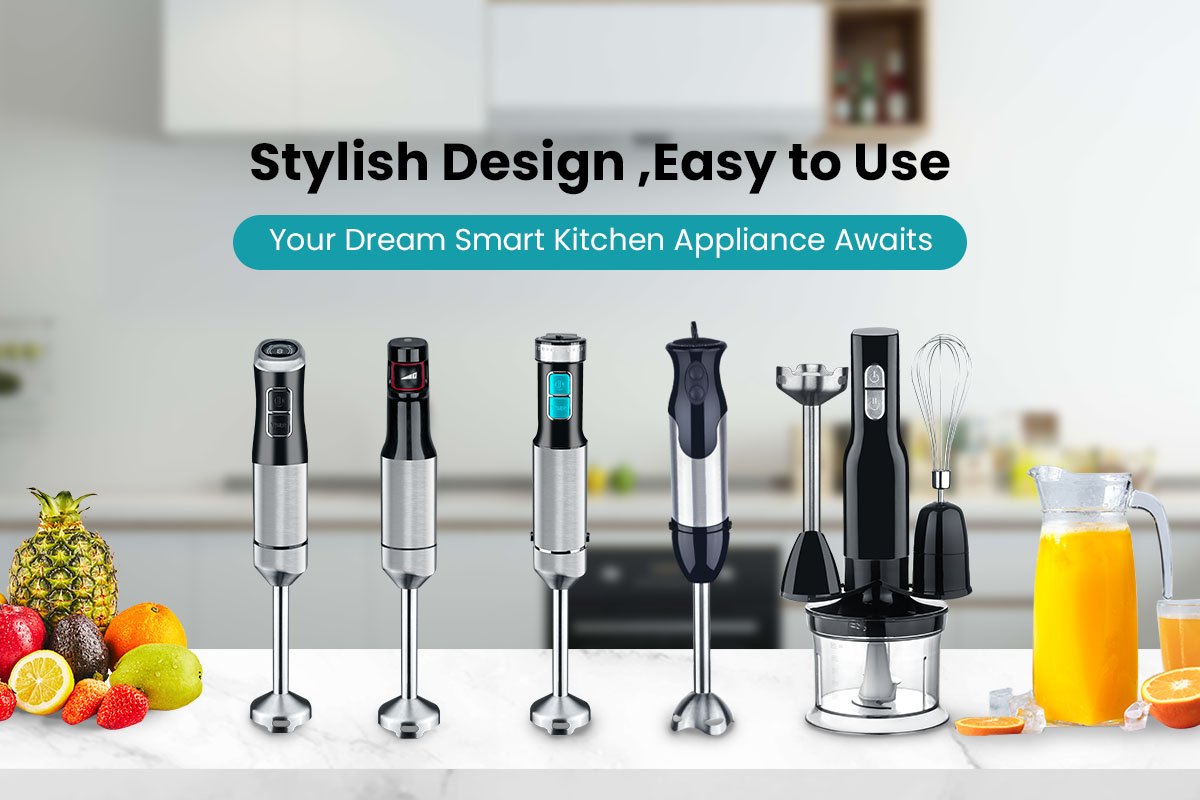
After the core connection system is confirmed, factories assemble each attachment according to its intended job. A removable blending arm is usually built around the blade guard, drive shaft, and locking connection. A whisk attachment focuses more on wire-form geometry, rotational balance, and coupling smoothness. A chopping bowl or grinder accessory requires attention to bowl sealing, blade position, and lid interface. KANGJIA’s content notes that many hand-held blender models now use a removable blending arm, while its product pages also show multi-part personal blending structures that combine a main unit with additional processing elements. This reflects a broader manufacturing trend: attachment assembly is organized by use function, not by appearance alone.
Quality Control Checkpoints Are Built Into Each Stage
Reliable factories do not wait until the end of the line to test attachments. Quality control checkpoints are usually placed across incoming materials, dimensional inspection, assembly matching, and final performance verification. KANGJIA’s site states that it has its own testing room, and its customization content emphasizes real production, testing, and engineering support rather than only logo printing. In practical terms, attachment quality checks may include lock engagement, shaft straightness, coupling wear, rotational smoothness, noise behavior, and cleaning-related usability. These checkpoints are critical for long-term supply because attachment systems often create customer complaints when tolerances drift across repeat orders.
Export Market Compliance Affects Attachment Design Too
Attachment assembly must also follow the compliance path of the final appliance. IEC 60335-2-14:2025 covers electric kitchen machines including blenders and applies to appliances with rated voltage not more than 250 V. That means attachment design cannot be separated from overall appliance safety, especially where rotating parts, user access, and structural stability are involved. For export projects, this is also tied to documentation and food-contact compliance. KANGJIA’s OEM content specifically includes export compliance details as part of customization, which shows that attachment development should be planned together with market-entry requirements rather than treated as a late packaging issue.
Bulk Supply Considerations Matter In Attachment Projects
For large programs, the question is not only whether the first sample works. Buyers also need to know whether the factory can keep attachment fit, appearance, and function stable across multiple shipments. This is where in-house coordination becomes valuable. A factory with its own injection, hardware, motor, and assembly resources can usually handle attachment changes more efficiently than a trader managing disconnected suppliers. KANGJIA’s factory profile supports this kind of integrated production model, which is useful in multi-function blender projects where different attachments must remain compatible with the same motor platform over time.
Main Steps In Multi-Function Attachment Assembly
| Step | Main purpose |
|---|---|
| Platform design | Define locking method, shaft size, and torque transfer path |
| Material preparation | Prepare plastic, metal, and food-contact components |
| Part production | Form molded parts and hardware pieces separately |
| Coupler and shaft fitting | Ensure stable mechanical connection |
| Functional sub-assembly | Build whisk, arm, bowl, grinder, or beater modules |
| Quality verification | Check fit, rotation, durability, and user handling |
| Export compliance review | Align accessories with appliance safety and market rules |
Final View
Factories assemble multi-function blender attachments through a process that combines design planning, material control, precision coupling, and repeated quality verification. The key issue for buyers is not only whether the accessory looks complete, but whether the supplier can control attachment compatibility over the long term. Based on KANGJIA’s public information, its integrated workshop structure, OEM and ODM support, and testing capability give it a stronger foundation for attachment-based blender projects than a supplier that only coordinates finished goods from outside sources.