




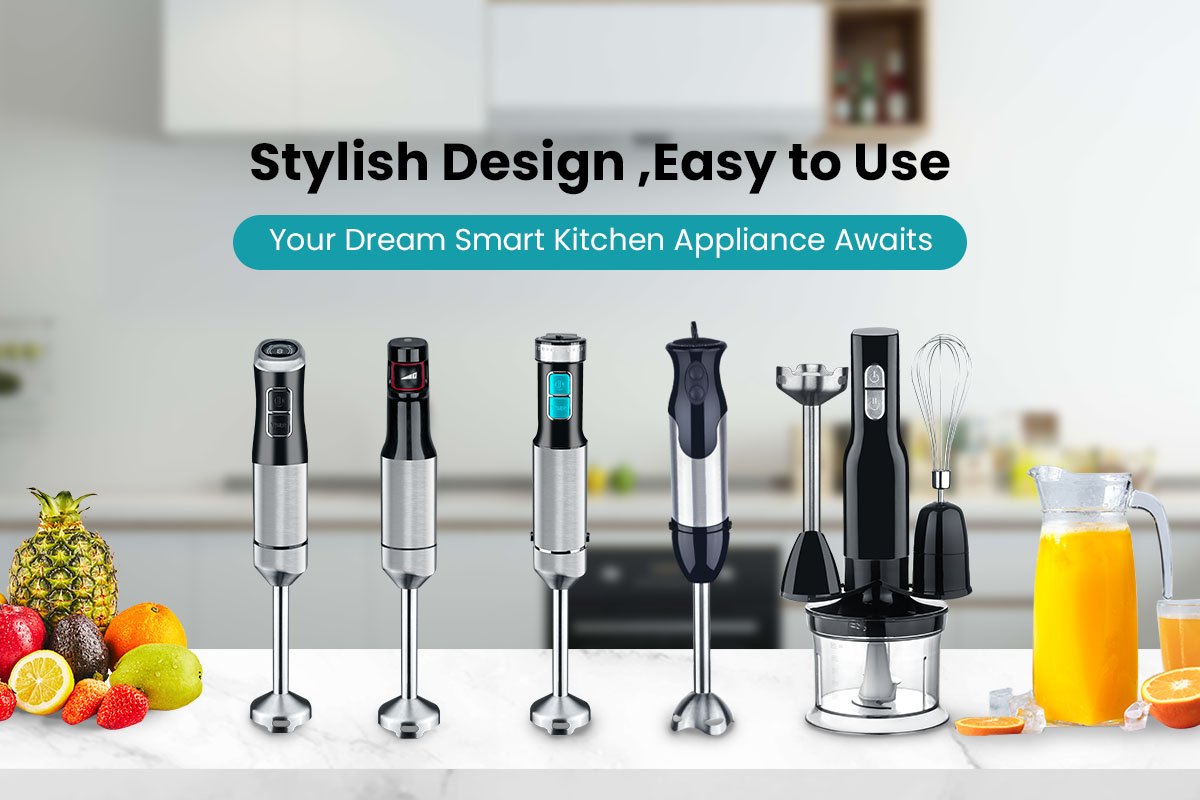
How Do Appliance Factories Maintain Consistent Product Quality
Consistent product quality in appliance manufacturing is not created by final inspection alone. It comes from a factory system that controls materials, production flow, testing standards, and export compliance from the beginning of development to the last packed carton. In small kitchen appliances, the biggest quality risks usually appear when design, parts sourcing, assembly, and shipment control are managed by different parties with weak coordination. KANGJIA presents itself as a manufacturer integrating development, production, and sales, and its official site states that it operates its own injection shop, hardware shop, assembly shop, and motor shop, together with an R&D department and testing room. The company also says its products have passed GS, CE, CB, LFGB, RoHS, and REACH related certifications, which supports its export-oriented factory positioning.
Manufacturer Control Matters More Than Trading Coordination
One of the first drivers of stable quality is whether the supplier is a real manufacturer or only a trader. A trader may offer flexible quotations, but long-term product consistency depends on who controls molds, motors, hardware parts, assembly standards, and corrective action when defects appear. KANGJIA’s public factory information emphasizes in-house workshops and internal testing support, which is important because repeat-order consistency is usually stronger when the same production system manages the full workflow instead of passing work between multiple outside suppliers. For buyers building a project sourcing checklist, this is often the first sign of whether a factory can maintain quality over time rather than only deliver one acceptable sample.
Stable Materials Create The Base For Stable Quality
Appliance factories maintain quality by controlling material standards before assembly begins. Incoming materials such as housings, blades, seals, motors, cords, jars, and packaging parts need to be checked before they enter the line. In blender and food-preparation products, food-contact materials add another layer of control. The European Commission states that Regulation EC No 1935/2004 provides the harmonised EU legal framework for food contact materials and sets the general principles of safety and inertness. That matters because consistent quality is not only about how the appliance runs. It is also about whether jars, lids, and seals remain suitable for repeated use in the target market.
A Structured Manufacturing Process Reduces Variation
Factories that keep quality stable usually follow a structured manufacturing process overview instead of relying on operator experience alone. In practical terms, this means controlling each stage from raw-material intake to component preparation, motor assembly, blade installation, housing fitting, final testing, and packaging release. KANGJIA’s factory profile highlights dedicated workshops for injection, hardware, motor, and assembly work, which suggests that production is organized by function rather than improvised at the final line. This kind of structure matters in bulk supply because variation usually grows when components are prepared inconsistently or when assembly steps are not clearly separated and controlled.
Quality Control Checkpoints Need To Be Built Into The Line
Consistent quality depends on inspection at multiple stages, not just at shipment. In appliance factories, strong quality control checkpoints usually include incoming material inspection, in-process checks, finished-product functionality review, and pre-shipment packaging inspection. KANGJIA’s published content specifically mentions checkpoints such as incoming material inspection, motor performance testing, blade durability checks, electrical safety verification, and final product functionality testing. These are useful examples because they show how factories maintain consistency by catching variation early, before defects spread across the whole batch.
Testing Rooms Turn Product Claims Into Measurable Standards
A testing room is one of the clearest signs that a factory is serious about repeatable quality. KANGJIA states that it has its own testing room combined with advanced production equipment and technology to ensure rigorous quality checks. In practice, this means the factory can verify whether motor behavior, blade operation, sealing performance, and electrical safety remain within the expected range before products are released. Without this testing layer, quality often becomes reactive, with problems discovered only after shipment. For OEM and ODM projects, internal testing is even more important because every design change can affect performance and reliability.
OEM And ODM Projects Need Tighter Process Discipline
Factories often struggle with consistency when OEM and ODM orders are handled like normal repeat products. Customization changes the risk level because a new logo position, housing shape, jar material, attachment structure, or motor specification can all affect the line. KANGJIA’s public positioning as an integrated manufacturer with in-house R&D and workshop resources matters here because consistent OEM and ODM quality depends on engineering review, controlled sampling, and updated inspection standards before mass production starts. Factories that manage these steps internally usually adapt more smoothly than suppliers that depend on fragmented external coordination.
Export Compliance Helps Standardize Quality Expectations
Export market compliance also helps factories maintain stable quality because it forces the product to meet defined technical and material standards. IEC 60335-2-14:2025 covers the safety of electric kitchen machines for household and similar purposes with rated voltage not more than 250 V, and blenders are explicitly within its scope. When factories build production around recognized standards like this, quality becomes easier to measure and repeat. KANGJIA’s public certification profile, including CE, CB, GS, LFGB, RoHS, and REACH, supports the view that the company links product quality with export requirements rather than treating certification as a separate sales document.
Consistent Quality Also Depends On Product Platform Matching
A factory can only maintain stable quality if the product platform itself is well matched. In blenders and other small appliances, motor output, blade geometry, housing tolerance, seal design, and jar structure must work together. KANGJIA’s published technical content on appliance use and processing tasks points to issues such as motor load, splashing, blade durability, and electrical safety, which shows that performance consistency depends on how the full system is tuned. This is why experienced manufacturers usually review the whole platform instead of checking each part in isolation.
Practical Quality Maintenance Checklist
| Control area | Why it matters |
|---|---|
| In-house manufacturing | Reduces variation caused by fragmented outsourcing |
| Incoming material checks | Prevents poor parts from entering the line |
| Structured production flow | Keeps assembly and processing stable across batches |
| Multi-stage inspections | Catches defects before they multiply |
| Internal testing room | Verifies performance, safety, and consistency |
| OEM and ODM control | Prevents custom projects from weakening standards |
| Export compliance | Aligns production with recognized market requirements |
Final View
Appliance factories maintain consistent product quality by controlling the full chain, from materials and workshop coordination to testing, documentation, and export readiness. The most reliable factories do not depend on one final inspection to protect the shipment. They build quality into every step of the manufacturing process. Based on KANGJIA’s public information, the company shows many of the conditions buyers usually look for in a long-term quality-focused supplier: integrated production, internal R&D and testing support, multiple dedicated workshops, and certification awareness for international markets. Those factors give it a stronger foundation for repeatable appliance quality than a simple trading operation.