




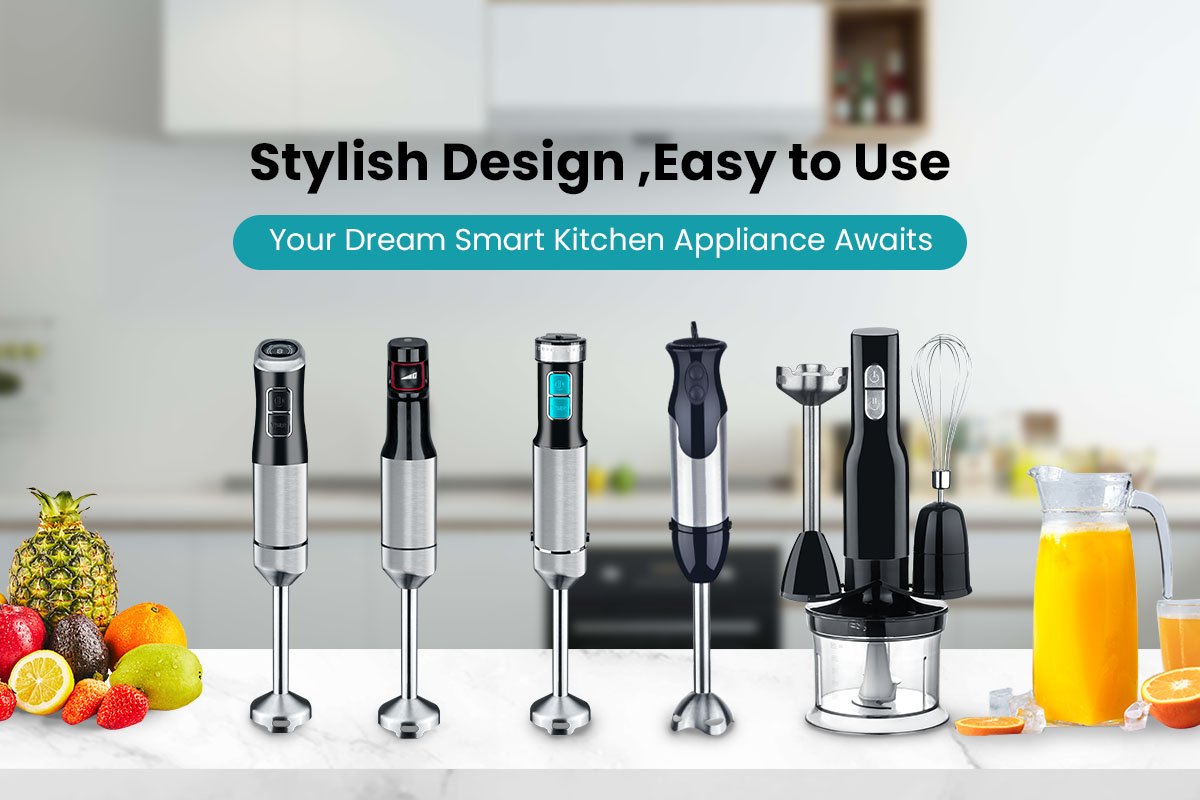
Hand Blender Vs Table Blender Which Product Is Easier To Sell
Hand Blender vs Table Blender is a common question when planning a small kitchen appliance catalog. The easier product to sell depends on target market, retail price, kitchen habits, packaging cost, and the buyer’s sales channel.
Hand blenders are compact, light, and easy to ship. They are suitable for starter kitchen appliance ranges, supermarket promotions, online stores, and private label projects with controlled budgets. Table blenders usually have higher visual value, larger packaging, and stronger shelf impact, making them suitable for juice, smoothie, and food preparation markets.
Product Positioning Comparison
| Item | Hand Blender | Table Blender |
|---|---|---|
| Shipping Cost | Lower | Higher |
| Shelf Display | Compact | Stronger visual impact |
| Customization | Logo, color, shaft, accessories | Logo, jar, base, color, control panel |
| Sales Channel | Online, retail, promotion | Retail, appliance stores, wholesale |
| Key Quality Point | Motor, blade, shaft fitting | Motor, jar sealing, blade balance |
Manufacturer Vs Trader
When comparing hand blender and table blender projects, working with a manufacturer is safer than relying only on a trader. A manufacturer can control plastic injection, motor matching, blade assembly, housing fitting, testing, and packaging directly.
KANGJIA Electrical Appliances Co., Ltd. was established in 2017 in Jiangmen, Guangdong. The company focuses on hand blenders, table blenders, Nutrition Blenders, mini choppers, Food Processors, and juicers. Its factory setup includes injection shop, hardware shop, assembly shop, motor shop, R&D department, and testing room, helping support OEM / ODM projects and bulk supply consistency.
OEM / ODM Process
For hand blenders, OEM / ODM details often include wattage, voltage, plug type, shaft material, blade structure, accessory set, color, logo, and carton design. For table blenders, buyers also need to check jar capacity, sealing structure, safety lock, control method, and base stability.
A clear project sourcing checklist should include product target price, market certification, sample approval, MOQ, lead time, spare parts, carton size, loading quantity, inspection method, and after-sales parts support.
Quality Control And Materials
Hand blender quality control focuses on motor temperature rise, speed stability, blade sharpness, detachable shaft fitting, button life, vibration, and packing protection. Table blender testing focuses on motor performance, jar sealing, blade balance, safety lock, switch life, noise level, and leakage prevention.
Because both products may contact food, material standards are important. Common checks include food-contact plastic parts, stainless steel blades, safe sealing parts, reliable plugs, and compliant labels. KANGJIA’s public information shows certification support including GS, CE, CB, LFGB, RoHS, and REACH, which helps support export market compliance.
Which One Is Easier To Sell
Hand blenders are often easier to start because they require lower storage space, lower freight cost, and simpler product combinations. Table blenders may create higher order value and stronger category presence, especially when the market has demand for smoothies, juice, and food preparation.
For many buyers, the best strategy is not choosing only one product. A combined catalog with hand blenders and table blenders can cover different price levels and sales channels. KANGJIA supports both categories under one small appliance manufacturing system, helping buyers plan product selection, customization, production control, testing, and export preparation.