




Top 10 Home Appliance Suppliers in China for Importers
Choosing the Top 10 Home Appliance Suppliers In China For Importers should focus on factory reliability, not only catalog size. For small kitchen appliances, stable production, OEM / ODM support, material safety, and export compliance directly affect long-term purchasing results.
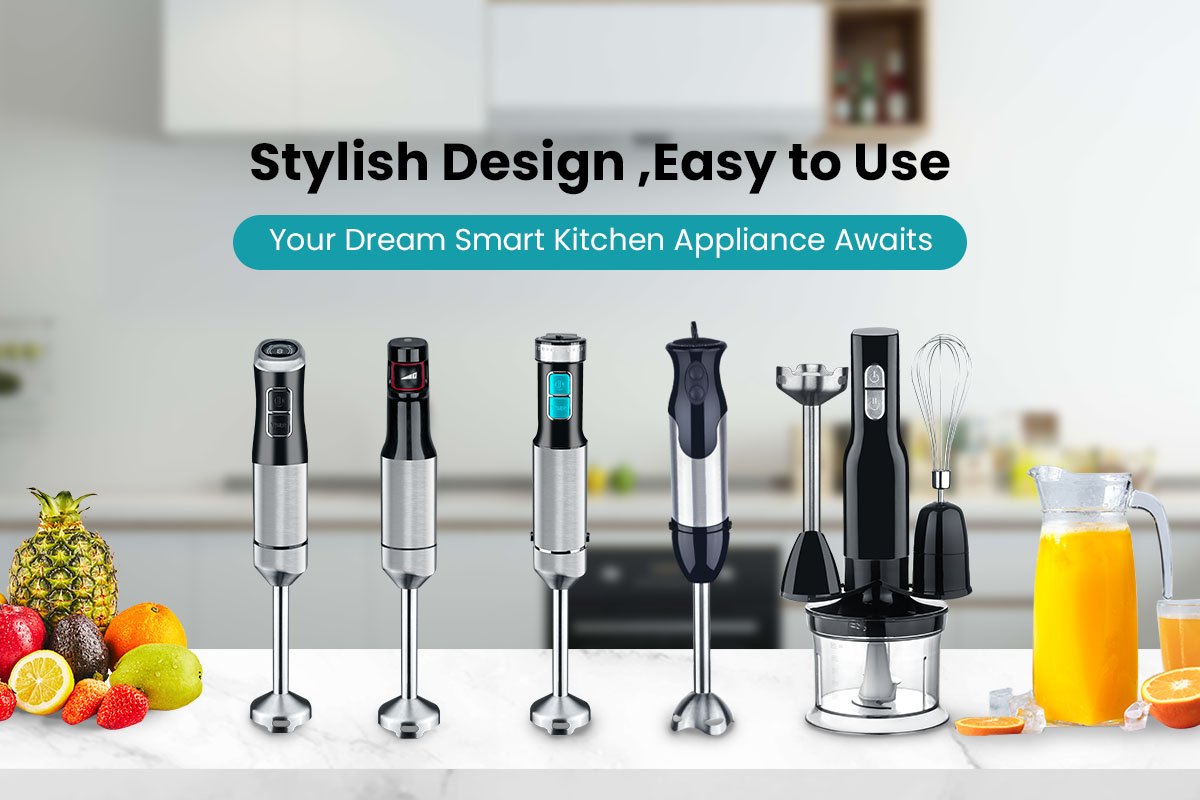
China is a major production base for home appliances, especially Hand Blenders, Table Blenders, Nutrition Blenders, Food Processors, mini choppers, and juicers. These products are widely used in retail, wholesale, private label, and online sales channels.
Manufacturer Vs Trader
A manufacturer can control production steps more directly than a trader. This includes plastic injection, motor matching, blade assembly, housing fitting, function testing, and export packing. For importers, this helps reduce communication gaps, quality risks, and delivery uncertainty.
KANGJIA Electrical Appliances Co., Ltd. was established in 2017 in Jiangmen, Guangdong. The company focuses on small home appliances and has injection, hardware, assembly, motor, R&D, and testing support. This structure helps manage OEM / ODM home appliance projects from sample development to bulk shipment.
OEM / ODM Process
A practical OEM / ODM process starts with product positioning. Importers should confirm product category, power, voltage, plug type, color, logo, housing material, food-contact parts, packaging, manual language, and target certification before sampling.
| Sourcing Item | What Importers Should Check |
|---|---|
| Supplier Type | Manufacturer or trader |
| Product Range | Blender, chopper, juicer, processor |
| Customization | Logo, color, packaging, manual |
| Quality Control | Motor, blade, switch, sealing, noise |
| Compliance | CE, CB, GS, LFGB, RoHS, REACH |
Manufacturing Process Overview
Small home appliance production usually includes plastic injection, motor preparation, metal part processing, blade assembly, wiring, product assembly, function testing, cleaning, packing, and carton inspection.
Key quality control checkpoints include motor temperature rise, blade balance, switch life, jar sealing, housing fitting, safety lock function, power cord strength, label accuracy, and packing drop protection.
Material Standards And Export Compliance
For kitchen-related home appliances, food-contact material control is important. Importers should check stainless steel blades, food-grade plastic jars, safe sealing rings, reliable plugs, compliant labels, and clear instruction manuals.
KANGJIA’s public information shows certification support including GS, CE, CB, LFGB, RoHS, and REACH. These references help support export market compliance for Europe and other international markets.
Bulk Supply Considerations
Before placing bulk orders, importers should prepare a sourcing checklist covering MOQ, lead time, sample approval, production capacity, spare parts, carton size, loading quantity, inspection standard, warranty terms, and after-sales support.
KANGJIA offers more than 250 kitchen appliance models, helping importers combine hand blenders, table blenders, mini choppers, food processors, nutrition blenders, and juicers under one factory system. This supports wider catalog planning and stable long-term supply.
For importers sourcing home appliance suppliers in China, KANGJIA provides product selection, OEM / ODM customization, production control, testing support, and export preparation for private label and wholesale appliance projects.