




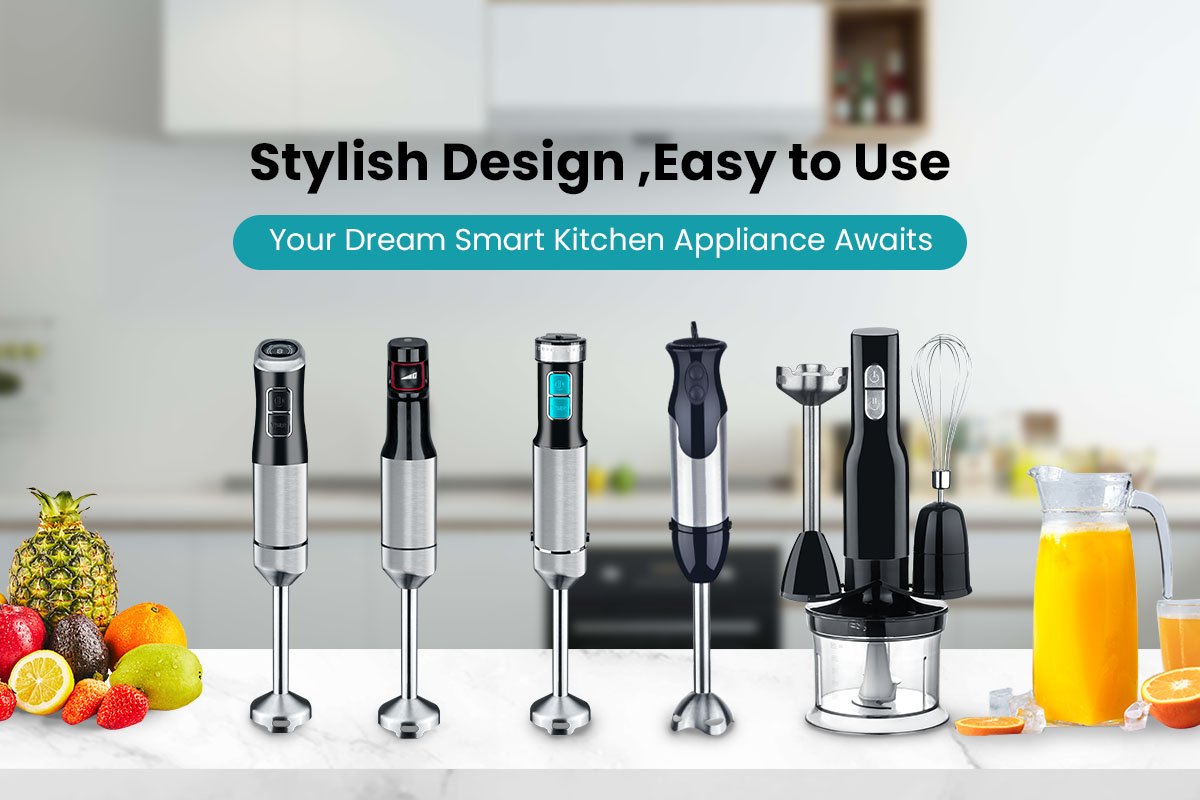
Top 10 Stainless Steel Blender Manufacturers In China
China has become a major global manufacturing base for stainless steel blenders, supported by strong supply chains in motors, stainless steel forming, blade machining, and electrical control systems. According to global small appliance trade statistics, stainless steel kitchen appliances continue to grow in demand due to durability, hygiene performance, and export compliance requirements in food safety markets.
This article explains how Stainless Steel Blender manufacturers operate and what defines a reliable ODM supplier in this category.
What Defines A stainless steel blender Manufacturer
A stainless steel blender manufacturer is responsible for full product engineering, including motor design, blade system optimization, jar material selection, and safety control integration. Stainless steel models require higher precision in sealing structure, vibration control, and thermal resistance compared with plastic housing designs.
Industry engineering benchmarks show that stainless steel blender jars can extend product lifespan by more than 40 percent compared with standard plastic containers under repeated high speed blending cycles.
Core Manufacturing Process Overview
ODM blender production follows a structured engineering and manufacturing system:
Product design and structural development
Motor system selection and testing
Stainless steel forming and polishing
Blade assembly and dynamic balancing
Electrical system integration
Functional testing under load conditions
Packaging and export compliance preparation
Each stage ensures performance stability and safety compliance for global markets.
Material Standards In Stainless Steel Blenders
Stainless steel used in blender manufacturing typically includes grades such as 304 and 316, depending on corrosion resistance requirements and food safety standards. Blade systems require hardened stainless steel to maintain cutting efficiency under high speed rotation.
Food contact material regulations in export markets require compliance with safety standards such as FDA food contact guidelines and EU food safety directives.
Manufacturer vs Trader Capability
A manufacturer vs trader comparison is critical in blender sourcing. A manufacturer controls motor design, stainless steel forming, blade balancing, and assembly testing. This ensures consistent performance across bulk production.
A trader depends on external factories, which may result in inconsistent motor performance, blade quality variation, and unstable electrical safety standards.
Quality Control Checkpoints
Key inspection stages include:
Motor speed stability testing under load
Blade sharpness and durability testing
Stainless steel corrosion resistance evaluation
Noise level and vibration testing
Electrical safety and insulation testing
Drop and transport simulation testing
These processes ensure export compliance and consistent product quality in mass production.
Stainless Steel Blender Performance Comparison
| Evaluation Factor | Low Grade Supplier | Standard Manufacturer | High End ODM Manufacturer |
|---|---|---|---|
| Motor stability | Low | Medium | High |
| Blade durability | Medium | High | Very high |
| Stainless steel quality | Basic | 304 grade | 304/316 grade |
| Noise control | Poor | Medium | Optimized |
| Export compliance | Limited | Stable | Fully certified |
OEM ODM And Bulk Supply Considerations
For international procurement, key sourcing factors include motor specification, stainless steel grade, blade hardness, safety certification, production capacity, packaging durability, and compliance documentation. A structured OEM and ODM process includes product design, sample testing, engineering validation, mass production, and final inspection.
KANGJIA Electrical operates an integrated ODM and OEM manufacturing system covering motor engineering, stainless steel processing, assembly, and quality control. Its production capability supports kitchen appliances and electrical products with stable performance across global bulk supply projects.
Industry Supply Evaluation Criteria
When selecting suppliers in China, buyers typically evaluate:
Engineering design capability
Stainless steel processing accuracy
Motor system reliability
Certification compliance such as CE and RoHS
Mass production consistency
OEM ODM flexibility
Manufacturing clusters in Guangdong and Zhejiang remain key global hubs for stainless steel small appliance production due to strong motor and metalworking supply chains.