




How To Choose Hand Blender Accessories for Different Sales Channels
Hand Blender accessories play an important role in product positioning, user experience, and market adaptability. Different sales channels may require different product combinations, packaging styles, and functional configurations.
A suitable accessory selection strategy helps improve product competitiveness while reducing unnecessary inventory complexity. For manufacturers, accessory design needs to consider application scenarios, production capability, quality control, and export requirements.
As a professional kitchen appliance manufacturer, KANGJIA focuses on integrated production, OEM and ODM development, and quality management. Our hand blender solutions are developed with flexible configurations to support different market requirements.
Why hand blender Accessories Matter
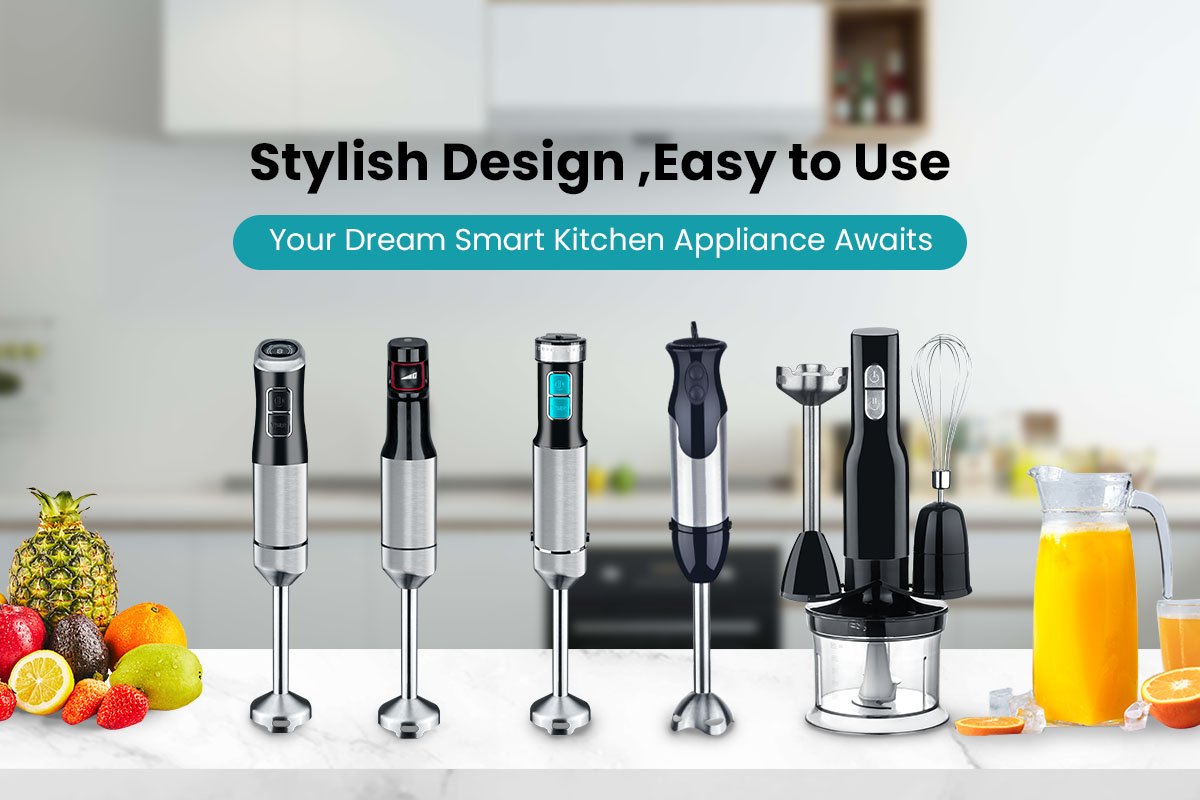
A hand blender is not only a motor unit. Accessories influence product functions, user experience, and market positioning.
Common accessories include:
| Accessory Type | Main Function |
|---|---|
| Blending shaft | Daily mixing and blending |
| whisk attachment | Beating and mixing ingredients |
| chopper attachment | Cutting vegetables and food preparation |
| Measuring cup | Supporting ingredient preparation |
| Storage solutions | Improving product organization |
According to the China Household Electrical Appliances Association, consumers are increasingly looking for multifunctional kitchen appliances because they help save space and improve convenience. This trend has increased demand for flexible appliance configurations.
Choose Accessories Based on Sales Channel Requirements
Different sales channels may focus on different product features. Manufacturers need to understand the expected application and customer needs before designing accessory combinations.
| Sales Channel | Suitable Accessory Strategy |
|---|---|
| Retail stores | Balanced functions and attractive packaging |
| Online platforms | Multiple functions and clear product presentation |
| Professional kitchen applications | Durable and practical accessories |
| Customized projects | Flexible accessory combinations |
Selecting the right accessory package helps avoid unnecessary costs while providing suitable product value.
Manufacturer vs Trader: Why Production Capability Matters
There is an important difference between working with a manufacturer and purchasing through a trader.
A trader usually focuses on product sourcing, while a manufacturer controls:
Product structure
Accessory design
Material selection
Production process
Quality inspection
At KANGJIA, we manage multiple production stages, including injection molding, hardware processing, motor production, assembly, and testing. This integrated manufacturing capability helps maintain consistency between the hand blender body and accessories.
Manufacturing Process Overview for Hand Blender Accessories
Accessory quality depends on accurate manufacturing control.
Material Selection
Different accessories require suitable materials based on their function.
Important considerations include:
Strength
Durability
Food contact safety
Surface quality
Mold Production and Injection Processing
Plastic accessories require accurate molds and controlled production parameters to maintain stable size and appearance.
Assembly Inspection
Manufacturers check whether accessories connect properly with the main blender unit.
Final Quality Testing
Finished accessories are inspected for:
Structural stability
Connection performance
Appearance quality
Usage reliability
OEM and ODM Process for Customized Accessories
Different markets may require customized accessory combinations, colors, packaging, and product functions.
A complete OEM and ODM process includes:
Requirement analysis
Accessory selection
Design confirmation
Prototype evaluation
Functional testing
Mass production
KANGJIA supports customized hand blender solutions by combining engineering experience with flexible manufacturing capabilities.
Quality Control Checkpoints for Accessories
Quality control should cover every accessory before products are shipped.
| Inspection Stage | Quality Focus |
|---|---|
| Incoming materials | Verify material standards |
| Mold inspection | Confirm production accuracy |
| Accessory assembly | Check compatibility |
| Function testing | Evaluate usability |
| Final inspection | Confirm shipment quality |
A complete inspection system helps reduce complaints caused by accessory defects.
Material Standards Used in Hand Blender Accessories
Material selection directly affects accessory durability and safety.
Important considerations include:
Plastic Components
Suitable food-grade materials help improve durability and user safety.
Metal Components
Metal parts require proper strength and corrosion resistance.
Connection Structures
Stable connection systems improve product reliability during repeated use.
KANGJIA manages material selection and manufacturing processes to maintain consistent product quality.
Bulk Supply Considerations for Hand Blender Projects
For large-volume orders, accessory selection should be evaluated together with production capability and supply management.
A practical project sourcing checklist includes:
| Evaluation Area | Key Questions |
|---|---|
| Factory capability | Can accessories be produced consistently? |
| Customization ability | Can combinations be adjusted? |
| Quality control | Are accessory inspections available? |
| Packaging support | Can sets be prepared efficiently? |
| Export experience | Can market requirements be supported? |
Reliable manufacturing systems help maintain stable quality across different product configurations.
Export Market Compliance
Hand blender accessories supplied internationally need to consider material safety, packaging requirements, labeling, and regional regulations.
KANGJIA supports products designed according to international requirements, including CE, CB, RoHS, and REACH standards. From accessory development to final packaging, each stage is managed to support reliable export supply.
Choosing the right hand blender accessories for different sales channels requires balancing product functions, market requirements, manufacturing capability, and quality control. Through integrated production resources, OEM and ODM experience, and professional testing systems, KANGJIA provides flexible hand blender solutions for global markets.