




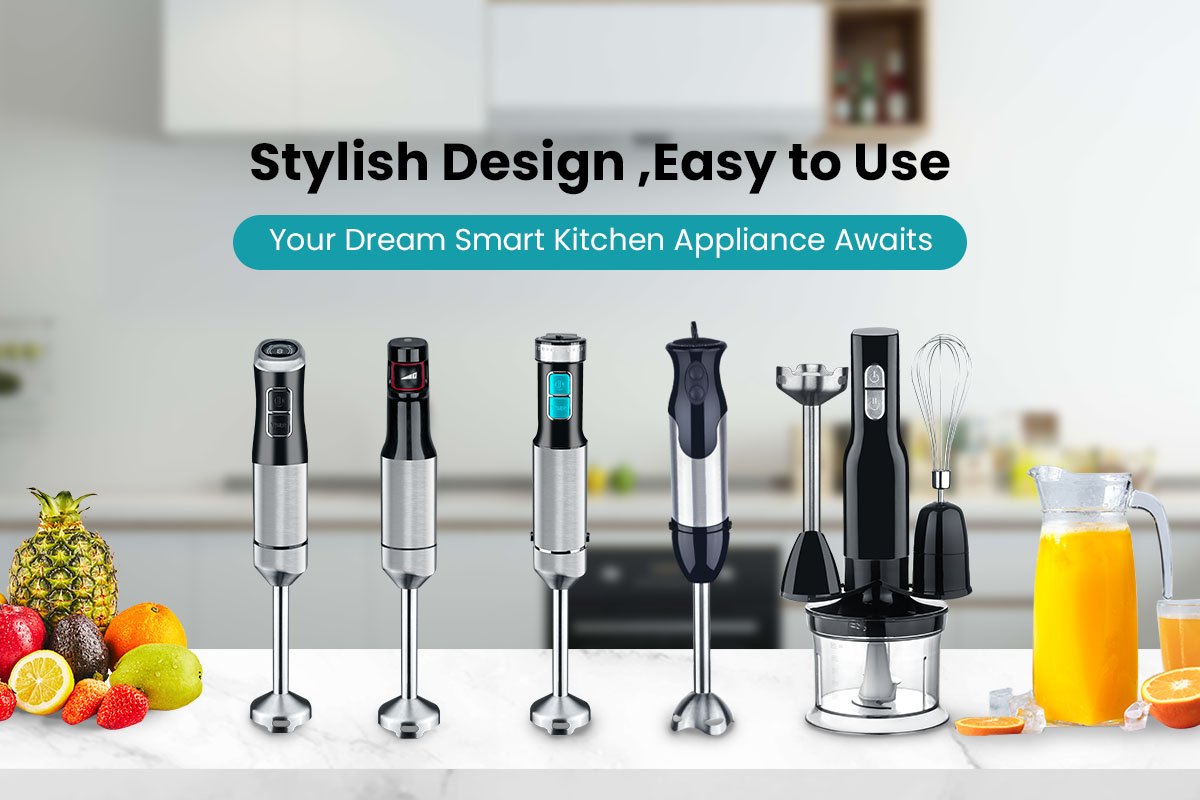
How To Select Blender Products for Online Retail And Wholesale Markets
Selecting the right blender products for online retail and wholesale markets requires careful evaluation of product performance, market demand, manufacturing capability, and supply reliability. A successful product strategy depends not only on attractive design but also on stable quality, suitable functions, and efficient production support.
For manufacturers, understanding different market requirements helps create products that balance performance, cost, and long-term reliability. As a professional kitchen appliance manufacturer, KANGJIA focuses on integrated production, OEM and ODM development, and strict quality management. Our blender products are designed to support different market applications with flexible customization options.
Key Factors When Selecting Blender Products
Different markets may require different blender features. Before selecting products, it is important to evaluate customer expectations, product positioning, and supply capability.
Important evaluation factors include:
| Evaluation Factor | Why It Matters |
|---|---|
| Product function | Determines market application |
| Motor performance | Affects blending efficiency |
| Product design | Influences market appeal |
| Quality stability | Reduces after-sales issues |
| Production capability | Supports continuous supply |
According to the China Household Electrical Appliances Association, the small appliance industry continues to develop with increasing demand for multifunctional and convenient kitchen products. This creates opportunities for manufacturers that can provide reliable and adaptable appliance solutions.
Choose Blender Types Based on Market Positioning
Different markets may require different blender categories.
Common product options include:
| Blender Type | Suitable Application |
|---|---|
| Hand Blender | Daily food preparation and flexible use |
| Table Blender | Household and commercial blending |
| Nutrition Blender | Healthy drinks and personal use |
| Food Processor | Multiple food preparation functions |
| Mini chopper | Compact kitchen applications |
Understanding product positioning helps avoid selecting unsuitable models for specific markets.
Manufacturer vs Trader: Why Production Capability Matters
There is an important difference between working with a manufacturer and purchasing through a trader.
A trader mainly focuses on product sourcing, while a manufacturer controls:
Product development
Component selection
Manufacturing process
Quality inspection
Customization support
At KANGJIA, we manage multiple production stages, including injection molding, hardware processing, motor production, assembly, and testing. This integrated approach helps maintain product consistency and production efficiency.
Manufacturing Process Overview of Blender Products
A reliable blender product requires control throughout the complete manufacturing process.
Material Preparation
Before production, manufacturers inspect:
Plastic materials
Motor components
Blade materials
Electrical parts
Structural components
This helps ensure materials meet product requirements.
Component Manufacturing
Key components are produced according to technical standards to maintain performance consistency.
Assembly Process
During assembly, manufacturers check:
Component installation
Electrical connections
Mechanical structure
Product appearance
Final Testing
Before shipment, products are tested for:
Function performance
Electrical safety
Noise level
Operating stability
Appearance quality
OEM and ODM Process for Online Retail and Wholesale Products
Different sales channels may require customized blender solutions, including appearance design, functions, packaging, and product specifications.
A complete OEM and ODM process includes:
Market requirement analysis
Product selection
Design adjustment
Prototype development
Testing approval
Mass production
KANGJIA supports customized kitchen appliance development by combining engineering experience with flexible production capabilities.
Quality Control Checkpoints for Blender Selection
Product quality is one of the most important factors when selecting blender products.
A professional quality control system includes:
| Production Stage | Quality Checkpoint |
|---|---|
| Material inspection | Verify component standards |
| Motor testing | Check performance stability |
| Blade inspection | Confirm balance and precision |
| Assembly inspection | Ensure product accuracy |
| Final testing | Verify complete performance |
Strict quality control helps maintain consistent product performance during large-volume supply.
Material Standards Used in Blender Manufacturing
Material selection directly affects product durability and safety.
Important considerations include:
Motor Components
Reliable motors support stable operation and longer service life.
Blade Materials
Durable blades improve blending performance and efficiency.
Housing Materials
Suitable housing materials provide protection and structural stability.
Electrical Components
Quality electrical parts support safe operation and international requirements.
KANGJIA manages material selection and manufacturing processes to maintain stable product quality.
Bulk Supply Considerations for Blender Products
For online retail and wholesale markets, supply reliability is as important as product performance.
A practical sourcing checklist includes:
| Evaluation Area | Key Questions |
|---|---|
| Factory capacity | Can production support order volume? |
| Quality system | Are inspections performed during production? |
| Customization | Can product specifications be adjusted? |
| Packaging | Can products be prepared for different channels? |
| Delivery management | Can schedules be controlled? |
A reliable manufacturing system helps maintain consistent quality across repeated orders.
Export Market Compliance
Blender products supplied internationally need to consider safety standards, certification, packaging, and labeling requirements.
KANGJIA supports products designed according to international requirements, including CE, CB, RoHS, and REACH standards. From product development to final shipment, every stage is managed to support reliable export supply.
Selecting blender products for online retail and wholesale markets requires a complete evaluation of product performance, manufacturing capability, quality systems, and customization support. With integrated production resources and OEM and ODM experience, KANGJIA provides reliable blender solutions for global markets.