




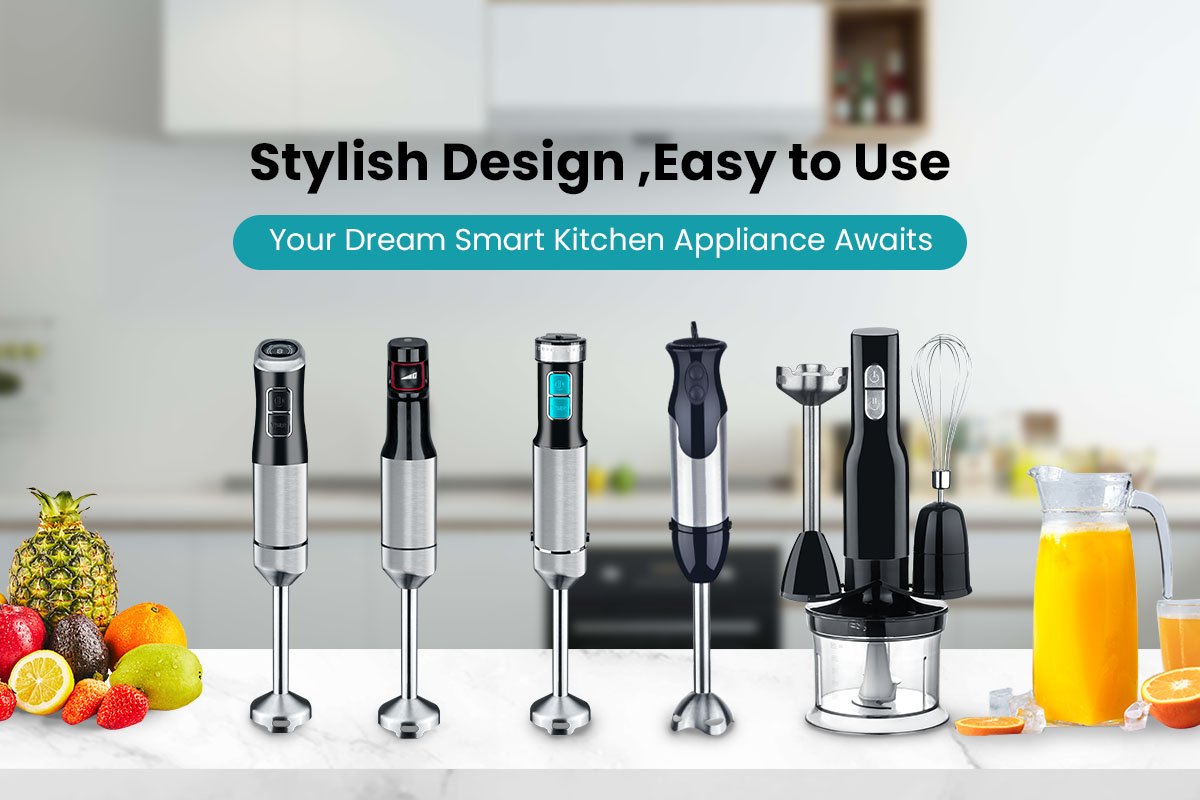
What Questions Should Buyers Ask A Blender Manufacturer
Choosing the right blender manufacturer requires more than reviewing product samples and prices. A reliable manufacturing partner should have strong production capability, quality management systems, OEM experience, and the ability to support long-term product development.
Before starting cooperation, asking the right questions helps evaluate whether a factory can meet product requirements, maintain consistent quality, and support stable supply. For blender projects, manufacturers need to control multiple processes, including motor production, component manufacturing, assembly, testing, and export preparation.
KANGJIA focuses on small kitchen appliance manufacturing with integrated capabilities covering product development, injection molding, hardware processing, motor production, assembly, R&D, and testing. This allows better control over manufacturing processes and customized product development.
Manufacturer vs Trader: Questions About Factory Capability
The first step is understanding whether the supplier is a direct manufacturer or a trading company.
A trading company may provide product sourcing services, but a direct kitchen appliance manufacturer can manage:
Product engineering
Material selection
Production scheduling
Quality inspection
Custom development
Before cooperation, important questions include:
| Evaluation Area | Questions To Ask |
|---|---|
| Factory Type | Are you the direct manufacturer? |
| Production Site | Where are products manufactured? |
| Equipment | What production equipment is available? |
| Production Team | How many engineers and workers support production? |
| Manufacturing Scope | Which processes are controlled internally? |
A professional factory should be able to explain its production structure instead of only showing finished products.
For blender manufacturing, production capability is especially important because performance depends on multiple systems working together, including motors, circuit boards, blades, containers, and housing structures.
Manufacturing Process Overview: Ask How Products Are Made
Understanding the manufacturing process helps evaluate production reliability.
A professional OEM blender manufacturer should have a clear workflow from product design to final shipment.
| Manufacturing Stage | Questions To Ask |
|---|---|
| Product Design | Can you support product development? |
| Component Production | Are key parts controlled internally? |
| Assembly | How is production consistency maintained? |
| Testing | What inspection procedures are used? |
| Packaging | How are products protected during shipping? |
Important questions include:
How are motors tested before assembly?
How are electronic components inspected?
How are finished products checked before shipment?
A factory with complete process control can identify problems earlier and improve production stability.
OEM And ODM Capability Questions
Many blender projects require customization beyond existing models. Therefore, OEM and ODM capability is an important evaluation factor.
A reliable OEM blender supplier should answer questions about:
Product Customization
Ask:
Can you customize product appearance?
Can motor power be adjusted?
Can functions be modified?
Can packaging be customized?
Customization options may include:
Logo printing
Color adjustment
Blade design
Container selection
Accessories
Engineering Support
Ask:
Do you have an R&D team?
Can you provide prototype development?
Can engineers optimize product structure?
A manufacturer with engineering capability can provide suggestions based on production feasibility instead of only following drawings.
KANGJIA provides different kitchen appliance solutions, including Electric Blenders and other small appliances, supporting OEM and ODM development according to project requirements.
Quality Control Questions Before Mass Production
Quality control is one of the most important topics when evaluating a blender factory.
A professional manufacturer should have inspection procedures covering every production stage.
Important questions include:
How are incoming materials inspected?
Are production checkpoints recorded?
Is every finished product tested?
What testing equipment is available?
A complete quality system usually includes:
| Quality Stage | Inspection Focus |
|---|---|
| Material Inspection | Plastic, metal, electronic components |
| Assembly Inspection | Component installation accuracy |
| Performance Testing | Motor and function testing |
| Safety Testing | Electrical protection |
| Final Inspection | Appearance and packaging |
According to IEC 60335 safety requirements for household electrical appliances, manufacturers need to evaluate electrical safety and reliability before products enter international markets.
Material Standards Questions
Material selection directly influences blender durability and safety.
Before cooperation, ask:
What materials are used for blades?
What standards are followed for food-contact parts?
What plastics are used for product housing?
How are electronic components selected?
Typical blender materials include:
| Component | Material Consideration |
|---|---|
| Blade System | Stainless steel durability |
| Container | Food-contact safety |
| Housing | Engineering plastic strength |
| Motor Parts | Electrical performance |
A professional blender manufacturer should clearly explain material standards and provide compliance information.
Bulk Supply Questions For Large Orders
For large-volume orders, production capacity and supply stability are critical.
A reliable bulk blender supplier should answer:
| Supply Factor | Questions To Ask |
|---|---|
| Capacity | What is the monthly production capability? |
| Lead Time | How long does mass production require? |
| Materials | How is supply stability maintained? |
| Quality | How is batch consistency controlled? |
| Delivery | How are shipment schedules managed? |
Production capacity should match actual demand. A factory with strong production planning can maintain stable supply during peak periods.
Project Sourcing Checklist Before Cooperation
Before starting a blender project, manufacturers usually recommend confirming:
| Project Item | Information Required |
|---|---|
| Product Type | Hand Blender, Table Blender, or other model |
| Technical Requirements | Power, voltage, functions |
| Customization | Logo, color, packaging |
| Quantity | Initial and future demand |
| Certification | Target market requirements |
| Delivery | Production and shipment schedule |
Clear project information helps manufacturers provide accurate solutions and reduce unnecessary changes.
Export Market Compliance Questions
International markets have different requirements for kitchen appliances.
Before cooperation, ask:
Which certifications do your products have?
Can you support different market standards?
How do you manage compliance during production?
Common certifications for blender products include:
CE
CB
GS
RoHS
LFGB
REACH
These certifications cover areas such as electrical safety, restricted substances, and food-contact materials.
KANGJIA supports export requirements through quality management and certification systems to help products meet different international market standards.
Choosing A Reliable Blender Manufacturing Partner
The right questions can help evaluate whether a supplier has real manufacturing capability, technical experience, and long-term cooperation value.
A reliable blender manufacturer should provide:
Transparent production processes
Strong OEM and ODM capability
Stable quality control
Reliable material management
Export compliance experience
As an experienced kitchen appliance manufacturer, KANGJIA combines integrated production resources with professional manufacturing management. Through controlled production processes, strict testing procedures, and customized development support, KANGJIA provides reliable blender solutions for global markets.