




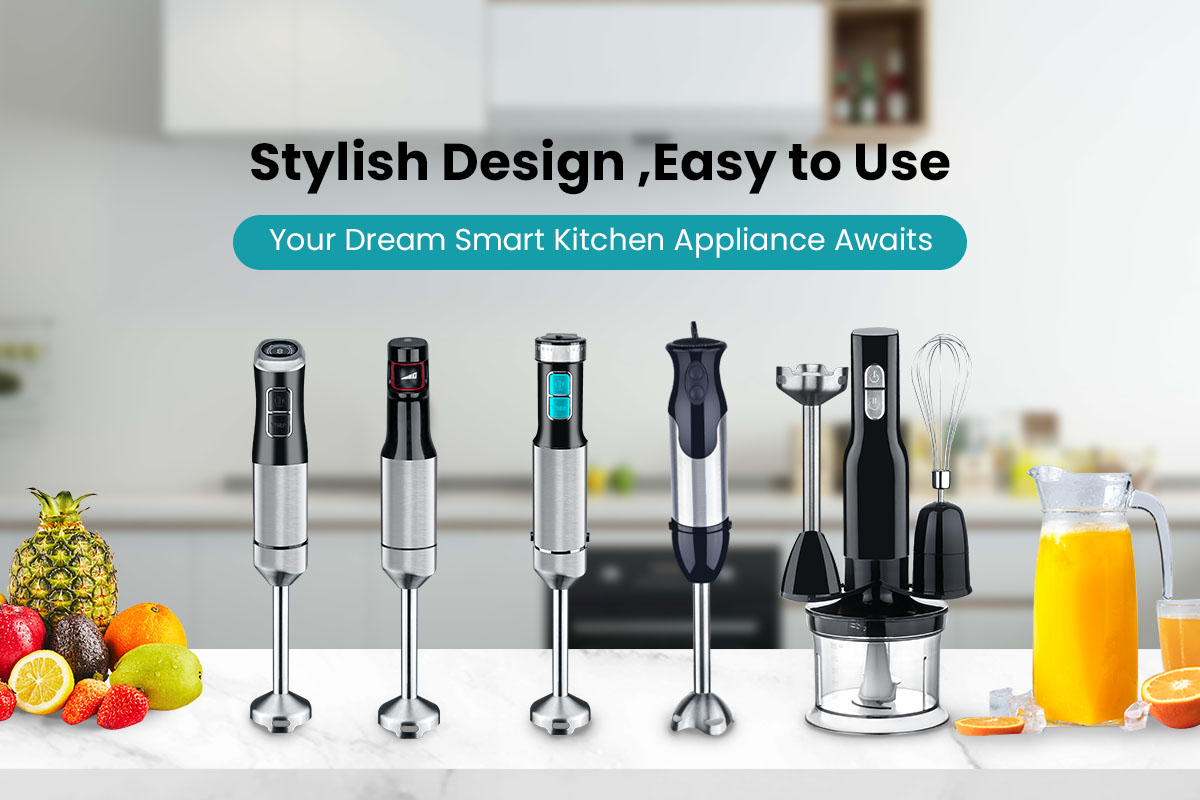
Food Processor vs Chopper: Which Product Better Matches Consumer Demand?
Food Processor better matches consumers seeking multiple kitchen functions, while chopper is suitable for users who need simple and efficient ingredient preparation.
What Is the Difference Between Food Processor and chopper?
For kitchen appliance brands evaluating consumer demand, the main difference between Food Processor and chopper is function range, processing capability, product structure, user scenarios, and market positioning.
A Food Processor is a multi-function kitchen appliance designed for various food preparation tasks, including chopping, slicing, shredding, mixing, and processing.
A Chopper is a simpler appliance mainly focused on quickly chopping ingredients into smaller pieces.
From an OEM manufacturing perspective, understanding the differences between these two products helps brands select suitable product categories based on target consumers and market strategies.
| Comparison | Food Processor | Chopper |
|---|---|---|
| Main Function | Multi-purpose food preparation | Ingredient chopping |
| Application Range | Wider | More focused |
| Target Users | Cooking-focused consumers | Convenience-focused users |
| Product Complexity | Higher | Simpler |
| Main Advantage | Versatility | Easy operation |
Why Do Brands Choose Food Processor Products?
Food Processor products provide broader kitchen functions and stronger application value.
Main advantages include:
Multiple processing functions
Higher preparation efficiency
Wider recipe applications
Better household value
Stronger product differentiation
Common applications include:
Vegetable chopping
Slicing ingredients
Shredding food
Mixing recipes
Preparing sauces
Typical target customers include:
Families
Home cooks
Cooking enthusiasts
Consumers seeking efficient kitchens
For brands targeting comprehensive kitchen appliance markets, Food Processor provides stronger product opportunities.
Why Do Brands Choose Chopper Products?
Chopper products focus on simple, fast, and convenient ingredient preparation.
Main advantages include:
Compact structure
Easy operation
Lower product cost
Simple cleaning
Suitable for daily use
Common applications include:
Chopping onions
Preparing garlic
Cutting herbs
Processing small ingredients
Typical target customers include:
Small households
Busy consumers
Users seeking simple kitchen tools
For brands targeting affordable and convenience-driven markets, Chopper provides an accessible product solution.
Which Product Better Matches Different Consumer Needs?
Consumer demand varies based on cooking habits and lifestyle.
Food Processor Fits Consumers Who Need:
More kitchen functions
Frequent cooking support
Multiple preparation methods
Higher efficiency
Common scenarios include:
Family meal preparation
Complex recipes
Daily cooking
Chopper Fits Consumers Who Need:
Quick preparation
Simple operation
Compact storage
Basic ingredient processing
Common scenarios include:
Small meal preparation
Quick ingredient cutting
Limited kitchen spaces
Which Product Provides Better Market Opportunities?
Market opportunities depend on target customers and product positioning.
Food Processor Market Advantages:
Suitable for:
Household appliance markets
Premium kitchen categories
Multi-function product lines
Growth factors include:
Demand for kitchen efficiency
Home cooking trends
Multi-purpose appliance development
Chopper Market Advantages:
Suitable for:
Entry-level kitchen products
Online retail channels
Convenience-focused markets
Growth factors include:
Affordable kitchen solutions
Small-space living
Simple cooking habits
Which Product Provides Better OEM Development Opportunities?
Both products support OEM development with different focuses.
Food Processor OEM Opportunities:
Brands can customize:
Motor performance
Bowl capacity
Blade systems
Function combinations
Accessories
Product appearance
The focus is creating versatile kitchen appliances.
Chopper OEM Opportunities:
Brands can customize:
Container design
Blade structure
Handle design
Product colors
Packaging
The focus is creating practical and easy-to-use kitchen tools.
Which Product Helps Brands Build Better Differentiation?
Differentiation is important in competitive kitchen appliance markets.
Food Processor Differentiation:
Brands can focus on:
Multi-function capability
Professional preparation
Premium materials
Advanced accessories
The product value comes from versatility.
Chopper Differentiation:
Brands can focus on:
Compact design
Ease of use
Affordable pricing
Convenience
The product value comes from simplicity.
Which Product Fits Online Sales Better?
Online channels require products with clear demonstrations.
Food Processor Online Advantages:
More functions to showcase
Strong comparison potential
Suitable for detailed product content
Good for:
E-commerce platforms
Brand websites
Appliance marketplaces
Chopper Online Advantages:
Easy product explanation
Simple usage demonstration
Lower purchasing barrier
Good for:
Social commerce
Short-video marketing
Value-focused online channels
Which Product Fits Offline Retail Better?
Offline retail depends on product display and consumer expectations.
Food Processor Offline Advantages:
Higher product value perception
Strong shelf presentation
Suitable for appliance stores
Chopper Offline Advantages:
Easy consumer understanding
Lower price barrier
Suitable for household accessory stores
Both products can perform well when matched with suitable retail channels.
How Does Manufacturing Complexity Differ Between Food Processor and Chopper?
Different structures require different production capabilities.
Food Processor Manufacturing Focus:
Motor systems
Multiple components
Blade precision
Safety features
Accessory compatibility
Quality control includes:
Electrical testing
Function verification
Assembly inspection
Chopper Manufacturing Focus:
Mechanical structure
Blade performance
Container strength
User operation reliability
Quality control includes:
Component inspection
Blade testing
Durability checks
Which Product Has Better Cost Advantages?
Cost structure affects market positioning.
Food Processor Cost Considerations:
Higher costs may come from:
More functions
Stronger motors
Additional accessories
Complex assembly
However, higher functions can support premium pricing.
Chopper Cost Advantages:
Benefits include:
Lower production cost
Simpler structure
Easier mass production
This makes Chopper suitable for price-sensitive markets.
Which Product Has Better Long-Term Growth Potential?
Both categories have different development opportunities.
Food Processor Growth Factors:
Increasing demand for kitchen efficiency
Multi-function appliance trends
Premium household markets
Chopper Growth Factors:
Convenience-focused lifestyles
Affordable kitchen product demand
Compact appliance trends
Brands should consider both current demand and future market direction.
How Should Brands Choose Between Food Processor and Chopper?
Brands can evaluate:
Choose Food Processor When:
Multiple functions are required
Premium positioning is planned
Household markets are targeted
Product differentiation is important
Choose Chopper When:
Convenience is the main selling point
Affordable products are needed
Entry-level consumers are targeted
Simple operation is preferred
The right choice depends on consumer demand, sales channels, pricing strategy, and brand goals.
How Can a Kitchen Appliance Manufacturer Support Product Development?
A professional kitchen appliance manufacturer can support brands through:
Product planning
OEM customization
Function development
Prototype testing
Quality inspection
Mass production support
Manufacturers with experience in both Food Processor and Chopper categories can help brands develop products suitable for different consumer markets.
Conclusion: Food Processor or Chopper, Which Product Better Matches Consumer Demand?
Food Processor better matches consumers looking for versatile kitchen solutions with multiple functions and wider applications. Chopper better matches consumers seeking simple, affordable, and convenient ingredient preparation.
For kitchen appliance brands, the better product choice depends on target customers, market positioning, retail channels, and long-term product development strategy.