




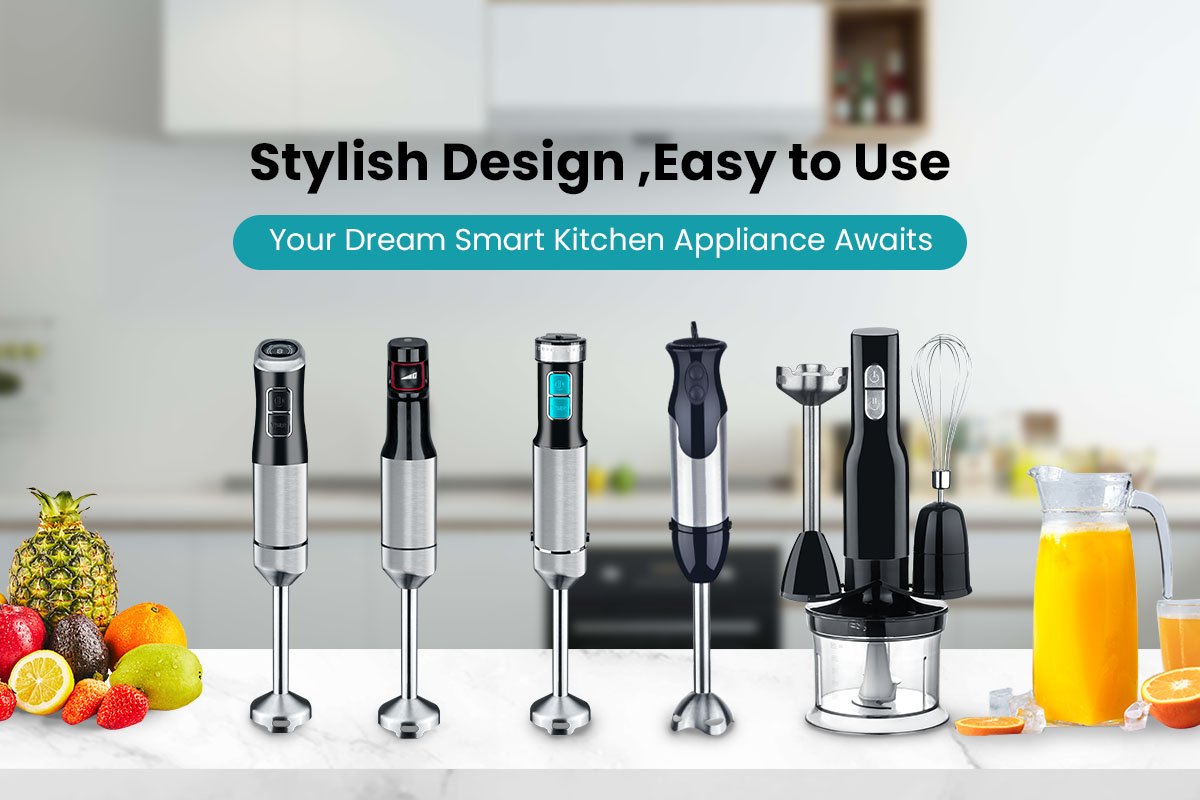
How Many Watts Should A Hand Blender Have
When shopping for a Hand Blender, one of the most important factors to consider is its wattage. The wattage determines the appliance’s power, efficiency, and ability to handle different types of ingredients. Choosing the right watt level depends on what you plan to use your hand blender for — light blending, thick soups, or heavy mixing tasks.
This article explains how hand blender wattage affects performance, the ideal watt range for various uses, and why Kangjia Electrical Appliances Co., Ltd. offers a versatile range of powerful, energy-efficient hand blenders suited for every kitchen.
Understanding Hand Blender Wattage
Wattage indicates how much power the motor of a hand blender uses. Generally, higher wattage means more blending strength and faster performance, allowing you to process thicker ingredients and larger batches.
However, a higher watt rating doesn’t always mean better results — it’s about matching power to your specific cooking needs.
| Task Type | Recommended Wattage | Description |
|---|---|---|
| Light blending (soups, smoothies) | 200–300W | Suitable for soft fruits, vegetables, and liquids |
| Medium blending (baby food, sauces) | 350–500W | Offers good balance for daily cooking needs |
| Heavy blending (nuts, ice, meat) | 600–1000W | Ideal for tougher ingredients and professional use |
Low-Wattage Hand Blenders (200–300W)
These compact models are perfect for basic kitchen tasks like mixing soups, beating eggs, and blending soft fruits. They are lightweight, easy to use, and consume less electricity.
Advantages:
Energy-efficient and quiet operation
Great for light daily use
Affordable and easy to clean
Limitations:
Not suitable for crushing ice or blending thick batters
Slower performance for fibrous vegetables
If you mainly prepare smoothies or soups, a 200–300W hand blender is usually sufficient.
Medium-Wattage Hand Blenders (350–500W)
Hand blenders in this range provide the perfect balance between power and versatility. They can handle thicker ingredients like potatoes, cooked meats, and sauces while maintaining smooth consistency.
Ideal For:
Making purées and creamy soups
Preparing sauces, salad dressings, or mayonnaise
Blending baby food and mashed vegetables
Benefits:
Reliable performance for everyday cooking
Compact yet powerful design
Easy to control with variable speed settings
This wattage range is the most popular for home kitchens.
High-Wattage Hand Blenders (600–1000W and above)
For more demanding tasks, such as crushing ice, grinding nuts, or blending fibrous vegetables, a high-wattage hand blender is the best option. These models are often equipped with stainless-steel blades and durable motors for extended use.
Applications:
Blending frozen fruits for smoothies
Grinding spices and nuts
Making nut butter or thick purees
Advantages:
Faster blending and smoother results
Suitable for both domestic and professional kitchens
Compatible with attachments like choppers and whisks
High-wattage blenders offer greater durability and can perform multiple functions, replacing several small appliances in your kitchen.
How to Choose the Right Wattage
When deciding how many watts your hand blender should have, consider the following:
Frequency of Use – Occasional use requires less power, while daily use needs a stronger motor.
Type of Ingredients – Softer foods require less wattage, but dense or frozen ingredients need higher power.
Attachments and Features – Models with choppers, whisks, or grinders often need more wattage to perform effectively.
Kitchen Size and Purpose – Compact 300W models are perfect for home kitchens, while 800W+ versions suit commercial or professional environments.
Comparison Table: Choosing the Right Hand Blender
| Wattage | Suitable For | Advantages | Typical User |
|---|---|---|---|
| 200–300W | Soups, eggs, milkshakes | Energy-saving, affordable | Light home use |
| 350–500W | Purees, sauces, baby food | Versatile and efficient | Everyday cook |
| 600–1000W | Ice, nuts, dense foods | Powerful and multifunctional | Professional chef or frequent user |
Why Choose Kangjia Hand Blenders
Kangjia Electrical Appliances Co., Ltd., based in Jiangmen City, Guangdong Province, is a professional manufacturer specializing in hand blenders, Table Blenders, mini choppers, and Food Processors. Their products are designed to deliver powerful performance with energy efficiency.
Features of Kangjia Hand Blenders
Wide wattage range from 200W to 1000W to suit different cooking needs
High-speed motors with variable speed control for precise blending
Durable stainless-steel blades that handle both soft and hard ingredients
Ergonomic design for comfortable grip and easy operation
International certifications such as CE, CB, and RoHS for safety and quality assurance
Kangjia offers OEM and ODM customization, allowing global buyers to personalize products according to market requirements.
Conclusion
The ideal wattage for a hand blender depends on your cooking habits.
For light blending tasks, 200–300W models are enough.
For daily use and versatility, choose 350–500W.
For heavy-duty or commercial needs, opt for 600W or higher.
A well-chosen hand blender can simplify meal preparation and save valuable kitchen space.
For dependable, powerful, and energy-efficient solutions, Kangjia Electrical Appliances provides a full range of hand blenders engineered for durability and precision—helping you blend, whisk, and puree with ease every time.