




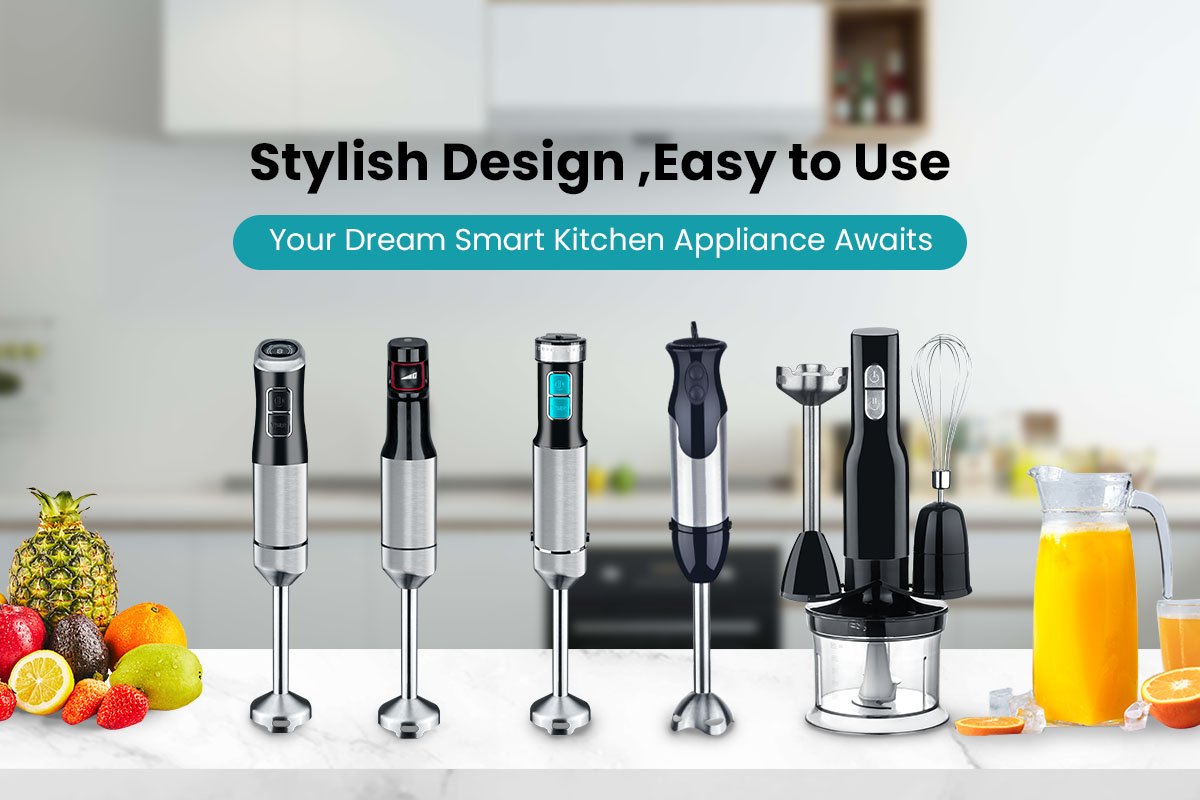
How To Remove Hand Blender Blade
A Hand Blender (also known as an immersion blender) is designed for easy use and maintenance. One of the key parts that may need occasional attention is the blade assembly — whether for cleaning, sharpening, or replacement. Knowing how to safely remove the hand blender blade helps you keep your appliance in perfect working condition and extend its lifespan.
This guide explains how to remove a hand blender blade safely, key precautions to take, and why choosing Kangjia Electrical Appliances Co., Ltd. hand blenders makes cleaning and maintenance easier thanks to their detachable stainless steel design.
Understanding the Hand Blender Blade Structure
The blade of a hand blender is usually attached to a detachable blending shaft that connects to the motor body. Depending on the model, the blade may be:
Fixed (non-removable): permanently attached to the blending arm and not intended for disassembly.
Detachable (removable): designed for replacement or deep cleaning.
Before starting, check your model’s manual or product markings. Many modern designs, like Kangjia hand blenders, feature detachable stainless-steel blades, which are safer and easier to maintain.
Tools You May Need
Soft cloth or rubber gloves (for safety)
Small screwdriver or wrench (for screw-type models)
Warm water and dish soap (for cleaning after removal)
Step-by-Step: How To Remove a Hand Blender Blade
1. Unplug the Blender Completely
Always disconnect your hand blender from the power source before touching the blade area. Never attempt removal while the device is connected or wet.
2. Detach the Blending Arm from the Motor
Most hand blenders feature a quick-release mechanism:
Press the release buttons on both sides of the handle.
Gently twist or pull downward to separate the blending shaft from the motor unit.
Set the motor part aside in a dry area.
3. Check if the Blade Is Removable
Inspect the bottom of the blending arm:
If you see a screw, nut, or lock ring near the blade hub, your model supports removal.
If the blade appears sealed or fused, it’s likely fixed and not designed to be detached.
4. Use a Cloth for Grip and Turn the Blade Assembly
Wrap the blade with a soft cloth or wear rubber gloves to protect your hands.
Hold the blending arm firmly.
Turn the blade counterclockwise (for most models) to unscrew it.
If it’s tight, gently tap the base or use a small wrench to loosen the ring holding it in place.
Once loosened, the blade and its washer can be lifted out carefully.
Tip: Do not use excessive force. If the blade doesn’t move, it may be permanently fixed or locked by dried residue — soak the shaft in warm soapy water to loosen it first.
5. Clean the Blade and Housing
After removal, wash both the blade and its housing in warm, soapy water. Use a soft brush to clean the crevices around the hub. Rinse thoroughly and dry completely before reassembly.
Avoid using abrasive materials that can scratch the stainless steel.
6. Reinstall the Blade (If Needed)
To reattach:
Align the blade shaft correctly with the housing slot.
Insert and turn clockwise until it fits securely.
Make sure it’s tightened firmly to prevent wobbling during use.
Reconnect the blending arm to the motor unit, plug it in, and briefly test to ensure the blade spins smoothly.
Safety Precautions
| Step | Safety Measure |
|---|---|
| Before removal | Always unplug and cool the appliance completely |
| During removal | Wear gloves or use a cloth to avoid cuts |
| After cleaning | Ensure all parts are fully dry before reassembly |
| Storage | Keep the blade covered or stored separately to prevent injury |
When To Remove or Replace the Blade
You should consider removing or replacing the blade if:
It becomes dull or bent and affects blending performance.
There’s visible rust or corrosion despite cleaning.
The blade wobbles or makes noise during operation.
Food residue is stuck in hard-to-reach areas around the hub.
Replacing a damaged blade is safer and more effective than continuing to use it.
Why Choose Kangjia Hand Blenders
Kangjia Electrical Appliances Co., Ltd., based in Jiangmen City, Guangdong Province, specializes in manufacturing hand blenders, Table Blenders, Food Processors, and mini choppers with user-friendly and durable designs.
Kangjia Hand Blender Features:
Detachable stainless-steel blending shafts for easy blade removal and cleaning
High-speed motors (200W–1000W) for efficient blending
Corrosion-resistant steel blades that maintain sharpness over time
Quick-release mechanism for safe assembly and disassembly
Certified quality (CE, CB, RoHS) ensuring international safety standards
OEM/ODM customization available for professional and household buyers
Kangjia’s detachable blade design simplifies maintenance, ensuring that cleaning and replacements can be done quickly and safely.
Maintenance Tips for Long Blade Life
Clean immediately after each use to prevent residue buildup.
Avoid blending hard materials like ice or bones, which can dull the blade.
Dry thoroughly before reassembly to prevent rust.
Inspect monthly for any cracks, bending, or corrosion.
Use moderate speed settings for soft ingredients to reduce mechanical stress.
Regular care ensures consistent blending performance and extends the life of both the blade and motor.
Conclusion
Removing a hand blender blade is simple if done carefully and correctly. Always unplug the device, detach the blending arm, loosen the blade gently, and clean it thoroughly before reassembling. Proper maintenance keeps your blender hygienic and performing like new.
For hand blenders designed with easy-to-remove stainless-steel blades, choose Kangjia Electrical Appliances. Their innovative design makes cleaning, repairing, and replacing parts effortless—helping both home users and professionals enjoy efficient, long-lasting blending with confidence.
Previous: Can I Blend Lemon With Hand Blender