




Can You Put A Hand Blender in Checked Luggage
Why Travelers Ask This Question
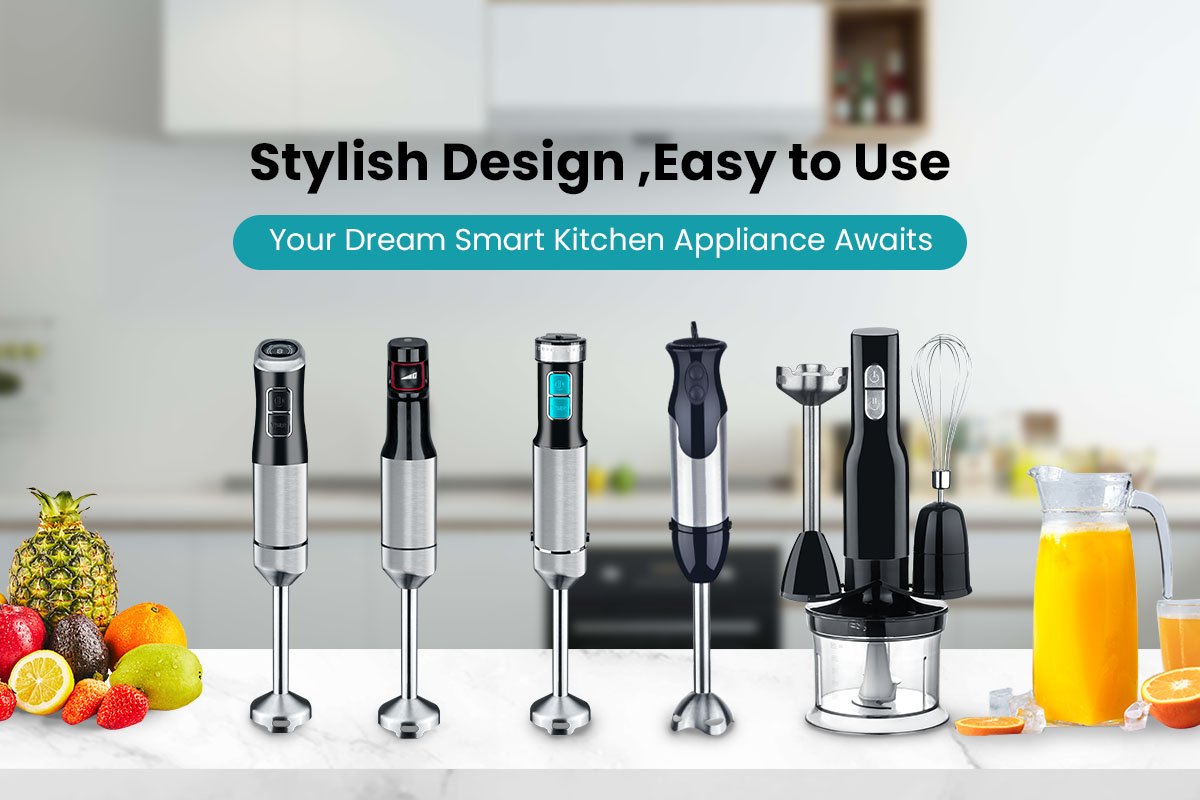
Hand Blenders are compact, versatile kitchen tools used for soups, smoothies, sauces and meal prep. Many travelers want to bring them abroad, ship samples from exhibitions, or transport units for testing.
Knowing airline regulations is essential so the appliance passes security checks smoothly. For manufacturers like KANGJIA Electrical Appliances Co., Ltd., whose product range includes hand blenders, Table Blenders and multifunction kitchen appliances, air-transport safety is a practical concern for buyers and distributors.
Can You Put a Hand Blender in Checked Luggage?
Yes — a hand blender can be placed in checked luggage, as long as it is packed safely and contains no prohibited components.
Airlines generally allow household electric appliances in checked baggage, provided they contain no lithium batteries, no liquids, and no exposed sharp parts.
What Parts of a Hand Blender Are Allowed in Checked Luggage?
Motor Housing
Allowed in checked luggage.
Must be clean and dry
Should be wrapped to prevent impact
Best placed in the center of the suitcase for protection
KANGJIA hand blenders use durable ABS housings and compact motor structures, making them suitable for checked-luggage transport.
Detachable Stainless-Steel Blending Shaft
Allowed in checked luggage.
Classified as a kitchen tool
Should be wrapped to avoid scratching other items
Blades (chopper or Accessory Blades)
Blades must be checked rather than carried on because they are considered sharp objects.
Wrap blades securely using bubble wrap, fabric, or the original packaging.
Many overseas buyers transporting KANGJIA samples use protective wrapping to avoid damage.
What Cannot Be Placed in Checked Luggage?
Lithium Batteries
Most standard hand blenders run on AC power and do not contain lithium batteries.
However, if a model includes a rechargeable cordless module, it may need to be placed in carry-on depending on airline policy.
KANGJIA’s hand blenders typically do not include lithium-powered units, so they can be safely checked.
How to Pack a Hand Blender Safely for Checked Luggage
1. Clean and Dry Every Component
Airline security may reject appliances containing food residue or moisture.
Ensure:
No liquids in the motor housing
No food stuck on blades
All parts are completely dry
2. Wrap Components Individually
This prevents both damage and noise during travel.
Recommended:
Bubble wrap for blades
Clothing or foam around the motor
Zip bags for small accessories
KANGJIA’s sturdy blade shafts and motors resist pressure well, but proper padding further reduces risk.
3. Place the Appliance Centrally in the Suitcase
Surrounding it with clothing or soft materials helps absorb shocks.
4. Tie the Power Cord
A neatly wrapped cable avoids tangling or accidental pulling.
Can You Bring a Hand Blender in Carry-On Luggage?
Usually no, because:
Blades are considered prohibited items
Many airports restrict handheld appliances with detachable blades
Only the motor housing, without any blade or sharp accessory, might be permitted—but this varies by airport.
The safest approach is to check the entire appliance.
Tips for International Buyers Transporting Samples
Many distributors, retailers, or private-label buyers carry KANGJIA product samples across borders. Best practices:
Always pack in checked luggage
Use the original factory packaging when possible
Add extra padding for multiple samples
Label fragile items inside the suitcase
KANGJIA also supports custom OEM/ODM packaging suitable for international freight and air-transport requirements.
Conclusion
Yes, you can put a hand blender in checked luggage, provided that:
All parts are clean and dry
Blades are wrapped securely
The appliance contains no lithium batteries
It is packed with proper cushioning
Hand blenders from KANGJIA are designed with durable construction, detachable shafts and safe materials, making them well-suited for air travel when packed correctly.