




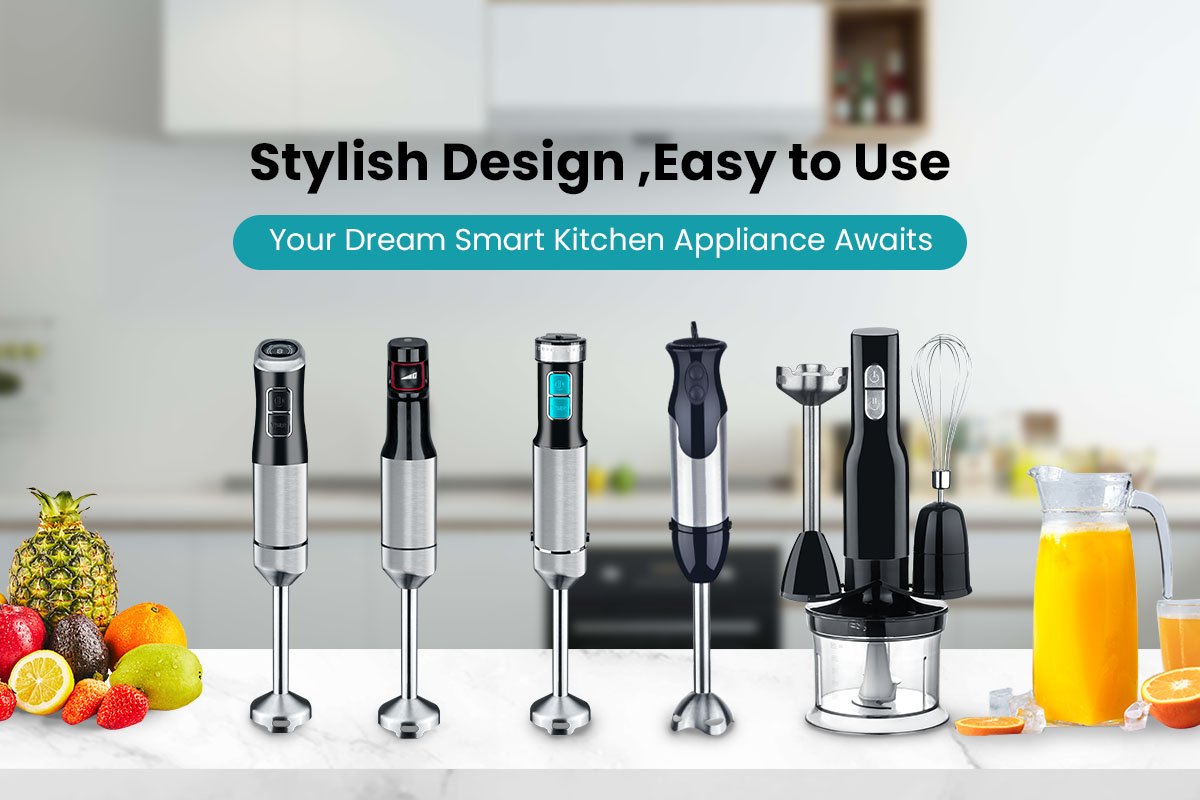
Can You Take A Hand Blender on A Plane
Why Travelers Want to Bring a Hand Blender
hand blenders are compact, versatile kitchen tools used for smoothies, sauces, soups and meal prep. Many people traveling internationally—especially students, long-term visitors, chefs, or buyers carrying samples—want to bring a hand blender with them.
However, airline security rules are strict regarding blades, sharp objects, and electrical appliances, so it’s important to know what is allowed before arriving at the airport.
For buyers working with KANGJIA Electrical Appliances Co., Ltd., whose hand blenders include detachable stainless-steel shafts and accessories, understanding these rules helps avoid travel delays.
Can You Take a Hand Blender on a Plane?
Yes — but only in checked luggage, not in carry-on.
Airports worldwide prohibit carrying any sharp or detachable blades in hand luggage. A hand blender includes a blending shaft with a blade, so it cannot be taken in cabin bags.
Why a Hand Blender Is Not Allowed in Carry-On Bags
Sharp Blades Are Prohibited
Security regulations classify blender blades as sharp objects.
Even if covered, wrapped or detached, they cannot pass through airport security in hand luggage.
Attachments Are Also Restricted
Mini chopper blades, whisk blades and metal blending heads all fall under prohibited items in carry-on.
Motor Housing Alone May Be Allowed — But Not Practical
The motor body contains no blades, but carrying half the appliance without the functional part is usually pointless.
To avoid confusion or secondary screening, travelers typically check the full set.
When Is a Hand Blender Allowed?
Checked luggage is permitted
A hand blender can be safely placed in checked baggage if:
It is clean and fully dry
Blades are safely wrapped
No lithium battery is inside the unit
KANGJIA hand blenders operate on AC power and contain no lithium batteries, making them suitable for checked luggage.
How to Pack a Hand Blender Safely in Checked Luggage
1. Clean and Dry All Parts
Security may refuse appliances with food residue.
Ensure the blending shaft, chopper bowl and motor housing are clean and dry.
2. Wrap the Blade Attachment
Use:
Bubble wrap
A cloth
The appliance’s original packaging
This prevents damage to the suitcase and improves safety.
3. Secure the Motor Unit
Place it in the center of the suitcase with soft clothing around it to absorb impact.
4. Tie the Power Cord
A neatly tied cord prevents snagging or damage during handling.
Are There Airline Differences?
Most international airlines follow similar rules:
No blades in carry-on
Hand blenders allowed in checked bags
However, some airports may require extra inspection for electrical appliances.
To avoid issues, travelers can pack the hand blender in the original box or a padded case.
What About Cordless Hand Blenders?
If a cordless model contains a removable lithium battery, the battery may need to stay in carry-on, while the appliance itself goes into checked luggage.
But corded hand blenders—like most models manufactured by KANGJIA—do not contain lithium batteries, so they are easier to transport.
Tips for Travelers and Product Buyers
For Personal Travel
Always place the blender in checked luggage
Keep blades well protected
Avoid traveling with wet or recently washed components
For Business or Sample Transport
KANGJIA product samples can be transported more safely when:
Packed in factory packaging
Reinforced with additional foam
Packed in the checked section with proper labeling
This ensures products arrive intact for exhibitions, testing or buyer demonstrations.
Conclusion
You can take a hand blender on a plane, but only in checked luggage.
Carry-on bags cannot include blender blades or sharp attachments, making the appliance unsuitable for cabin transport.
With proper cleaning, wrapping and packing, hand blenders from KANGJIA can be transported safely for international travel, business visits or sample testing.