




How To Change Hand Blender Blades
Understanding How Hand Blender Blades Attach
Most hand blenders use a detachable shaft system, allowing the blade end to be removed for cleaning, replacement, or swapping specialized attachments. The blade itself is typically integrated into the shaft rather than removed independently. This design improves safety, stability, and hygiene.
Before changing any blade or attachment, always make sure the blender is unplugged to avoid accidental activation.
Step-by-Step Guide: How To Change Hand Blender Blades
1. Unplug the Hand Blender
Safety comes first. Disconnect the unit from power before touching the blade area.
2. Detach the Blending Shaft
Most hand blenders use one of these mechanisms:
A twist-and-lock system
A snap-in release button
A push-and-turn bayonet fitting
Hold the motor body firmly and rotate or press the release buttons to remove the blending shaft.
This entire shaft includes the blade assembly.
3. Identify the Replacement Blade or Attachment
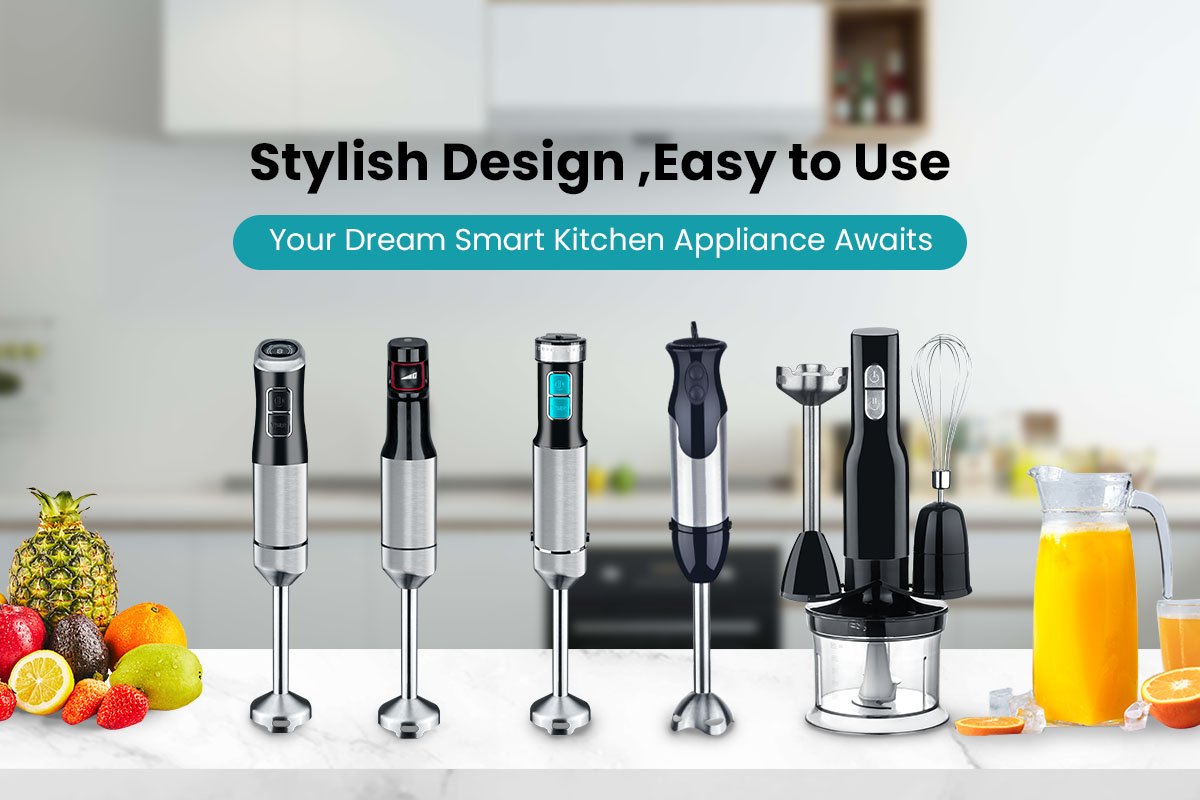
Hand blender blades are usually part of a full attachment, such as:
Standard blending blade (most common)
Whisk attachment
Multi-purpose blade for thicker mixtures
Since the blade is not removed separately, replacing the blade means replacing the entire attachment piece.
4. Align the New Attachment With the Motor Body
Position the new shaft or accessory so that its connector aligns with the motor unit’s locking system.
Common steps include:
Inserting the attachment until it clicks
Twisting clockwise until locked
Pressing down while rotating into position
5. Test the Connection Before Use
Give the attachment a gentle pull to ensure it is fully secured.
Then plug in the blender briefly and run it for one second to verify smooth operation.
6. Clean and Maintain the Blades Properly
To extend blade life:
Rinse immediately after use
Avoid blending extremely hard or dry foods without liquid
Store attachments in a dry, ventilated area
Inspect for dullness, bending, or rust
KANGJIA’s hand blenders, produced through integrated motor workshops, injection workshops, and hardware processing, are designed with durable detachable shafts that simplify cleaning and replacement. The company’s cold-rolled stainless-steel blades and reinforced locking mechanisms ensure stability during repeated attachment changes.
Troubleshooting Common Issues
The Shaft Won’t Detach
Check for dried food blocking the locking mechanism
Rinse under warm water
Avoid forcing it, which may damage the connector
The New Blade Doesn’t Lock In
Ensure the alignment marks match
Make sure no debris is inside the connector
Try reattaching with a firm push and twist
The Blade Doesn’t Spin After Replacement
Confirm the shaft is fully locked
Test the motor separately
Inspect the connector pins for wear
Final Answer
To change hand blender blades, unplug the unit, detach the blending shaft, replace it with the correct attachment, align and lock it into place, and test the connection.
Because most hand blender blades are integrated into the shaft, changing the blade means replacing the entire attachment rather than the blade alone.
With well-designed detachable mechanisms and durable construction, high-quality hand blenders such as those produced by KANGJIA make blade replacement simple, safe, and efficient.