




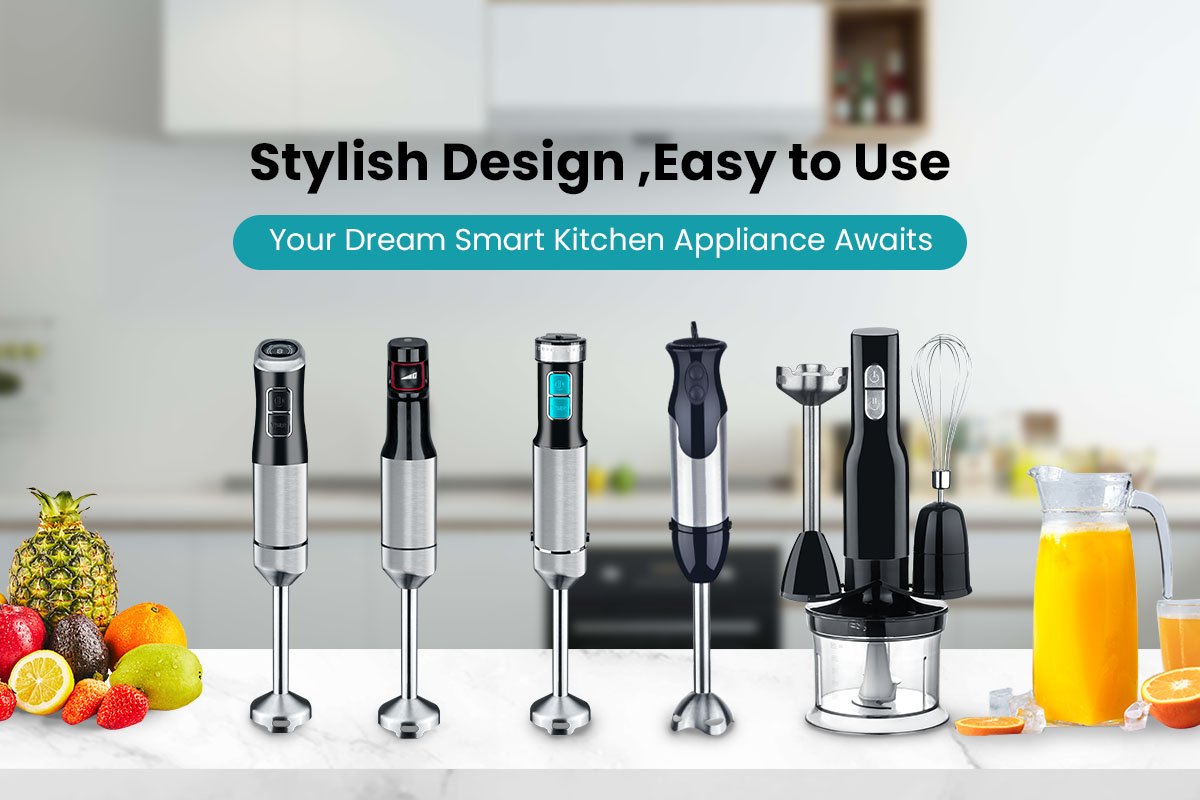
For distributors, retailers, and brand owners entering the kitchen appliance market, private label blenders are commonly produced through an OEM manufacturing process. OEM production allows buyers to sell blenders under their own brand while the manufacturer handles product design adjustments, manufacturing, and quality control. Understanding how this process works helps buyers manage product development and bulk sourcing more efficiently.
-
2026-03-17
-
2026-03-16When sourcing kitchen appliances such as blenders, mixers, or food processors, importers often need to verify whether a supplier is a real manufacturer or only a trading company. One of the most reliable ways to confirm this is by reviewing official documents that demonstrate production capability, quality management, and export compliance.
-
2026-03-13Blenders designed for international markets must undergo multiple durability and performance tests before entering mass production. These tests ensure that the appliance can operate safely and maintain stable performance during long-term daily use. Professional kitchen appliance manufacturers normally integrate structured testing procedures into their production and quality control systems.
-
2026-03-12For importers sourcing blenders or other small kitchen appliances, verifying a supplier’s production capacity is essential before placing large orders. Production capacity directly affects delivery timelines, product consistency, and long-term supply stability. By evaluating several key factors, buyers can determine whether a blender factory has the manufacturing strength required for bulk supply.
-
2026-03-11When sourcing kitchen appliances such as blenders, mixers, or other small appliances, buyers often need to evaluate whether a supplier has real manufacturing strength. A professional kitchen appliance manufacturer should possess comprehensive production capabilities, stable quality control systems, and strong OEM or ODM development support.
-
2026-03-10In the kitchen appliance sourcing market, buyers often face two options: purchasing hand blenders from a trading company or cooperating directly with a manufacturer. For distributors, wholesalers, and project buyers, sourcing directly from a factory provides stronger control over product quality, customization capability, and supply stability.
-
2026-03-09In the global kitchen appliance supply chain, many buyers encounter a common challenge: distinguishing between a genuine blender manufacturer and a trading company. For importers, distributors, and OEM brand owners, identifying a real factory is essential because it directly affects product consistency, customization capability, quality control, and long-term supply stability.
-
2026-03-06Stainless steel blades are widely used in blenders because they provide strength, durability, and reliable cutting performance when processing food ingredients. Blenders must handle a wide range of materials such as fruits, vegetables, ice, and frozen foods, so the blade material must be able to withstand high-speed rotation and repeated impact without losing its sharpness or structural stability.
-
2026-03-05A hand blender can easily be used to make milkshakes at home. Because milkshakes mainly require blending soft ingredients such as milk, ice cream, fruits, or flavored syrups, a hand blender is well suited for the task. Its rotating blades quickly mix the ingredients together and create a smooth and creamy drink.
-
2026-03-04Marshmallows are usually made by whipping sugar syrup, gelatin, and air together to create a light and fluffy texture. While stand mixers are commonly used for this process, many people wonder whether a hand blender can also be used. In certain situations, a hand blender can assist in preparing marshmallow mixtures, but its effectiveness depends on the appliance’s motor strength and blade or whisk attachment.
-
2026-03-03Many people associate juicing with dedicated juicers, but a hand blender can also be used to make fresh juice in certain situations. A hand blender works by blending fruits and vegetables into a liquid mixture, which can then be consumed directly or filtered to remove pulp. While it may not separate juice from fiber like a traditional juicer, it is still a practical solution for preparing quick homemade drinks.
-
2026-03-02Many people associate ice cream with specialized ice cream machines, but a hand blender can also be used to make simple frozen desserts. By blending frozen fruits, cream, or yogurt mixtures, a hand blender can break down solid ingredients and create a smooth ice-cream-like texture. The final result depends largely on the motor power, blade design, and stability of the appliance.Hand blenders are versatile kitchen appliances designed for blending, pureeing, and mixing ingredients. When used with frozen components such as bananas, berries, or dairy mixtures, the rotating blades gradually break the frozen structure and combine the ingredients into a creamy consistency. Although the texture may differ slightly from churned ice cream, it can still produce satisfying homemade frozen desserts.KANGJIA Electrical Appliances Co., Ltd. is a professional manufacturer of small kitchen appliances, producing products such as hand blenders, countertop blenders, mini choppers, and food processors. The company integrates product development, manufacturing, and global sales, providing stable supply solutions for international distributors and wholesale buyers.In appliance manufacturing, product performance depends heavily on materials and production processes. Hand blenders are typically produced through motor assembly, blade manufacturing, plastic housing molding, electronic installation, and final product testing. KANGJIA operates integrated production facilities including injection workshops, hardware processing workshops, motor production lines, and assembly lines, helping maintain consistent product quality.Compared with trading companies, direct manufacturers offer better control over production and product consistency. Manufacturers can manage raw material selection, production parameters, and quality inspections within the factory, while traders usually rely on external factories for supply.KANGJIA also supports OEM and ODM cooperation for global buyers. Customization can include product design, motor specifications, blade structure, and packaging configuration. The company maintains an R&D team and testing facilities to ensure product performance during development and production.Quality control checkpoints include incoming material inspection, motor performance testing, blade durability checks, electrical safety verification, and final product functionality testing. These procedures help ensure that each appliance meets reliability standards before shipment.For international markets, kitchen appliances must also comply with export regulations. Products may require certifications such as CE, GS, CB, LFGB, RoHS, and REACH to meet safety and environmental requirements.In summary, a hand blender can be used to prepare simple ice cream by blending frozen ingredients into a creamy mixture. However, appliance quality plays a key role in achieving good results. For distributors and appliance brands sourcing in bulk, working directly with a manufacturer that controls production, quality inspection, and certification compliance helps ensure reliable product performance and stable global supply.