




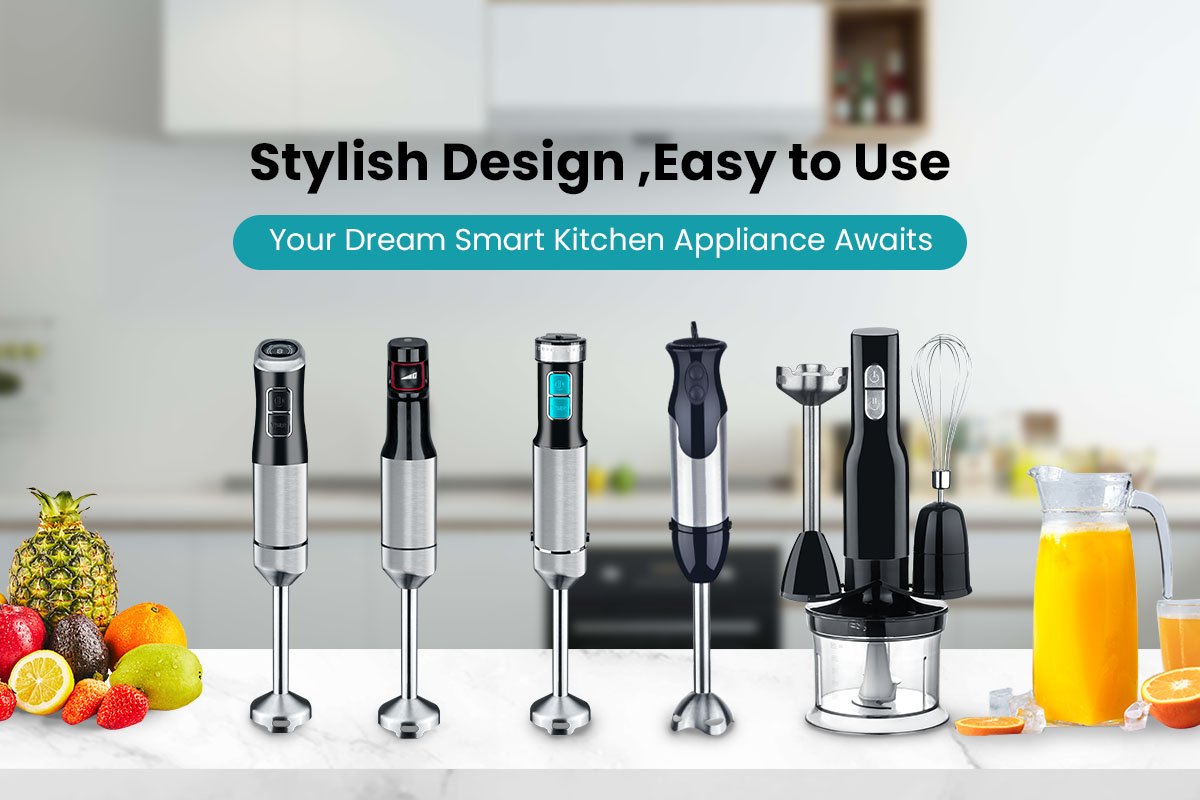
A successful OEM blender project starts with clear communication between the product developer and the manufacturer. Before production begins, a professional blender manufacturer needs complete project information to evaluate product design, manufacturing feasibility, material requirements, certification needs, and production planning.
-
2026-08-19
-
2026-08-18The production time of an OEM blender depends on many factors, including product design, customization requirements, material preparation, certification needs, and factory production capacity. A standard blender project may move faster, while a fully customized product with new structures and packaging usually requires more development time.
-
2026-08-17When developing a new blender product, MOQ is one of the most common factors considered during project planning. The typical MOQ for OEM blender orders depends on product design, customization requirements, material preparation, production process, and factory capacity.
-
2026-08-14Choosing a reliable blender supplier requires more than evaluating product design, price, and production capacity. For kitchen appliances sold in international markets, certifications are an important indicator of product safety, material compliance, and manufacturing capability.
-
2026-08-13Choosing the right supply partner is one of the most important decisions when developing blender products. A company that can provide a product catalog is not always the same as a company that can control production quality, support customization, and manage long-term supply.
-
2026-08-12Choosing the right supply source is an important decision when developing blender products. Buying directly from a blender manufacturer provides more than a competitive price. It allows better control over product quality, customization, production efficiency, and long-term supply stability.
-
2026-08-11Selecting the right blender manufacturer in China requires more than checking product catalogs or comparing prices. A reliable factory should have real production capability, quality control systems, engineering experience, and export compliance knowledge.
-
2026-08-10Choosing a reliable blender manufacturer is an important step when developing kitchen appliance products. A suitable manufacturing partner is not only responsible for product supply but also influences product quality, production stability, customization capability, and long-term market performance.
-
2026-08-07Electrical safety is one of the most important considerations when developing and manufacturing blenders. A blender combines a high-speed motor, electrical components, rotating blades, and user-accessible parts, which means every detail from circuit design to final inspection must meet strict safety requirements.
-
2026-08-06The motor is the core power system of a blender, directly influencing blending efficiency, operating stability, noise control, and product lifespan. A high-quality blender motor is not created by using only a powerful electrical component.
-
2026-08-05A blender circuit board is the control center that connects the motor, speed adjustment system, safety protection functions, and user operation interface. Although it is a small component inside the appliance, its performance directly affects motor response, power stability, and product safety.
-
2026-08-04A blender speed control system directly affects the user experience, motor efficiency, and product reliability. Different speed settings allow users to process various ingredients with better control, while a stable control system helps protect the motor during continuous operation.