




What Are The Key Cost Factors When Importing Blenders in Large Quantities?
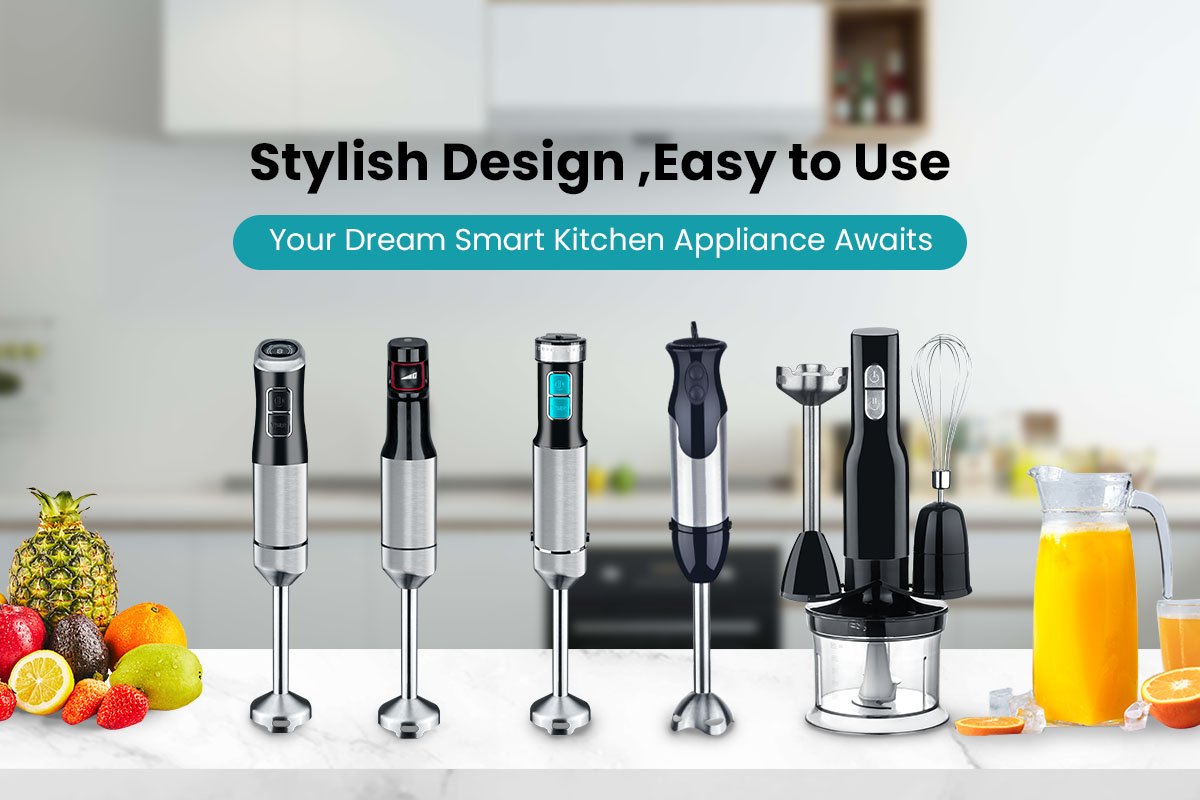
Importing blenders in large volumes is never only about unit price. The real landed cost comes from product structure, tooling, compliance, packaging efficiency, freight planning, and supplier type. For buyers comparing quotations, the biggest mistake is to treat a blender as a simple finished item. In practice, motor grade, blade design, jar material, noise target, carton layout, and certification path all change the final cost. KANGJIA, established in 2017 in Jiangmen and focused on integrated development, production, and sales of small home appliances, offers Table Blenders, Hand Blenders, Nutrition Blenders, and related products, which makes it easier to control these variables from the factory side.
Manufacturer vs Trader Changes The Cost Structure
A direct OEM blender manufacturer usually gives clearer cost visibility than a trader. With a factory, buyers can review motor specification, blade assembly, jar material, packaging structure, and production testing before mass production. A trader may simplify communication, but cost often includes an extra margin and less control over engineering change, lead time, and claim handling. KANGJIA’s own site positions the company as an integrated manufacturer rather than a pure trading company, which is important when a project needs repeated specification adjustment or long-term bulk supply.
OEM And ODM Process Affects Budget Early
For ODM blender development, cost is shaped at the briefing stage. KANGJIA notes that buyers normally need to provide technical and commercial information before development starts. That matters because every unclear point can create new sampling rounds, packaging revisions, artwork changes, or accessory redesign. ODM is often faster when the platform already exists, while full OEM customization may involve fresh tooling, mold revision, performance verification, and longer approval cycles. These hidden development steps are a major part of blender import cost in project sourcing.
Material Standards Used Directly Influence Price
A blender cost is heavily tied to food-contact materials and component durability. Jar plastics and sealing components must match the target market’s food-contact expectations. In the EU, Regulation EC No 1935/2004 sets the general safety framework for food contact materials. In the US, food contact substances that require authorization must be cleared before marketing. On the electrical side, IEC 60335-2-14:2025 covers kitchen machines including blenders and applies to products with rated voltage not more than 250 V. Better materials, better sealing, and verified food-contact compliance raise factory cost, but they usually reduce rejection risk later.
Quality Control Checkpoints Prevent Expensive Claims
In bulk blender sourcing, poor quality control is often more expensive than a higher initial quote. Key blender quality control points include incoming motor inspection, blade balance, jar leakage test, coupling fit, speed consistency, noise check, drop resistance of packaging, and final run test. KANGJIA’s published technical content also points to prototype validation, repeated start-stop cycle testing, and heat-rise evaluation for thick-load applications. These checkpoints reduce after-sales cost, replacement freight, and market complaints.
Export Market Compliance Must Be Counted Upfront
For the EU market, blender projects may involve CE-related compliance routes under the Low Voltage Directive and EMC Directive, and electronic products also face RoHS material restrictions. The European Commission states that RoHS currently restricts ten substances. WEEE obligations can also affect market entry and downstream responsibility. None of these items are free. Testing fees, document preparation, label revision, declaration management, and packaging updates all belong in the project budget before the order is placed.
Manufacturing Process Overview And Bulk Supply Considerations
A typical manufacturing process overview for blenders includes component sourcing, housing molding, motor assembly, blade and shaft fitting, jar assembly, functional testing, cleaning, packing, and shipment release. In bulk supply, carton size, master carton quantity, spare parts ratio, and container loading efficiency can change freight cost per unit as much as raw material fluctuations do. KANGJIA’s active blender range from roughly 300 W to 600 W also shows that power level and configuration are major quotation variables.
Project Sourcing Checklist
| Cost factor | Why it matters |
|---|---|
| Motor and power rating | Higher wattage and stability usually increase component cost |
| Jar and food-contact material | Impacts safety compliance, durability, and claim risk |
| OEM or ODM route | Changes tooling, sampling time, and engineering workload |
| Packaging plan | Affects breakage rate and freight efficiency |
| Certification path | Adds lab fees, documentation, and timeline cost |
| Quality checkpoints | Reduces returns and replacement expense |
| Supplier type | Determines transparency, control, and response speed |
Final View
The best quotation is not always the lowest number on the first page. For large blender imports, the real savings come from choosing a true factory partner, locking the right OEM or ODM path, defining material standards early, and checking compliance before shipment. That is where KANGJIA’s integrated manufacturing model, focused blender category, and ongoing OEM and ODM development capability can create a more stable sourcing result over the full life of the order.