




What Should Buyers Check before Choosing A Blender Manufacturer?
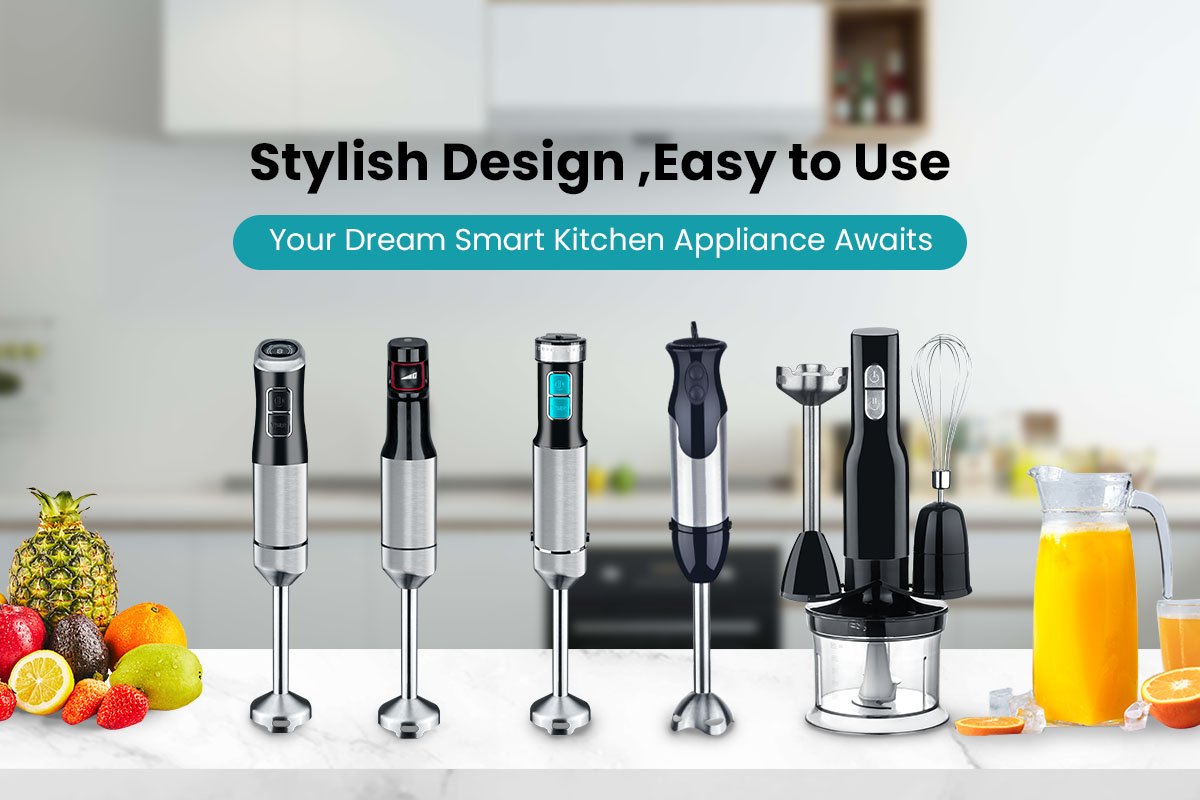
Choosing a blender manufacturer is not only about comparing quotations. A reliable supplier must be able to prove factory identity, manage OEM and ODM development, control quality in mass production, and meet export compliance requirements. KANGJIA positions itself as a small home appliance manufacturer integrating development, production, and sales, with product coverage including Hand Blenders, Table Blenders, Nutrition Blenders, and mini choppers. Its website also states that it operates its own injection shop, hardware shop, assembly shop, motor shop, R&D department, and testing room, which is a strong signal for buyers evaluating a real blender manufacturer instead of a trading company.
Check Whether It Is A Real Manufacturer Or A Trader
The first step in any project sourcing checklist is to verify whether the supplier actually controls production. A trader may offer fast communication, but a factory gives stronger visibility into tooling, material selection, production scheduling, and corrective action. KANGJIA highlights integrated production and says it offers more than 250 kitchen appliance models, while its published company information and product pages repeatedly describe in-house production capability and direct manufacturing structure. For buyers planning long-term volume orders, this matters because manufacturer control usually leads to better price stability, clearer lead times, and faster engineering response.
Review The OEM And ODM Process Before Quotation
A serious OEM blender supplier should explain how customization is managed before the order starts. KANGJIA’s recent technical content shows that buyers are expected to provide technical and commercial information for ODM blender development, while its OEM articles mention appearance customization, function adjustment, attachment selection, logo placement, and packaging adaptation. This is important because the true cost and timing of a blender project depend on how clearly the supplier can control development steps such as sampling, confirmation, engineering changes, and packaging approval. A factory with a structured OEM and ODM process usually reduces revision risk during mass production.
Understand The Manufacturing Process Overview
Before selecting a supplier, buyers should ask for a clear manufacturing process overview. KANGJIA’s published lead time guidance describes blender production through component inspection, motor assembly, blade installation, housing assembly, final testing, and shipment preparation. The same article notes that standard orders often require 20 to 35 days, while production preparation can take about 5 to 10 days and final inspection usually takes 3 to 5 days. These numbers are useful because they help buyers judge whether a supplier is giving realistic schedules or only sales promises.
Confirm Quality Control Checkpoints
For bulk blender sourcing, a low quote means little without a stable blender quality control system. KANGJIA states that it has its own testing room and performs rigorous quality checks, while its application articles refer to prototype validation, repeated start-stop cycle testing, heat rise testing, and splash control evaluation. These checkpoints matter because blender reliability depends on motor stability, blade balance, sealing performance, electrical safety, and consistent assembly. Buyers should always ask how incoming materials are checked, how in-process defects are controlled, and how finished units are tested before shipment.
Verify Material Standards Used
Material quality is one of the most important bulk supply considerations. KANGJIA lists certifications including GS, CE, CB, LFGB, RoHS, and REACH on its site, which indicates attention to both electrical and material compliance. On one blender product page, it also specifies a glass jug, stainless steel blades, a 1.5 liter capacity, and 300 to 500 watt power options. These details are valuable because buyers can assess whether the supplier is using materials suitable for durability, food contact, and target market positioning rather than relying on generic catalog descriptions.
Check Export Market Compliance
A blender supplier must also understand export market compliance. IEC 60335-2-14:2025 covers kitchen machines including blenders and states that the standard applies to appliances with rated voltage not more than 250 V. In the EU, RoHS rules restrict hazardous substances in electrical and electronic equipment, and the European Commission notes that WEEE is one of the fastest-growing waste streams. For buyers, this means compliance is not just a label issue. It affects design choice, materials, test planning, declarations, and market entry risk. A supplier that already works with CE, RoHS, and related requirements is easier to evaluate for export programs.
Evaluate Bulk Supply Stability
Large orders require more than factory photos. Buyers should check whether the manufacturer can secure motors, blades, switches, and housing materials during peak season. KANGJIA’s supply-related content explains that integrated facilities, component inventory preparation, and structured inspections help maintain stable output when demand rises. Its site also highlights internal workshops and multiple product platforms, which support flexible scheduling across blender programs. For buyers comparing a blender factory China source, supply continuity is often as important as the initial quotation.
Practical Checklist Before Final Selection
| Check item | Why it matters |
|---|---|
| Manufacturer or trader | Decides production control, cost transparency, and engineering speed |
| OEM and ODM workflow | Affects sampling, branding, packaging, and lead time |
| Production process | Helps verify realistic delivery planning |
| Quality checkpoints | Reduces claim risk and shipment inconsistency |
| Material standards | Supports durability, food contact suitability, and positioning |
| Compliance capability | Lowers certification and export risk |
| Bulk supply readiness | Protects delivery performance during large orders |
Final Thought
The right blender supplier should be able to show real production capability, organized OEM and ODM management, stable quality systems, clear material specifications, and export compliance knowledge. KANGJIA’s public information points to an integrated factory model with in-house workshops, testing support, multiple blender categories, and certification awareness, which gives buyers a more practical basis for evaluation than price alone.