




What Questions Should Importers Ask When Sourcing Kitchen Appliances From China?
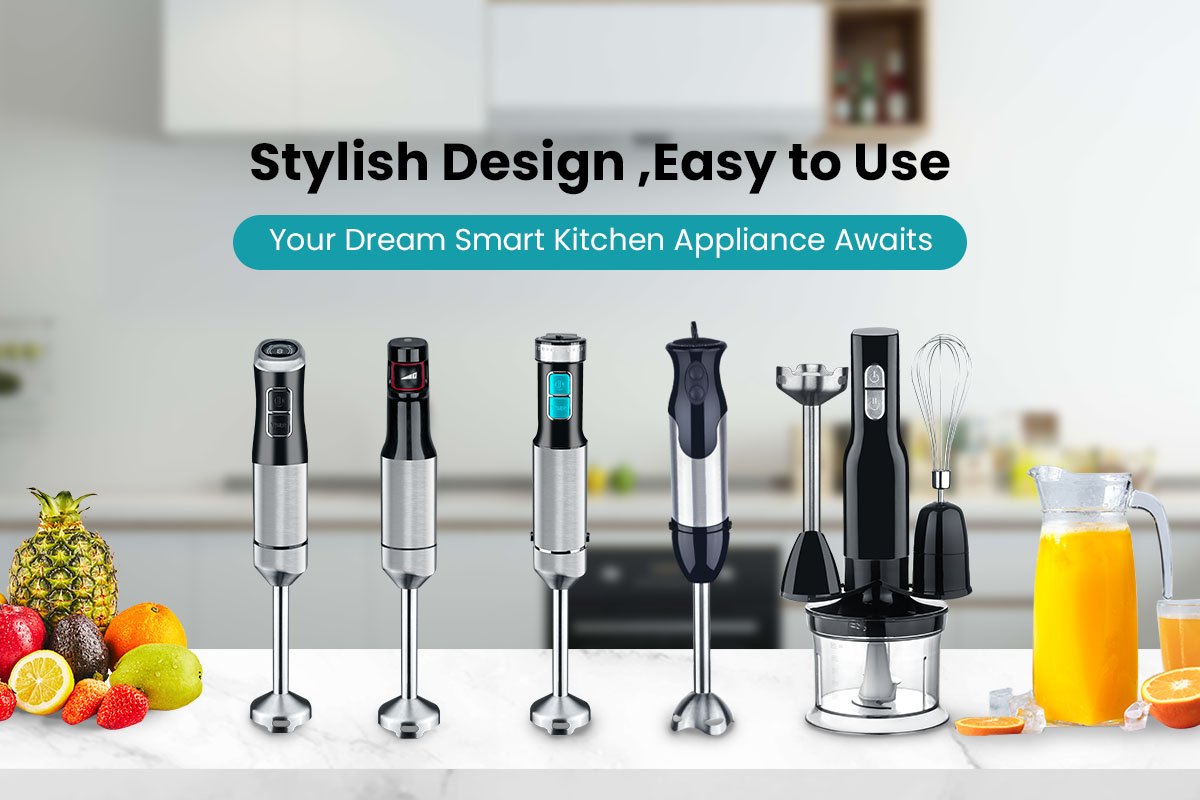
Sourcing from China starts with one basic question: is the supplier a real factory with stable production control, or only a sales company managing outside resources? That distinction affects lead time, pricing logic, engineering response, and after-sales handling. For kitchen appliances, a strong kitchen appliance manufacturer in China should be able to show its workshop structure, testing capability, product range, and export experience. KANGJIA presents itself as a manufacturer integrating development, production, and sales, and its product range includes Hand Blenders, Table Blenders, Nutrition Blenders, mini choppers, and other small appliances.
Is This Supplier A Manufacturer Or A Trader?
Importers should ask who controls tooling, materials, assembly, and final inspection. A trader can help with communication, but a manufacturer normally gives better visibility into production planning and technical changes. KANGJIA’s public materials describe in-house departments such as injection, hardware, assembly, motor, R&D, and testing, which is exactly the kind of proof importers should ask to review during supplier evaluation. This is a key checkpoint when comparing a small appliance factory with a trading company.
How Does The OEM And ODM Process Work?
Another important question is whether the supplier has a structured OEM / ODM process. KANGJIA’s published ODM content explains that buyers normally need to provide technical and commercial information before development begins. That matters because unclear input at the start often leads to repeated sample changes, packaging revision, or delayed approval. For importers handling branded programs, a supplier with an organized OEM blender supplier workflow is usually easier to manage than one that only offers standard catalog products.
What Is The Manufacturing Process Overview?
Importers should ask for a clear manufacturing process overview rather than a simple promise on delivery. A reliable factory should explain how components are inspected, how motors and blades are assembled, how housing and controls are fitted, and how finished units are tested before packing. KANGJIA’s technical content also refers to prototype validation, repeated start-stop cycle testing, heat-rise testing, and splash control evaluation, which are useful signals that engineering checks are built into development rather than handled only after complaints appear.
What Quality Control Checkpoints Are Used?
For a real project sourcing checklist, importers should ask what is checked at incoming inspection, during assembly, and before shipment. In kitchen appliances, common control points include motor stability, blade balance, sealing performance, electrical safety, and finished-product function testing. KANGJIA’s own technical articles emphasize validation under demanding use conditions, which supports the case for asking detailed questions about quality control checkpoints before any bulk order is confirmed.
What Material Standards And Compliance Requirements Apply?
Material standards should never be treated as a minor issue. For export programs, food-contact parts and electrical parts both matter. In the EU, food contact materials must comply with Regulation EC No 1935/2004, while good manufacturing practice is also part of the framework. For electrical safety, IEC 60335-2-14:2025 covers kitchen machines including blenders and applies to appliances with rated voltage not more than 250 V. These are practical checkpoints for buyers comparing export-compliant kitchen appliance sourcing options.
Can The Factory Support Bulk Supply And Export Markets?
Bulk orders require more than sample quality. Importers should ask how the factory handles component preparation, production scheduling, carton planning, and repeat-order consistency. Export market compliance is part of this review as well. In the EU, RoHS restricts hazardous substances in electrical and electronic equipment, and the European Commission notes that waste electrical and electronic equipment is one of the fastest-growing waste streams. A supplier already familiar with these rules is usually better prepared for smoother approval and shipment release.
A Simple Question List Before Ordering
| Question | Why it matters |
|---|---|
| Are you a manufacturer or a trader? | Confirms control over cost, production, and corrective action |
| What is your OEM and ODM process? | Helps judge sampling efficiency and customization ability |
| What does your production flow look like? | Verifies whether delivery promises are realistic |
| What are your quality control checkpoints? | Reduces defect risk in bulk supply |
| What material standards do you follow? | Supports food-contact safety and product durability |
| What export compliance experience do you have? | Lowers approval and market-entry risk |
| How do you manage repeat orders? | Protects consistency across long-term supply programs |
Final Thought
The best sourcing questions are the ones that uncover how a factory really operates. Importers should not only ask for price, but also verify manufacturer status, OEM and ODM structure, production flow, testing routines, material standards, and export compliance readiness. Based on KANGJIA’s public information, the company shows the core features buyers usually expect from a reliable kitchen appliance supplier: integrated manufacturing, active product development, and technical attention to quality and export requirements.