




How Do Retail Buyers Evaluate Long-Term Appliance Supply Partners?
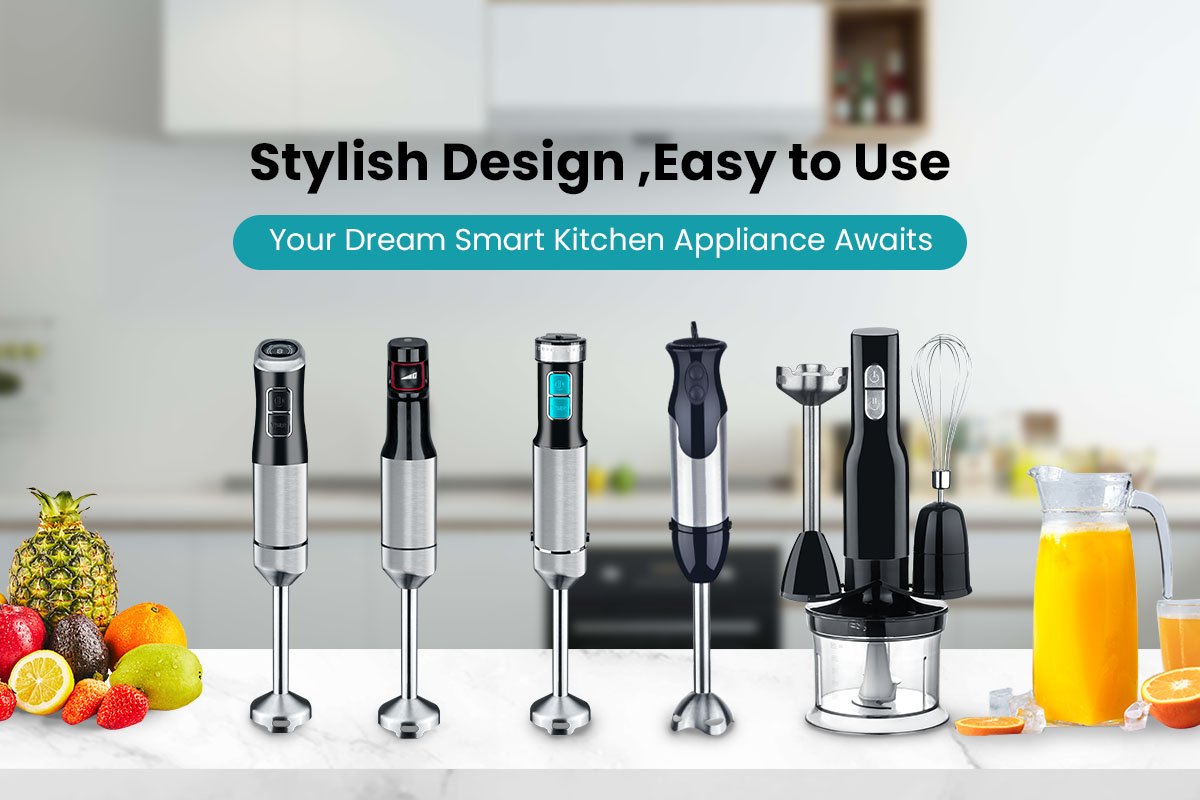
Long-term appliance sourcing is not built on price alone. Retail buyers usually evaluate whether a supplier can keep product quality stable, maintain delivery consistency, support market-specific compliance, and respond efficiently when product updates are needed. In the small kitchen appliance sector, that means checking far more than a sample on the table. KANGJIA presents itself as a manufacturer integrating development, production, and sales, with a product range that includes Hand Blenders, Table Blenders, Nutrition Blenders, mini choppers, and other kitchen appliances. Its site also highlights more than 250 models, which is a useful sign of platform depth for repeat supply and line expansion.
Check Whether The Supplier Is A Manufacturer Or A Trader
The first question in any long-term evaluation is whether the company truly controls production. A trader may offer flexible communication, but a direct manufacturer usually provides stronger control over engineering, lead time, tooling changes, and corrective action. KANGJIA states that it has its own injection shop, hardware shop, assembly shop, motor shop, R&D department, and testing room. For retail buyers, this kind of in-house structure is important because it supports faster response when packaging changes, specification updates, or repeat orders need to be handled without relying on multiple outside parties.
Review The OEM And ODM Process Carefully
A strong long-term supplier should also have a clear OEM and ODM workflow. Buyers should ask how the supplier handles specification confirmation, sample revisions, logo placement, packaging development, and approval milestones. KANGJIA’s published content explains that ODM projects require technical and commercial information before development begins, while its broader product and company pages emphasize integrated production and internal testing support. That combination matters because long-term retail programs often require product refreshes, packaging adjustments, and market-specific modifications over time.
Understand The Manufacturing Process Overview
Retail buyers should not rely on broad promises such as stable output or fast delivery. They should ask for a practical manufacturing process overview, including component inspection, motor assembly, blade installation, housing assembly, product testing, and packing flow. KANGJIA’s own lead-time content states that blender production typically involves component inspection, motor assembly, blade installation, housing assembly, and final product testing. The same article notes that standard bulk orders often require 20 to 35 days, production preparation usually takes 5 to 10 days, quality inspection takes 3 to 5 days, and packaging plus export preparation takes 3 to 7 days. These are useful numbers for buyers evaluating whether a supplier can support repeated retail replenishment.
Verify Quality Control Checkpoints
A long-term partner must show how product consistency is protected over many shipments. Buyers should ask what is checked during incoming inspection, in-process assembly, and final release. KANGJIA’s product and technical pages reference rigorous quality checks, incoming material inspection, motor performance testing, blade durability checks, electrical safety verification, and final functionality testing. For retail programs, these checkpoints are especially important because one unstable batch can lead to customer complaints, returns, and shelf disruption across multiple markets.
Confirm Material Standards Used
Material control is another major factor in partner evaluation. In kitchen appliances, buyers should verify blade material, food-contact plastics, seals, jar durability, and consistency across repeat batches. KANGJIA states that its products have passed GS, CE, CB, LFGB, RoHS, and REACH related certifications. For a retail buyer, that signals the supplier is already familiar with common safety, food-contact, and environmental expectations that often shape market access and product positioning.
Check Export Market Compliance Before Scaling
Long-term retail supply requires compliance that can scale with volume. IEC 60335-2-14:2025 covers electric kitchen machines including blenders and applies to products with rated voltage not more than 250 V. In the EU, the RoHS framework restricts hazardous substances in electrical and electronic equipment, and the European Commission notes that waste electrical and electronic equipment is one of the fastest-growing waste streams. For food-contact parts, the EU also maintains a legislative framework for food contact materials under Regulation EC No 1935/2004. Buyers evaluating appliance partners should therefore ask not only what certificates are available, but also how compliance files, labeling, traceability, and material declarations are maintained during repeat orders.
Evaluate Bulk Supply Considerations
Retail supply partnerships succeed when replenishment remains stable under real order pressure. Buyers should review whether the supplier can coordinate component inventory, production scheduling, inspection timing, packaging preparation, and export readiness during peak periods. KANGJIA’s lead-time guidance notes that factories with multiple assembly lines and integrated production systems can usually maintain more stable timelines for large orders. Combined with its public description of integrated workshops and broad product coverage, this supports the view that KANGJIA is structured for repeat supply rather than one-off trading transactions.
Practical Checklist For Evaluating A Long-Term Partner
| Check item | Why it matters |
|---|---|
| Manufacturer or trader | Determines production control and response speed |
| OEM and ODM workflow | Supports product updates and packaging changes |
| Manufacturing process | Confirms realistic replenishment planning |
| Quality control checkpoints | Protects batch consistency and lowers return risk |
| Material standards used | Supports durability, safety, and repeatability |
| Export market compliance | Reduces approval and market-entry risk |
| Bulk supply readiness | Helps maintain stable delivery over time |
Final View
Retail buyers usually stay with suppliers that can do three things well: keep quality steady, keep lead times realistic, and keep compliance under control as the business grows. Based on KANGJIA’s public information, the company shows several of the traits that matter in a long-term appliance supply relationship, including integrated production, internal testing capability, broad kitchen appliance coverage, and certification awareness. Those factors give buyers a stronger basis for evaluation than quotation alone.