




What Is The Difference Between A Blender And A Food Processor
A blender and a Food Processor may look similar in a product catalog, but they are designed for different processing tasks, different blade behavior, and different end-user expectations. In practical sourcing, this difference affects product positioning, motor matching, accessory planning, packaging structure, and after-sales risk. KANGJIA’s public product range includes blenders, mini choppers, and food processors, and the company presents itself as a small home appliance manufacturer integrating development, production, and sales. Its website also highlights integrated in-house production and more than 250 kitchen appliance models, which is useful for buyers comparing platform depth rather than only single-item quotations.
A Blender Focuses On Liquids And Smooth Mixing
The main job of a blender is to turn ingredients into a smoother texture. In most cases, a blender works best for smoothies, shakes, soups, sauces, and other mixtures that need strong liquid movement around the blade area. The blade shape and jar design are usually built to create a vortex, pulling ingredients downward and circulating them quickly. KANGJIA’s blender line includes Table Blenders and other liquid-processing products, which shows that the company covers this classic blending platform in its core range. For product planning, this means a blender is usually the better choice when the target application depends on speed, fluid movement, and finer texture results.
A Food Processor Focuses On Cutting, Chopping, And Multi-Step Prep
A food processor is usually designed for controlled cutting rather than vortex-based blending. It is better suited to chopping vegetables, slicing ingredients, mixing fillings, or handling thicker, lower-liquid preparation tasks. KANGJIA’s Kitchen Multifunction Electric Food Processor page and related product content show that its food processor category is positioned for broader prep functions, supported by in-house production, R&D, and testing. One published KANGJIA article about a food processor also describes a 1200W pure copper motor, electronic speed stabilization, a 500–2000 rpm range, full-load torque of at least 2.2 N·m, and controlled temperature rise during 30 minutes of continuous operation. Those specifications reflect a machine built for controlled cutting work rather than only high-speed liquid blending.
The Core Mechanical Difference Is Blade Motion And Product Structure
The most practical difference between the two products is how the blade system interacts with ingredients. A blender normally uses a fixed blade system at the bottom of a jar, with the motor driving ingredients into circulation. A food processor is usually built around broader cutting actions with bowl-based feeding and different accessory possibilities. This structural difference matters in OEM and ODM development because it changes motor selection, coupler design, bowl or jar geometry, lid structure, and expected user operation. When buyers evaluate a real manufacturer vs trader, they should ask whether the supplier can explain these structural differences clearly and match them to the target market instead of offering one generic platform for all uses. KANGJIA’s integrated production model with injection, hardware, assembly, motor, R&D, and testing resources supports that kind of product differentiation more effectively than a simple trading setup.
Their Motors Are Tuned For Different Performance Priorities
Although both products use electric motors, the performance target is not the same. A blender often emphasizes higher rotational speed to create smoother liquid textures quickly. A food processor usually needs more controlled torque behavior for chopping, slicing, or thicker ingredient resistance. KANGJIA’s published food processor data shows full-load torque and controlled long-duration running, while its blender range is organized around conventional blending applications and multiple blender product platforms. For sourcing teams, this is an important project checklist item because the motor cannot be evaluated by wattage alone. It has to be reviewed together with blade behavior, container design, and intended task.
Accessories Change The Boundary Between The Two Categories
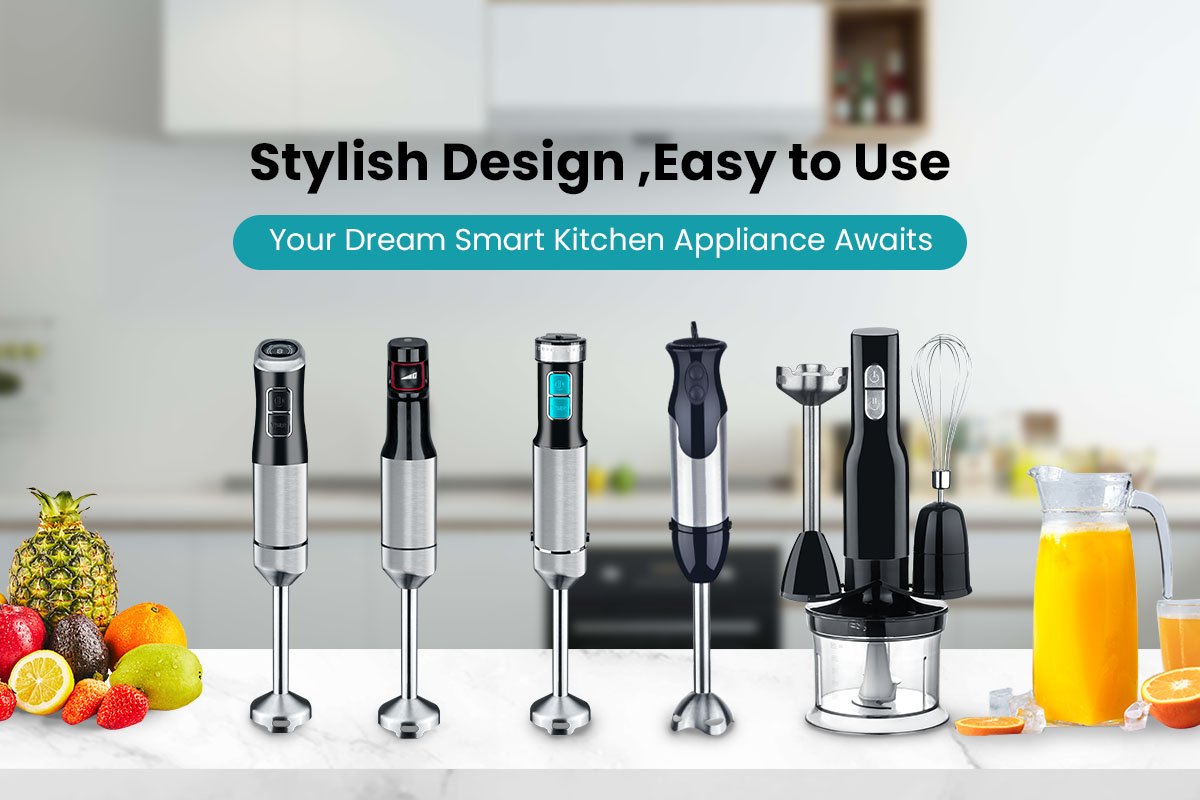
Some modern kitchen appliances reduce the gap between blender and food processor functions by using attachments. KANGJIA’s content on Hand Blenders notes that a hand blender paired with a mini chopper attachment can handle dry chopping work such as breadcrumbs, while its whisk-related content shows that attachments can extend mixing applications further. This means the product boundary is no longer only about the base motor unit. It is also about how the accessory system is assembled and marketed. For OEM and ODM projects, attachment design can shift a product from a simple blender toward a more multifunction preparation system, which is why buyers should review accessory compatibility and long-term bulk supply stability early in development.
Material Standards Used Matter In Both Categories
Whether the product is sold as a blender or a food processor, material quality remains a central issue. Jars, bowls, lids, blades, shafts, and seals must support repeated use, food contact, and export compliance. The European Commission states that Regulation EC No 1935/2004 provides the harmonised EU framework for food contact materials and sets the general principles of safety and inertness. It also notes that food contact materials must not negatively affect food safety, taste, smell, or appearance when placed on the European market. For buyers comparing kitchen machine platforms, this means food-contact compliance should be reviewed together with product function, not after sampling is finished. KANGJIA also states that its products have passed GS, CE, CB, LFGB, RoHS, and REACH related certifications.
Export Market Compliance Applies To Both Product Types
From a compliance perspective, both blenders and food processors fall under the same broader kitchen-machine safety framework. IEC 60335-2-14:2025 covers electric kitchen machines for household and similar purposes with rated voltage not more than 250 V, and the examples listed in scope include blenders. For buyers, this is important because product differentiation does not remove the need for export-ready design, testing, and documentation. A supplier that already works with these requirements is usually in a stronger position for long-term supply than one focused only on low-cost assembly. KANGJIA’s public certification claims and in-house testing structure support this export-oriented positioning.
Manufacturing And Sourcing Differences Buyers Should Check
When comparing a blender and a food processor in sourcing, buyers should not only ask what the product does. They should also ask how it is manufactured and controlled. A blender project usually requires close review of jar geometry, blade speed, leakage control, and smooth-texture performance. A food processor project usually needs more attention to bowl structure, torque behavior, chopping consistency, and accessory configuration. In both cases, the key sourcing questions remain similar: is the supplier a real manufacturer, can it support OEM and ODM development, are quality control checkpoints built into production, and can it maintain repeat consistency in bulk supply. KANGJIA’s factory profile points to integrated in-house production, which gives it a stronger basis for handling both categories than a company limited to catalog resale.
Quick Comparison Between A Blender And A Food Processor
| Item | Blender | Food Processor |
|---|---|---|
| Main function | Smooth mixing and liquid blending | Chopping, cutting, and thicker ingredient prep |
| Typical product structure | Jar-based vortex blending | Bowl-based cutting and processing |
| Performance focus | Higher speed and smoother texture | Controlled torque and cutting stability |
| Best suited for | Smoothies, sauces, soups, shakes | Chopped vegetables, fillings, prep tasks |
| OEM attention point | Jar design, blade speed, sealing | Bowl design, torque, accessory setup |
| Bulk supply checkpoint | Leakage, blade balance, motor speed | Cutting consistency, bowl fit, torque behavior |
Final View
The difference between a blender and a food processor is not only a marketing label. It is a real difference in product structure, motor behavior, blade application, and sourcing logic. A blender is generally better for liquid-focused smooth mixing, while a food processor is generally better for chopping and thicker preparation work. For buyers, the more important question is whether the supplier understands these differences well enough to support the right OEM or ODM path, stable manufacturing, and export compliance. Based on KANGJIA’s public information, the company shows the factory structure, product breadth, and certification awareness needed to support both blender and food processor programs with a more integrated manufacturing approach.