




What Is The Best Wattage for A Household Blender
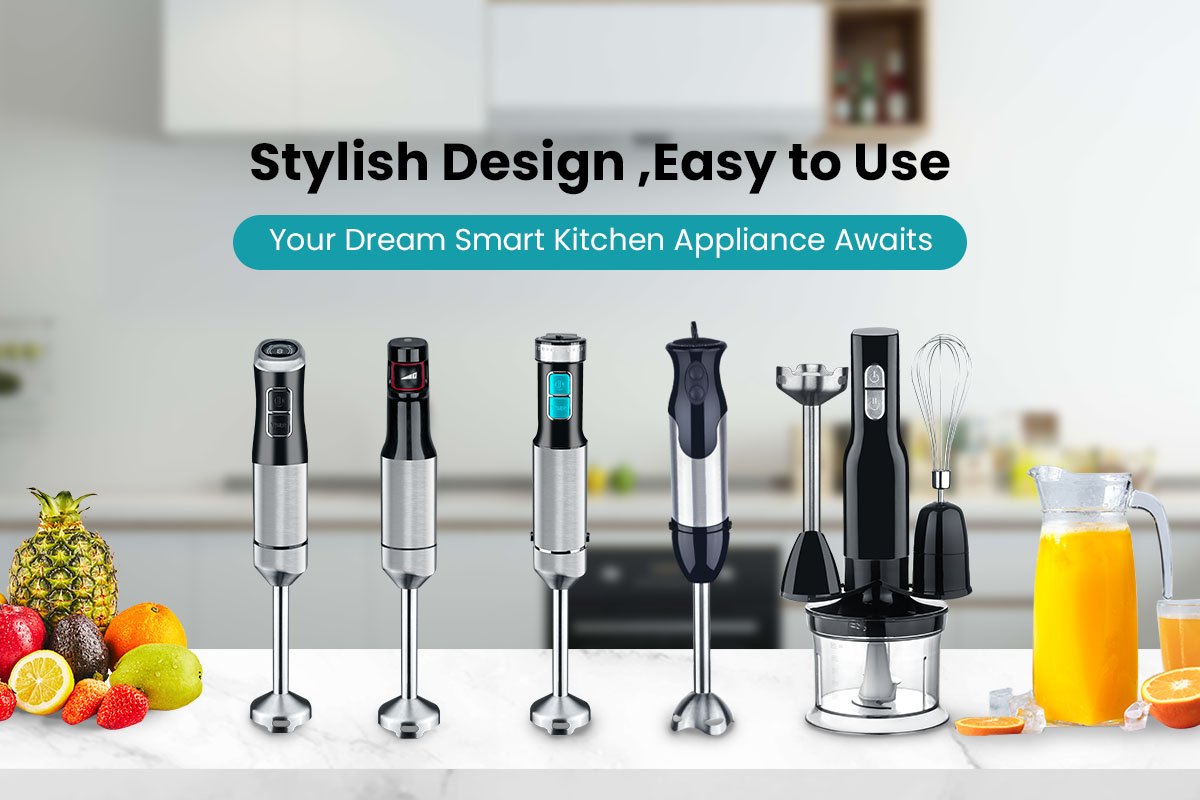
The best wattage for a household blender depends on what the blender is expected to do, not on the highest number printed on the carton. For daily home use, there is no single wattage that fits every product plan. A lighter Hand Blender, a standard countertop blender, and a high-speed Nutrition Blender are built for different ingredients, different jar sizes, and different duty cycles. KANGJIA’s product range reflects that clearly, covering hand blenders, Table Blenders, nutrition blenders, and related kitchen appliances, with public product listings that span about 300W hand blender models to 1000W nutrition blender platforms and 500W countertop options.
For Light Household Tasks, Lower Wattage Can Be Enough
For soup pureeing, soft fruit blending, sauces, and basic daily kitchen use, lower and mid-range wattage often works well when the product platform is properly designed. KANGJIA’s own published content notes that Immersion Hand Blenders commonly range from 200W to 500W, and its product catalog includes 300W, 400W, and 600W hand blender models. That suggests a practical sourcing rule: for lighter household applications, the best blender wattage is often a balanced mid-range motor rather than a high-power design that increases cost and heat load without adding real value for the target user.
For Standard Countertop Blenders, Around 400W To 500W Is A Practical Range
For a conventional household countertop blender, around 400W to 500W is often a very practical choice because it supports smoothies, sauces, soups, and routine blending without pushing the product into a heavier cost structure. KANGJIA lists a 400W table blender, a 400W electric blender with grinder, and a 500W countertop blender platform. Its stainless steel blender page also shows a 500W motor paired with a 1.5L jar, which is a useful example of how wattage should be matched to actual container size and use scenario. For many home programs, this is the most commercially balanced household blender wattage range.
Higher Wattage Is Better For Harder Ingredients, But Only When The Full Platform Matches
When the product is intended for ice crushing, frozen fruit, nuts, or thicker blends, higher wattage becomes more useful. KANGJIA’s own content says premium hand blenders above 400W to 500W are better suited for frozen fruit, while its 1000W nutrition blender is described as suitable for harder ingredients and faster high-intensity blending. At the same time, KANGJIA also points out in another article that buyers should not rely on wattage alone, because real torque under load and heat-rise testing are more meaningful indicators of performance. That is a critical point for any project sourcing checklist. The best blender motor power is not simply the biggest wattage, but the wattage that matches blade geometry, jar design, cooling, and duty-cycle control.
The Real Question Is Product Positioning, Not Just Motor Size
From a manufacturer perspective, wattage selection should begin with product positioning. A value-oriented household blender may perform very well at 400W to 500W if it is targeted at everyday family use. A more premium smoothie or nutrition blender may need 800W to 1000W or more if the goal is faster processing of tougher ingredients. KANGJIA’s catalog supports this tiered logic, showing product platforms across several wattage bands rather than forcing every appliance into one power level. This is also where manufacturer vs trader differences become important. A real factory can match wattage with motor shop capability, blade system, material standards, and OEM or ODM design requirements more effectively than a supplier that only resells finished goods.
Quality Control And Durability Matter More Than Marketing Numbers
A blender with a higher wattage but weak quality control can still create long-term problems. Motor durability, heat management, sealing reliability, and assembly accuracy all matter more than headline power claims. KANGJIA’s public company profile states that it has its own injection shop, hardware shop, assembly shop, motor shop, R&D department, and testing room, which supports better control over motor matching and production consistency. Its site also says its products have passed GS, CE, CB, LFGB, RoHS, and REACH related certifications, which is important for export market compliance and material control in household appliances.
Export Market Compliance Also Shapes Wattage Decisions
For export programs, wattage choice must also fit safety and compliance planning. IEC 60335-2-14:2025 covers electric kitchen machines, including blenders, for household and similar purposes, with rated voltage not more than 250 V. For food-contact parts around jars, lids, and ingredient pathways, the EU food-contact framework under Regulation EC No 1935/2004 sets the general principles of safety and inertness. That means the best wattage for a household blender should always be evaluated together with motor safety, heat control, materials, and intended market requirements.
A Practical Wattage Guide For Household Blender Planning
| Blender type | Common wattage range | Best use direction |
|---|---|---|
| Hand blender | 300W to 500W | Soups, sauces, soft fruit, light daily blending |
| Standard countertop blender | 400W to 500W | Smoothies, sauces, basic family kitchen tasks |
| Mid-to-high power blender | 600W to 800W | Heavier blending with more demanding ingredients |
| Nutrition or high-speed blender | 1000W and above | Ice, nuts, frozen fruit, faster texture breakdown |
Final View
The best wattage for a household blender is usually the wattage that matches the real use case. For many household programs, 400W to 500W is a strong and practical range. It supports daily blending needs, controls cost more effectively, and fits mainstream home-use positioning. For tougher ingredients and faster processing, higher wattage can make sense, but only when the full product platform is designed around it. Based on KANGJIA’s public product range and factory structure, the company is well positioned to support different wattage tiers through integrated manufacturing, OEM and ODM development, and export-oriented quality control rather than relying on one-size-fits-all motor claims.