




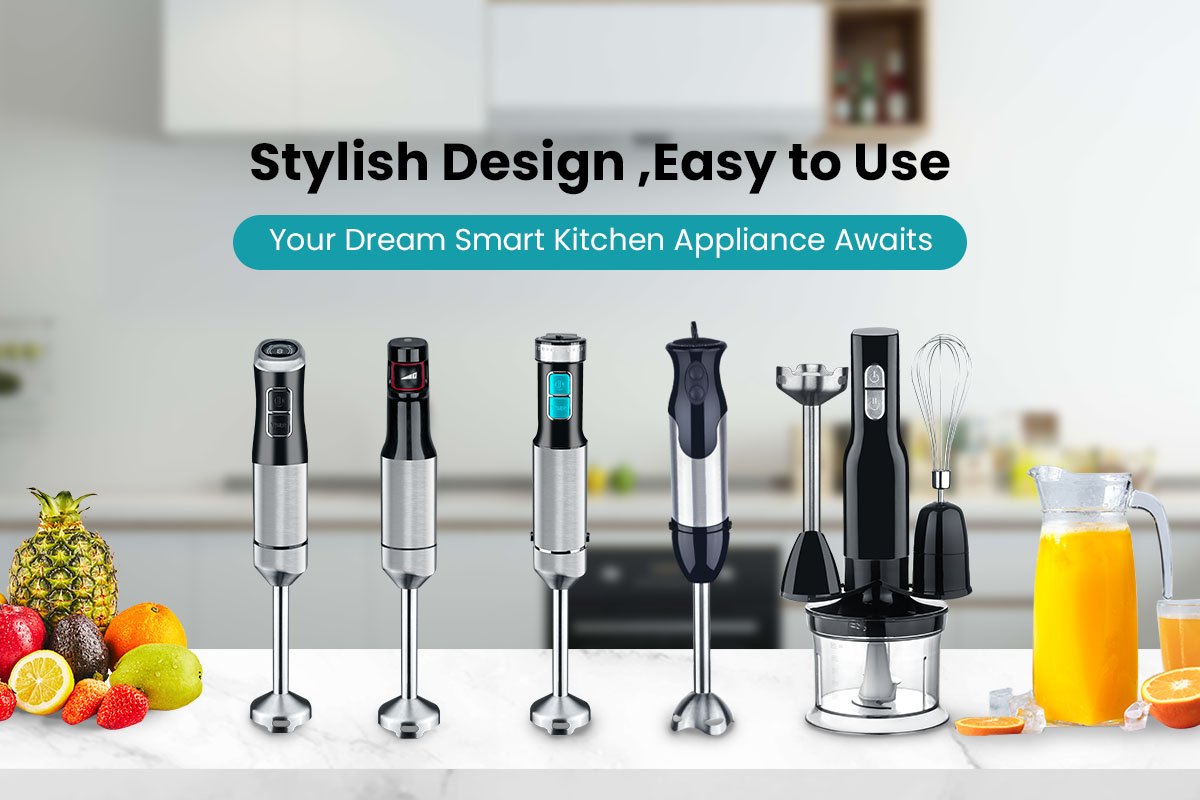
Why Do Some Blenders Have Multiple Speed Settings?
Speed Control Helps Match Different Ingredients
Some blenders have multiple speed settings because different ingredients need different blending force. Soft fruit, milkshakes, sauces, soups, frozen fruit, nuts, and crushed ice do not respond the same way inside the jar. Low speed helps start mixing smoothly, while higher speed improves cutting, circulation, and final texture.
KANGJIA’s High-Speed blender uses a 500W motor, stainless steel blade structure, stainless steel housing, and five blending speed levels. Its 2-In-1 Multi-Function Professional Blender also lists 5 speed plus pulse speed, a 1.5L glass jug, and stainless steel cross blade for blending. These details show how speed control supports more flexible kitchen use.
How Different Speeds Work In Daily Use
| Speed Setting | Best Use | Buyer Should Check |
|---|---|---|
| Low speed | Soft fruit, sauces, light mixing | Smooth start and stable motor response |
| Medium speed | Milkshakes, soup, puree | Texture control and jar circulation |
| High speed | Frozen fruit, thicker drinks | Torque, blade strength, heat control |
| Pulse speed | Ice, nuts, short power bursts | Motor protection and switch durability |
| Variable control | Different recipes and textures | User convenience and product positioning |
Why Multiple Speeds Improve Product Value
A blender with only one speed may be simple, but it gives users less control. Multiple speed settings allow the same appliance to handle more recipes, which improves product value for retail shelves, kitchen appliance channels, and private label product lines.
For example, a smoothie needs strong circulation for a fine texture. A sauce may need slower blending to avoid over-processing. Ice crushing often needs pulse control because short bursts reduce stress on the motor and blade system. For buyers planning bulk order programs, speed options can help create different product levels without changing the whole appliance platform.
Factory Control Matters Behind The Speed Design
Speed settings are not only about adding buttons. The motor, circuit control, blade structure, jar shape, switch durability, and cooling design must work together. A blender with many speeds but weak motor control may still perform poorly under thick ingredients.
KANGJIA Electrical Appliances Co., Ltd. is a small home appliance manufacturer integrating development, production, and sales. The company has its own injection shop, hardware shop, assembly shop, motor shop, R&D department, and testing room. Its products have passed GS, CE, CB, LFGB, RoHS, REACH, and other certification-related checks, supporting export-oriented appliance projects.
Professional Advice Before Ordering
Before choosing Blenders with multiple speed settings, buyers should confirm motor power, speed levels, pulse function, jar capacity, blade material, voltage, plug type, noise level, packaging format, and certification needs. For OEM/ODM projects, our team can recommend a suiTable Blender platform according to target recipes, market price level, and bulk order plan.
Share your product direction with KANGJIA, and we can help prepare a practical blender solution for stable supply and long-term product development.