




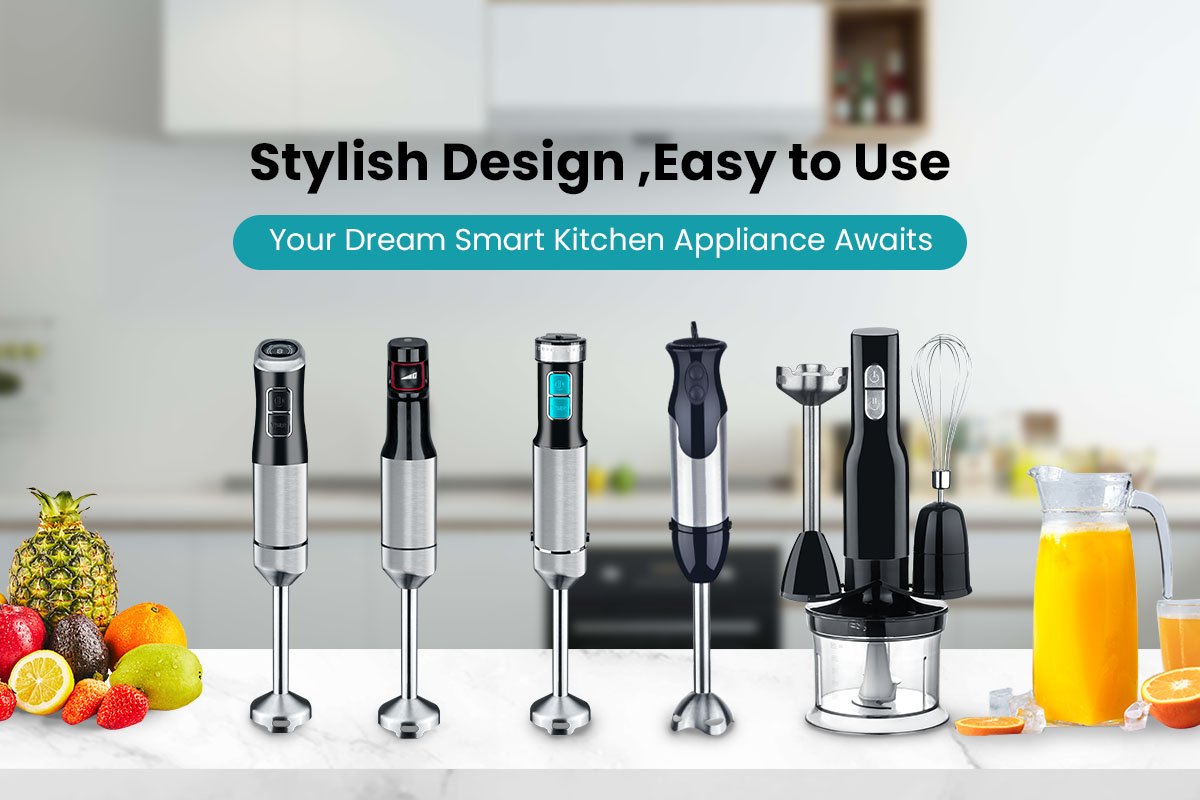
Top 10 Electric Blender Manufacturers In China
Choosing the Top 10 Electric Blender Manufacturers In China is not only about finding a low unit price. A reliable electric blender project needs stable motor performance, safe material selection, OEM / ODM capability, quality testing, and export compliance.
China is a major manufacturing base for small kitchen appliances. Electric blenders are widely sourced for supermarkets, online retail, kitchenware channels, and private label appliance programs. For long-term supply, buyers should focus on whether the factory can control production details instead of only offering ready-made models.
Manufacturer Vs Trader
A manufacturer can manage product structure, motor matching, housing injection, blade assembly, testing, and packaging more directly. A trader may provide many choices, but usually depends on external factories for delivery and quality control.
KANGJIA Electrical Appliances Co., Ltd. was established in 2017 in Jiangmen, Guangdong. The company focuses on small home appliances, including electric blenders, Hand Blenders, Table Blenders, Nutrition Blenders, mini choppers, Food Processors, and juicers. Its public factory information shows injection shop, hardware shop, assembly shop, motor shop, R&D department, and testing room, which supports practical OEM / ODM project control.
OEM / ODM Process
For an electric blender OEM / ODM project, buyers should first confirm the target market and sales channel. Key details include wattage, voltage, plug type, jar capacity, blade material, motor speed, housing color, logo, control panel, instruction manual, carton design, and certification needs.
| Project Item | Key Sourcing Check |
|---|---|
| Factory Type | Manufacturer or trader |
| Product Design | Power, jar, blade, housing |
| Customization | Logo, color, packing, manual |
| Testing | Motor, leakage, noise, sealing |
| Compliance | CE, CB, GS, LFGB, RoHS, REACH |
Manufacturing Process Overview
Electric blender production usually includes plastic injection, motor preparation, blade processing, jar matching, base assembly, wiring, function testing, cleaning, packing, and carton inspection. Each process affects product consistency during bulk supply.
Important quality control checkpoints include motor temperature rise, blade balance, jar sealing, switch life, base stability, noise level, safety lock function, power cord strength, and packing drop resistance.
Material Standards And Export Compliance
Because electric blenders contact food, material standards are important. Buyers should check food-contact plastic jars, stainless steel blades, sealing parts, safe wiring, plug quality, and compliant labels.
KANGJIA’s public information shows export-related certification support including GS, CE, CB, LFGB, RoHS, and REACH. These references help support electric blender projects for Europe and other international markets.
Bulk Supply Considerations
Before placing a bulk order, buyers should prepare a project sourcing checklist covering MOQ, lead time, production capacity, spare parts, voltage standard, plug type, carton size, loading quantity, inspection method, and after-sales support.
KANGJIA offers more than 250 kitchen appliance models, giving buyers flexibility when building a wider appliance catalog. Its integrated production system helps reduce communication cost and improve consistency across repeated orders.
Why KANGJIA Fits Electric Blender Sourcing
As an electric blender manufacturer in China, KANGJIA supports product selection, private label customization, sample adjustment, production control, quality testing, and export preparation. For buyers planning long-term electric blender sourcing, KANGJIA provides a stable manufacturing base for OEM / ODM kitchen appliance projects.
Keywords: Top 10 Electric Blender Manufacturers