




How Do Buyers Choose A Reliable Blender Manufacturer
Choosing a reliable blender manufacturer is an important step when developing kitchen appliance products. A suitable manufacturing partner is not only responsible for product supply but also influences product quality, production stability, customization capability, and long-term market performance.
A professional manufacturer should have complete production capabilities, engineering experience, and quality management systems. At KANGJIA, we focus on small kitchen appliance manufacturing with integrated capabilities covering motor production, injection molding, hardware processing, product assembly, and testing. This allows us to control key production stages and provide stable OEM and ODM solutions for global markets. (kjelectrical.cn)
Manufacturer vs Trader: The First Factor To Evaluate
The first difference buyers should understand is the difference between a manufacturer and a trading company.
A trading company mainly connects suppliers and customers, while a direct kitchen appliance manufacturer participates in product development, production management, and quality control.
Working with a factory provides advantages such as:
Direct communication with engineering teams
Better control of product specifications
Faster response to design changes
More stable production scheduling
Stronger quality traceability
For blender projects, manufacturing capability is especially important because the product involves multiple production stages, including motor assembly, electronic control, plastic molding, blade installation, and final testing.
A reliable manufacturer should be able to explain not only the product features but also how the product is designed, produced, and tested.
Manufacturing Process Overview: What A Professional Factory Should Control
A complete OEM blender manufacturer should have a structured manufacturing process from initial design to finished product inspection.
The typical production workflow includes:
| Manufacturing Stage | Main Process | Quality Focus |
|---|---|---|
| Product Development | Design evaluation and engineering review | Function and structure optimization |
| Component Production | Motor, plastic, and hardware manufacturing | Material consistency |
| Assembly Process | Product assembly and connection | Production accuracy |
| Performance Testing | Electrical and functional inspection | Product reliability |
| Final Packaging | Appearance inspection and packing | Export readiness |
Factories with internal production resources can better manage the relationship between different components. For example, the motor, circuit board, blade system, and housing structure must work together to achieve stable blending performance.
OEM and ODM Capability for Product Development
A reliable supplier should have strong OEM and ODM experience because different markets often require customized solutions.
The OEM and ODM process usually includes:
Requirement Analysis
Manufacturers review:
Product application
Motor power requirements
Capacity specifications
Appearance design
Packaging requirements
Target market standards
Engineering Development
Professional engineers evaluate:
Internal structure
Motor matching
Circuit design
Material selection
Production feasibility
Prototype Testing
Before mass production, samples are tested for:
Performance
Safety
Durability
User experience
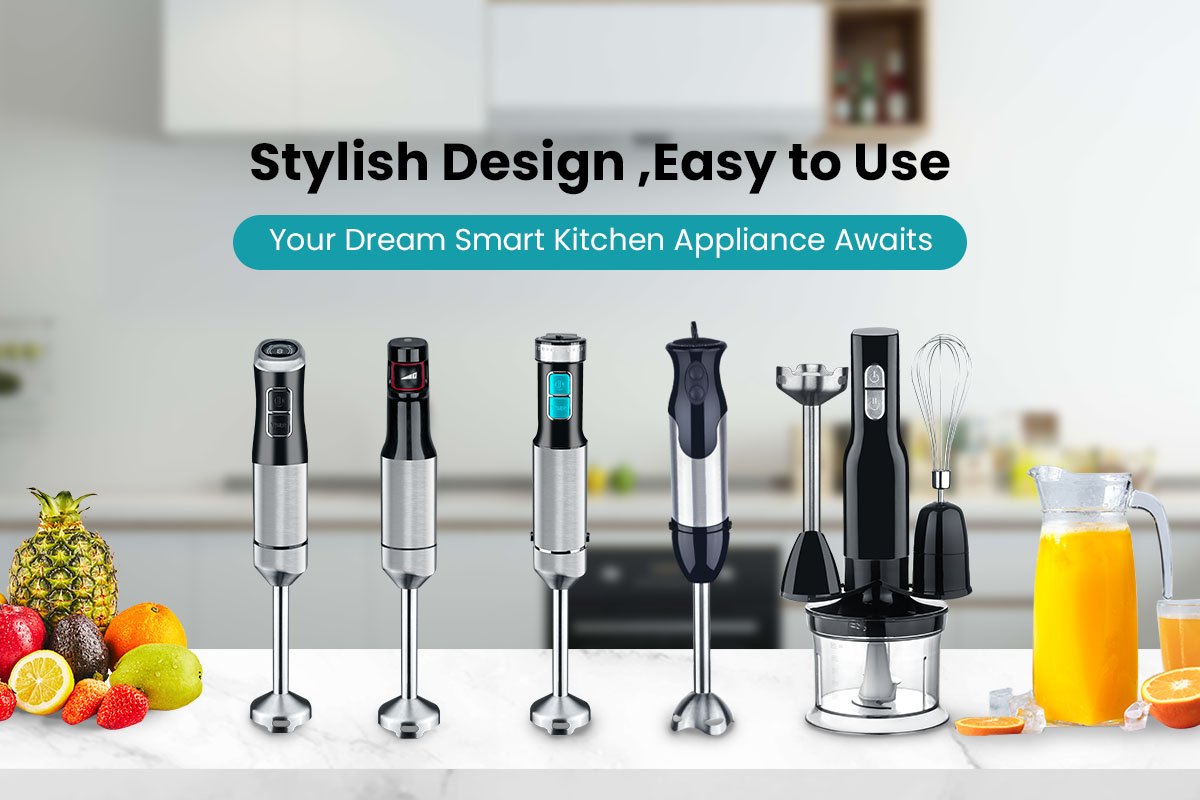
KANGJIA supports customized kitchen appliance development and provides solutions for different blender applications, including Hand Blenders, Table Blenders, and Nutrition Blenders. (kjelectrical.cn)
Quality Control Checkpoints That Matter
Quality control is one of the most important factors when evaluating a blender supplier.
A professional factory should have inspection procedures covering:
Incoming Material Inspection
Materials such as:
Plastic components
Metal parts
Motor components
Electronic components
should be checked before entering production.
Production Process Inspection
During assembly, factories should monitor:
Component installation accuracy
Electrical connections
Motor performance
Product structure
Final Product Testing
Finished blenders should be tested for:
Operating stability
Noise performance
Speed control
Safety functions
Continuous operation
According to IEC 60335 safety standards for household electrical appliances, manufacturers need to evaluate electrical safety and operational reliability before products enter international markets.
Material Standards Used in Reliable Blender Manufacturing
Material quality directly affects blender durability and safety.
A professional manufacturer should understand the importance of:
Motor Materials
High-quality motors commonly use:
Copper wire for efficient electrical transmission
Silicon steel sheets for electromagnetic performance
Durable metal shafts for mechanical strength
Food Contact Materials
Components that contact food need to meet safety requirements. Materials should comply with regulations related to food safety and restricted substances.
Housing Materials
Engineering plastics are commonly selected because they provide:
Good insulation performance
Structural strength
Heat resistance
Surface quality
Material selection should balance performance, safety, and production efficiency.
Bulk Supply Considerations for Blender Projects
For large production requirements, production capacity alone is not enough. A reliable bulk blender supplier should provide:
Stable manufacturing capacity
Consistent product quality
Reliable component supply
Production scheduling ability
Export documentation support
Large-volume production requires strict batch control. Even small differences in motors, electronic components, or plastic parts may influence final product performance.
Project Sourcing Checklist Before Cooperation
Before starting a blender project, manufacturers usually confirm several important points:
| Project Item | Key Questions |
|---|---|
| Factory Capability | Does the factory control main production processes? |
| Product Development | Can the manufacturer support OEM and ODM? |
| Quality System | Are testing procedures clearly defined? |
| Materials | Are materials compliant with market requirements? |
| Certification | Can products meet export standards? |
| Production Capacity | Can the factory support stable supply? |
A clear sourcing checklist helps reduce communication problems and improves project efficiency.
Export Market Compliance Capability
A reliable export kitchen appliance supplier should understand different market compliance requirements.
Common requirements include:
CE compliance for European markets
RoHS requirements for restricted substances
Food contact safety standards
Electrical safety testing
CE marking indicates that a product manufacturer declares conformity with applicable European health, safety, and environmental protection requirements.
Factories with export experience can integrate compliance requirements during product design and production instead of solving certification issues after manufacturing.
Choosing A Long-Term Blender Manufacturing Partner
Selecting a blender manufacturer requires more than comparing product prices. A reliable factory should provide complete manufacturing capabilities, professional engineering support, strict quality control, and stable production management.
As an experienced kitchen appliance manufacturer, KANGJIA focuses on integrated manufacturing, OEM and ODM development, and export market requirements. With control over motor production, injection molding, assembly, and testing processes, we provide reliable blender solutions for global customers. (kjelectrical.cn)