




How Can Importers Verify A Blender Factory In China
Selecting the right blender manufacturer in China requires more than checking product catalogs or comparing prices. A reliable factory should have real production capability, quality control systems, engineering experience, and export compliance knowledge.
For kitchen appliance projects, factory verification helps reduce risks related to inconsistent quality, delayed production, and limited customization ability. A professional manufacturer should be able to demonstrate how products are designed, produced, tested, and prepared for international markets.
KANGJIA ELECTRICAL APPLIANCES focuses on small home appliance manufacturing, integrating product development, production, and sales. With its own injection shop, hardware shop, assembly shop, motor shop, R&D department, and testing room, KANGJIA controls important manufacturing stages internally to provide stable OEM and ODM solutions. (KANGJIA)
Manufacturer vs Trader: How To Identify A Real Factory
The first step in verifying a Chinese blender supplier is understanding whether the company is a manufacturer or a trading company.
A trading company may offer many products, but it usually depends on external factories for production. A direct kitchen appliance manufacturer has stronger control over:
Product development
Component selection
Production scheduling
Quality inspection
Customization services
When evaluating a factory, importers should check whether the supplier can provide details about:
Production workshops
Manufacturing equipment
Assembly procedures
Testing methods
Quality management
A real factory should not only show finished products but also explain the complete manufacturing process behind them.
Manufacturing Process Overview: What A Blender Factory Should Control
A professional blender manufacturer should have a complete production workflow covering multiple stages.
| Manufacturing Stage | Main Process | Verification Point |
|---|---|---|
| Product Design | Structure and function development | Engineering capability |
| Component Production | Motor, plastic, and hardware processing | Production control |
| Assembly | Complete product integration | Process management |
| Testing | Performance and safety inspection | Quality reliability |
| Packaging | Export preparation | Shipping protection |
For example, blender production involves cooperation between motor systems, blades, containers, electrical components, and plastic structures. Any weakness in one stage may influence the final product performance.
Factories with integrated production capabilities can better coordinate different components and respond faster when product improvements are needed.
Check Factory OEM and ODM Capability
A reliable OEM blender manufacturer should have experience supporting customized projects instead of only selling standard models.
During the OEM and ODM process, a professional factory should be able to support:
Product Requirement Review
The factory should understand:
Target market
Product functions
Motor power requirements
Voltage standards
Appearance preferences
Packaging specifications
Engineering Development
Engineers should evaluate:
Product structure
Circuit design
Motor matching
Material selection
Production feasibility
Prototype Testing
Before mass production, samples should be tested for:
Performance
Safety
Durability
User operation
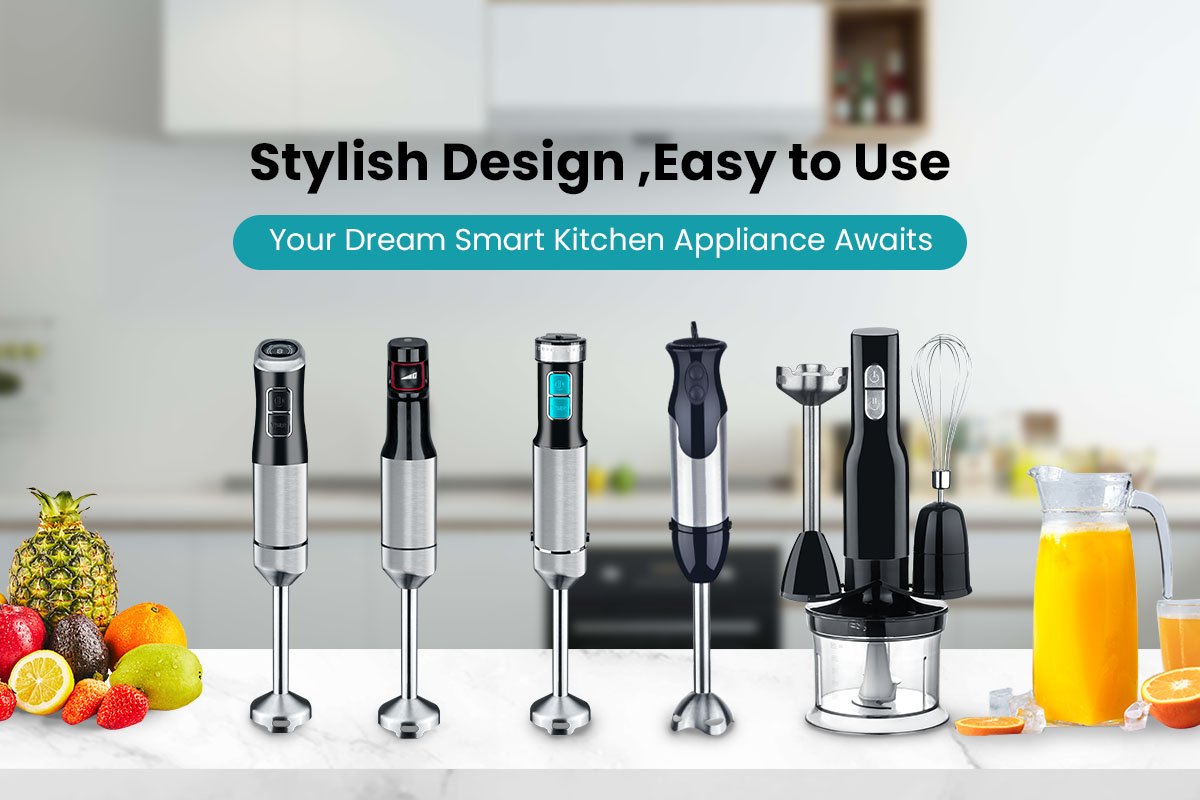
KANGJIA provides various blender solutions, including Hand Blenders, Table Blenders, Nutrition Blenders, Food Processors, and other small kitchen appliances, supporting different product requirements. (KANGJIA)
Quality Control Checkpoints To Verify
Quality management is one of the most important factors when checking a blender factory.
A professional factory should have inspection procedures covering:
Incoming Material Inspection
Factories should check:
Plastic materials
Motor components
Electronic parts
Stainless steel blades
Material inspection helps prevent quality issues before production begins.
Production Process Inspection
During assembly, factories should monitor:
Component installation
Electrical connections
Motor operation
Product appearance
Final Product Testing
Before shipment, finished blenders should be tested for:
Power performance
Speed control
Noise level
Safety functions
Continuous operation
According to IEC 60335 safety requirements for household electrical appliances, manufacturers need to evaluate electrical safety and product reliability before products enter international markets.
Material Standards Used In Blender Production
Factory verification should also include material management.
High-quality blender production commonly involves:
| Component | Material Requirement |
|---|---|
| Blade System | Food-grade stainless steel |
| Motor Components | Durable electrical materials |
| Housing | Strong engineering plastics |
| Container | Safe and durable food-contact materials |
A professional manufacturer should understand the relationship between material selection and product lifespan.
For example, stainless steel blades are widely used because they provide corrosion resistance and durability during repeated blending operations. KANGJIA electric blender products use stainless steel blade structures and different motor configurations according to product requirements. (KANGJIA)
Bulk Supply Considerations When Verifying A Factory
For large-volume projects, production capacity is an important verification point.
A reliable bulk blender supplier should have:
Stable production lines
Consistent component sourcing
Batch quality control
Production planning ability
Export experience
Importers should ask factories about:
Monthly production capacity
Standard lead time
Quality inspection process
Packaging capability
Previous export experience
A factory with strong production management can maintain product consistency during long-term supply.
Project Sourcing Checklist Before Cooperation
Before starting a blender project, a practical verification checklist includes:
| Evaluation Item | Key Questions |
|---|---|
| Factory Type | Is it a direct manufacturer? |
| Production Capability | Does it have internal workshops? |
| Product Development | Can it support OEM and ODM? |
| Quality System | Are inspection procedures available? |
| Materials | Are materials compliant with standards? |
| Certifications | Can products meet export requirements? |
| Supply Ability | Can it support stable production? |
This checklist helps evaluate whether a factory can support a complete product project rather than only provide finished goods.
Export Market Compliance Capability
International kitchen appliance markets have different compliance requirements. A reliable export kitchen appliance supplier should understand certification and documentation requirements before production.
Common requirements include:
CE certification
RoHS compliance
CB certification
Food safety standards
Regional electrical requirements
KANGJIA products have passed certifications including GS, CE, CB, LFGB, ROHS, and REACH, supporting different export market requirements. (KANGJIA)
Building A Reliable Supply Relationship With A Chinese Blender Factory
Verifying a blender factory requires evaluating more than product appearance and price. A reliable manufacturer should have complete production capabilities, professional engineering support, strict quality control, and export experience.
A qualified factory can provide transparency from material selection and manufacturing processes to final inspection and shipment preparation.
As an experienced blender manufacturer, KANGJIA focuses on integrated production, OEM and ODM development, and quality management. Through internal manufacturing resources and professional testing procedures, KANGJIA provides reliable blender solutions for global markets. (KANGJIA)