




What Is The Typical Moq for Oem Blender Orders
When developing a new blender product, MOQ is one of the most common factors considered during project planning. The typical MOQ for OEM blender orders depends on product design, customization requirements, material preparation, production process, and factory capacity.
A professional blender manufacturer does not define MOQ only by quantity. A reasonable MOQ should balance production efficiency, quality control, component sourcing, and customization requirements. At KANGJIA, we provide OEM and ODM kitchen appliance solutions with integrated manufacturing capabilities, including motor production, injection molding, hardware processing, assembly, and testing, helping customers develop sTable Blender products for different markets.
Manufacturer vs Trader: Why MOQ Is Different
The MOQ offered by a direct factory is usually based on real manufacturing requirements, while a trading company may set quantities according to supplier conditions.
A direct kitchen appliance manufacturer considers factors such as:
Component purchasing volume
Mold and tooling requirements
Production line efficiency
Material preparation
Quality inspection costs
A trading company may provide lower initial quantities by combining orders from different sources, but this approach may limit customization ability and production transparency.
For OEM blender projects, working directly with a manufacturer provides better control over:
Product specifications
Production schedules
Quality standards
Custom development
How Manufacturers Determine OEM Blender MOQ
There is no fixed MOQ for every blender project. Factories usually evaluate several conditions before confirming production quantities.
| Factor | Impact On MOQ |
|---|---|
| Product Design | New structures may require higher quantity |
| Customization Level | More customization may increase MOQ |
| Materials | Special materials require larger preparation |
| Packaging | Customized packaging affects minimum quantity |
| Production Efficiency | Larger orders improve manufacturing efficiency |
For example, a standard blender model with existing molds may require a lower MOQ, while a completely customized product involving new molds, special colors, and unique structures may require a higher starting quantity.
Manufacturing Process Overview And MOQ Requirements
A complete OEM blender manufacturer needs to coordinate multiple production stages.
The typical manufacturing process includes:
| Production Stage | MOQ Consideration |
|---|---|
| Product Design | Engineering investment |
| Mold Preparation | Tooling cost distribution |
| Component Production | Material purchasing quantity |
| Assembly | Production line efficiency |
| Testing | Quality control requirements |
| Packaging | Customized printing quantity |
Blender manufacturing involves multiple components, including motors, circuit boards, blades, containers, and plastic housings. Each component requires stable supply management.
A manufacturer with integrated production capability can optimize MOQ by controlling more processes internally.
OEM And ODM Process Influence On Order Quantity
OEM and ODM projects usually involve different MOQ requirements.
Standard Product OEM
For existing models, MOQ may mainly depend on:
Production scheduling
Packaging requirements
Component availability
This type of project usually has simpler preparation because the product structure is already developed.
Customized ODM Development
For new product development, factories need to consider:
Industrial design
Structural development
Mold production
Prototype testing
Certification requirements
A customized blender manufacturer may recommend a higher MOQ because more resources are invested before mass production begins.
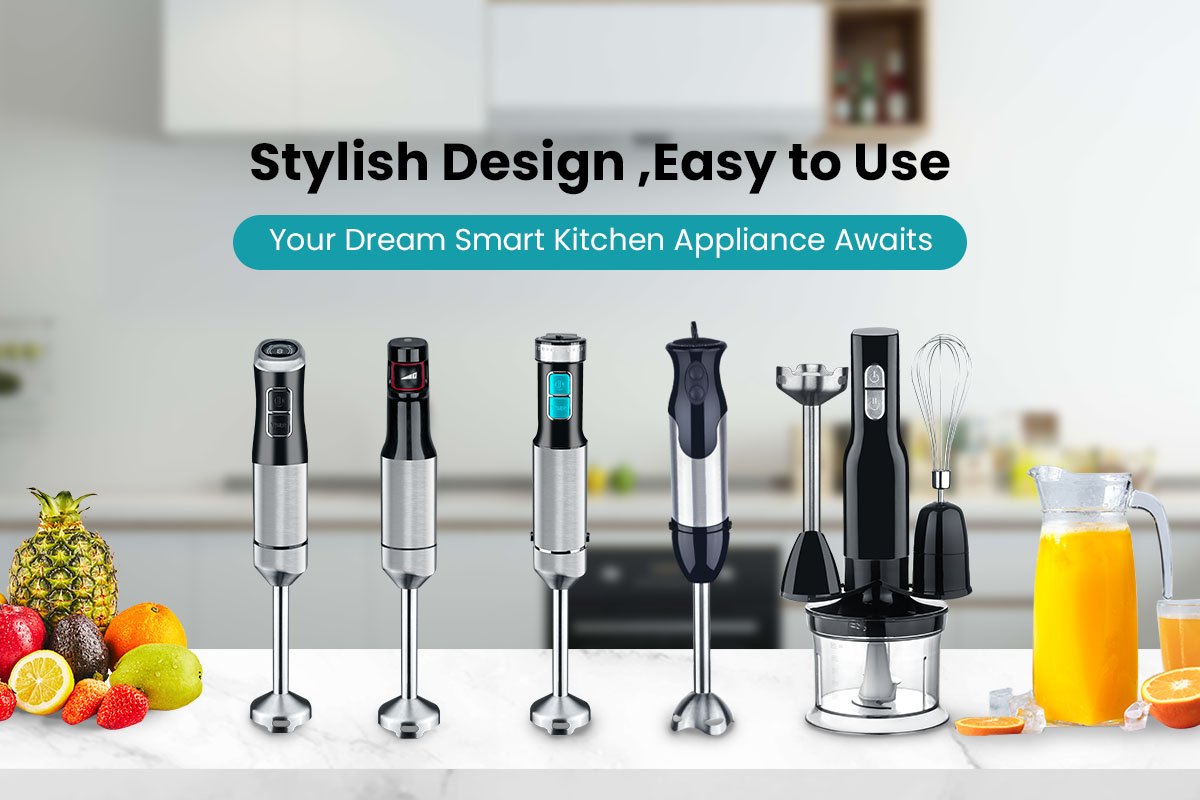
KANGJIA supports different blender solutions, including Hand Blenders, Electric Blenders, and Nutrition Blenders, with customization options based on product requirements. KANGJIA Electric Blender Products
Quality Control Requirements For Different MOQ Levels
MOQ is closely related to quality management.
A professional factory maintains the same quality standards regardless of order quantity through:
Material Inspection
Factories check:
Plastic material quality
Motor components
Electronic parts
Stainless steel blade materials
Production Inspection
During manufacturing, quality teams monitor:
Assembly accuracy
Electrical connections
Product appearance
Functional performance
Final Testing
Finished blenders are tested for:
Motor operation
Speed control
Safety performance
Continuous working stability
According to IEC 60335 safety standards for household electrical appliances, manufacturers need to evaluate electrical safety and reliability before products enter international markets.
Bulk Supply Considerations For Blender Orders
For larger orders, MOQ becomes part of supply chain planning.
A reliable bulk blender supplier should provide:
Stable production capacity
Consistent product quality
Reliable component supply
Production scheduling support
Export documentation
Large-volume orders can improve production efficiency because factories can optimize material purchasing and assembly planning.
However, quantity should not be the only consideration. A suitable MOQ should match market demand, inventory planning, and product development strategy.
Project Sourcing Checklist Before Confirming MOQ
Before starting an OEM blender project, several points should be evaluated:
| Evaluation Item | Key Question |
|---|---|
| Product Type | Is it a standard model or customized product? |
| Design Requirement | Are new molds required? |
| Market Demand | What is the expected sales volume? |
| Certification | Are additional tests needed? |
| Packaging | Is customized packaging required? |
| Production Capacity | Can the factory support future growth? |
A clear project checklist helps determine a practical MOQ instead of selecting quantity only based on price.
Material Standards And MOQ Relationship
Material selection also influences MOQ.
Common blender materials include:
Stainless steel for blade systems
Engineering plastics for housing structures
Food-contact materials for containers
Electrical materials for motor systems
Special colors, customized materials, or upgraded components may require larger purchasing quantities because suppliers usually prepare materials based on production volume.
A manufacturer with strong supply chain management can help optimize material preparation and reduce unnecessary waste.
Export Market Compliance And MOQ Planning
Export requirements may also influence MOQ decisions.
Different markets may require:
CE compliance
RoHS testing
Food contact safety requirements
Product labeling
Packaging regulations
If certification testing requires customized samples, factories need to include development quantities during project planning.
KANGJIA products have passed certifications including GS, CE, CB, LFGB, RoHS, and REACH to support different export market requirements.
Finding The Right MOQ For Long-Term Blender Production
The best MOQ is not always the lowest quantity. A suitable MOQ should support product quality, production efficiency, customization requirements, and future supply stability.
A professional blender manufacturer evaluates MOQ based on real production conditions rather than setting a fixed number for every project.
With integrated manufacturing capabilities, OEM and ODM experience, and quality management systems, KANGJIA helps develop reliable blender solutions with practical production planning for global markets.