




How Do Distributors Evaluate Long-Term Appliance Suppliers
Choosing a long-term appliance supplier requires more than checking product prices and available models. Distributors need to evaluate whether a manufacturer can provide stable quality, consistent production capacity, reliable delivery, and continuous product support over time.
For kitchen appliances such as blenders, long-term cooperation depends on the supplier’s manufacturing capability, OEM experience, quality management, and export compliance. A professional blender manufacturer should not only provide finished products but also demonstrate control over product development, production processes, and supply chain management.
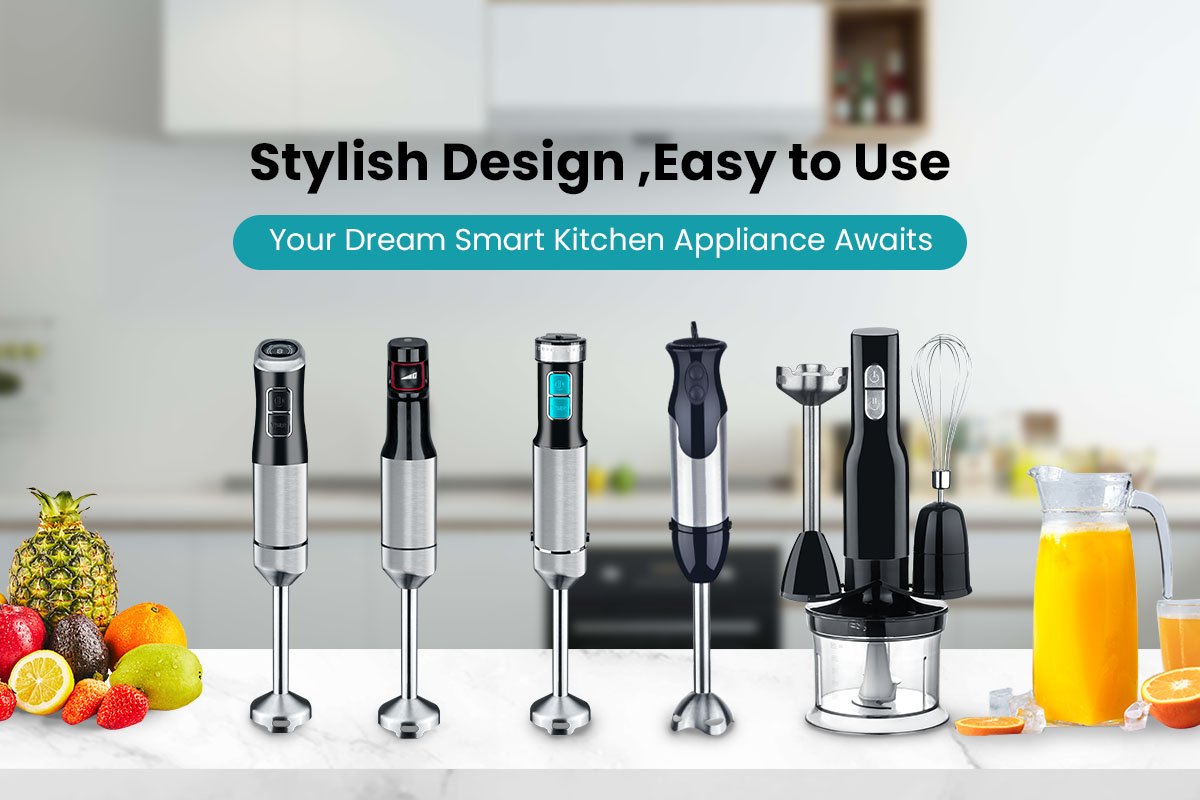
KANGJIA ELECTRICAL APPLIANCES specializes in small home appliance manufacturing, covering Hand Blenders, Table Blenders, Nutrition Blenders, mini choppers, and other kitchen appliances. With integrated production resources including injection shop, hardware shop, assembly shop, motor shop, R&D department, and testing room, KANGJIA supports stable OEM and ODM cooperation for global markets. (KANGJIA)
Manufacturer vs Trader: Evaluating Real Supply Capability
The first factor distributors evaluate is whether a supplier is a direct manufacturer or a trading company.
A trading company may offer a wide product range, but a direct kitchen appliance manufacturer usually provides stronger control over:
Product engineering
Component selection
Manufacturing process
Quality inspection
Production scheduling
For long-term cooperation, distributors need suppliers that can respond quickly when market demand changes or product adjustments are required.
Important evaluation questions include:
| Evaluation Area | Key Questions |
|---|---|
| Factory Capability | Does the supplier own production facilities? |
| Production Control | Which processes are managed internally? |
| Engineering Support | Can the supplier support product improvement? |
| Quality System | Are inspection procedures established? |
| Supply Stability | Can production continue for repeat orders? |
A direct factory relationship helps distributors better understand production capability and reduces uncertainty during long-term supply.
Manufacturing Process Overview: How Suppliers Maintain Consistency
A reliable blender manufacturer should have a complete manufacturing process from product development to final shipment.
| Manufacturing Stage | Long-Term Supply Evaluation |
|---|---|
| Product Development | Engineering and customization capability |
| Component Production | Stable material and parts management |
| Assembly | Production efficiency and consistency |
| Testing | Product reliability verification |
| Packaging | Export protection capability |
Blender production involves multiple connected systems, including motors, circuit boards, blades, containers, and housing structures. A supplier’s ability to coordinate these components directly affects product stability.
KANGJIA manages key production stages internally, including injection molding, hardware processing, motor production, assembly, and testing, helping maintain consistency across production batches. (KANGJIA)
OEM And ODM Capability For Future Product Development
Distributors often evaluate suppliers based on their ability to support future product expansion.
A reliable OEM blender supplier should provide:
Product Customization Support
Possible customization areas include:
Motor power
Speed control systems
Blade structures
Container capacity
Product appearance
Accessories
Engineering Development
A professional supplier should have the ability to support:
Product design evaluation
Prototype development
Structure optimization
Function improvement
Product Line Expansion
Long-term suppliers should also support different product categories.
KANGJIA’s product range includes hand blenders, table blenders, nutrition blenders, Food Processors, and other small appliances, allowing distributors to develop broader kitchen appliance product lines. (KANGJIA)
Quality Control Checkpoints For Long-Term Cooperation
Product consistency is one of the most important factors in supplier evaluation.
A professional manufacturer should have quality control throughout the production process.
| Quality Stage | Inspection Focus |
|---|---|
| Material Inspection | Plastic, metal, and electronic components |
| Assembly Inspection | Component installation accuracy |
| Performance Testing | Motor and function reliability |
| Safety Testing | Electrical protection |
| Final Inspection | Product appearance and packaging |
Key quality checks include:
Motor performance
Speed control accuracy
Blade operation
Noise level
Electrical safety
According to IEC 60335 safety requirements for household electrical appliances, manufacturers need to evaluate electrical safety and operating reliability before products enter international markets.
A strong quality system helps distributors reduce after-sales problems and maintain customer satisfaction.
Material Standards Used In Reliable Appliance Manufacturing
Long-term suppliers should have clear material standards.
Important materials in blender production include:
| Component | Material Consideration |
|---|---|
| Blade System | Stainless steel durability |
| Container | Food-contact safety |
| Housing | Engineering plastic strength |
| Motor Components | Electrical performance |
For example, stainless steel blade systems are widely used because of their corrosion resistance and durability during repeated food processing. KANGJIA electric blender products use stainless steel blade structures and different configurations based on product requirements. (KANGJIA)
Material control is especially important for export products because different markets may have different safety requirements.
Bulk Supply Considerations For Long-Term Partnerships
Stable supply capability is essential for distributors managing continuous sales channels.
A reliable bulk blender supplier should provide:
Stable production capacity
Consistent product quality
Reliable component sourcing
Flexible production planning
Clear delivery schedules
Distributors should evaluate:
| Supply Factor | Evaluation Question |
|---|---|
| Production Capacity | Can the factory support future growth? |
| Lead Time | Is delivery predictable? |
| Quality Stability | Are batches consistent? |
| Product Range | Can new models be developed? |
| Service Support | Can technical issues be handled quickly? |
A supplier with integrated production capability can better manage demand changes and reduce supply interruptions.
Project Sourcing Checklist Before Selecting A Supplier
Before establishing a long-term relationship, distributors should evaluate several areas.
| Evaluation Item | Key Information |
|---|---|
| Factory Type | Manufacturer or trader |
| Production Capability | Equipment and production resources |
| OEM Ability | Customization and development support |
| Quality System | Testing procedures |
| Materials | Compliance standards |
| Certification | Export market requirements |
| Supply Plan | Future production capability |
A complete evaluation helps identify suppliers that can support long-term business development.
Export Market Compliance Capability
International appliance markets require different compliance standards.
A professional export kitchen appliance supplier should understand:
Electrical safety requirements
Material regulations
Product labeling
Certification documentation
Common certifications for kitchen appliances include:
CE
CB
GS
RoHS
LFGB
REACH
KANGJIA products have passed certifications including GS, CE, CB, LFGB, RoHS, and REACH, supporting different international market requirements. (KANGJIA)
Building Long-Term Value Through The Right Appliance Supplier
A long-term appliance supplier should provide more than competitive pricing. Stable manufacturing capability, reliable quality control, OEM development support, and export experience are the foundation of successful cooperation.
For distributors, choosing a supplier means evaluating whether the manufacturer can grow together with changing market demands.
As an experienced blender manufacturer, KANGJIA combines integrated production resources, OEM and ODM capabilities, and strict quality management systems. Through professional manufacturing processes and continuous product development, KANGJIA provides reliable kitchen appliance solutions for global markets. (KANGJIA)