




Hand Blender vs Table Blender: Which Product Is Better for Kitchen Appliance Brands?
Hand Blender and Table Blender serve different market needs. hand blender fits compact, flexible product lines, while Table Blender is better for brands focusing on powerful blending performance and family-oriented applications.
What Is the Main Difference Between Hand Blender and Table Blender?
For kitchen appliance brands, the key difference between Hand Blender and Table Blender is the product structure, usage positioning, and target market.
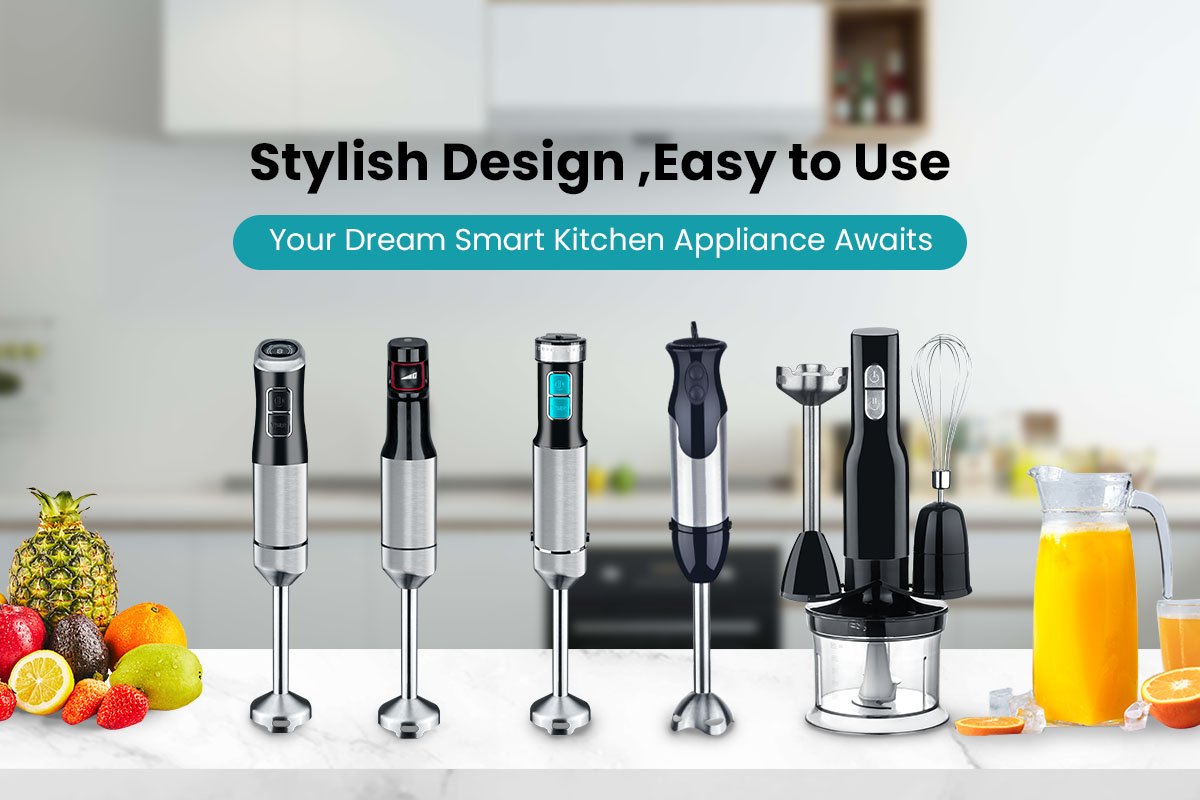
A Hand Blender, also known as an immersion blender, uses a handheld motor unit connected with a blending shaft. It is designed for direct blending inside containers, offering advantages such as compact storage, easy operation, and flexible applications.
A Table Blender, also called a countertop blender, uses a motor base with a dedicated blending jar. It is designed for higher-capacity blending tasks and is commonly used for smoothies, drinks, sauces, and daily food preparation.
From a manufacturing perspective, the selection between these two products depends on brand positioning, sales channels, target customers, and expected product features.
| Comparison | Hand Blender | Table Blender |
|---|---|---|
| Product Structure | Handheld motor with blending attachment | Motor base with blending jar |
| Main Advantage | Flexible and space-saving | Strong blending capacity |
| Typical Capacity | Small to medium batches | Medium to large batches |
| Suitable Markets | Compact kitchen appliance markets | Family and beverage appliance markets |
| Product Positioning | Convenience and versatility | Performance and capacity |
Which Product Offers Better Market Opportunities for Kitchen Appliance Brands?
The better choice depends on the target market and product strategy.
Hand Blender products usually attract customers who value convenience, portability, and multifunction use. They are commonly positioned for apartments, small kitchens, cooking enthusiasts, and consumers who need quick food preparation solutions.
Table Blender products are often positioned around power, capacity, and blending performance. They are suitable for brands targeting families, smoothie markets, beverage preparation, and larger kitchen applications.
For OEM buyers, Hand Blender provides opportunities for developing compact product lines, while Table Blender offers more possibilities for performance-focused product positioning.
A manufacturer evaluating new product development should consider whether the brand needs a flexible everyday kitchen tool or a higher-performance countertop appliance.
Which Product Has Better OEM Customization Potential?
Both Hand Blender and Table Blender support OEM customization, but the customization focus is different.
Hand Blender OEM Development
Hand Blender customization often focuses on:
Motor power selection
Speed control options
Stainless steel shaft design
Accessory combinations
Color customization
Packaging solutions
For brands building a diversified kitchen appliance portfolio, Hand Blender can be developed with different attachments, such as whisk accessories or chopping functions, creating multiple product versions from one platform.
Table Blender OEM Development
Table Blender customization usually focuses on:
Motor performance
Jar capacity
Blade structure
Control panel design
Housing appearance
Noise reduction solutions
For brands targeting premium kitchen appliances, Table Blender provides more opportunities to highlight performance specifications and product appearance.
Which Product Is Easier to Manufacture and Control for Bulk Production?
From a manufacturing viewpoint, Hand Blender generally has a more compact product structure, while Table Blender involves more components including the motor base, jar assembly, blade system, and control components.
Hand Blender production usually focuses on:
Motor assembly accuracy
Shaft connection reliability
Switch durability
Accessory matching
Table Blender production requires additional attention to:
Motor performance testing
Jar sealing inspection
Blade balance testing
Noise control
Electrical safety testing
A professional kitchen appliance manufacturer needs to establish quality control processes for both product categories to ensure stable bulk production.
Which Product Is Better for Different Sales Channels?
Different channels may require different product strategies.
Hand Blender Applications
Hand Blender is suitable for:
Online kitchen appliance stores
Household appliance brands
Compact kitchen product lines
Gift appliance markets
Starter kitchen solutions
Its smaller size and multifunction accessories make it easier for brands to create different package combinations.
Table Blender Applications
Table Blender is commonly used for:
Supermarket appliance categories
Home appliance retailers
Beverage-related product lines
Family kitchen appliance collections
Its larger size and stronger performance often support higher-value product positioning.
Which Product Has Better Cost Control for OEM Buyers?
Cost structure depends on specifications, materials, order quantity, and customization requirements.
Hand Blender often has advantages in:
Smaller product size
Lower packaging volume
Easier transportation
Flexible accessory combinations
Table Blender may involve higher costs due to:
Larger motor systems
Additional jar components
More packaging materials
Higher shipping volume
However, Table Blender products can also support higher retail pricing when equipped with stronger performance features and premium designs.
OEM buyers should evaluate total product value rather than only unit cost.
How Should Brands Choose Between Hand Blender and Table Blender?
Kitchen appliance brands can evaluate the following factors:
Choose Hand Blender When:
The target market prefers compact appliances
The product line focuses on convenience
Multiple accessories are important
Storage space is a key selling point
Choose Table Blender When:
Customers need higher blending capacity
Performance is the main selling point
The product targets family kitchens
The brand focuses on premium appliance categories
The right choice depends on market positioning rather than simply comparing product functions.
How Can a Blender Manufacturer Support Product Development?
A capable kitchen appliance manufacturer should provide more than standard products.
For Hand Blender and Table Blender projects, manufacturers with integrated production capabilities can support:
Product structure development
Motor and component selection
Appearance customization
Prototype testing
Quality inspection
Mass production management
Export packaging solutions
With experience in small kitchen appliance manufacturing, suppliers can help brands select suitable product configurations according to market requirements.
Conclusion: Hand Blender or Table Blender, Which Is Better for Brands?
Hand Blender is suitable for brands seeking compact, flexible, and multifunction kitchen appliances, while Table Blender is better for brands focusing on capacity, performance, and family usage scenarios. The ideal product choice depends on target customers, sales channels, and long-term product strategy.