




How Can Buyers Ensure Stable Blender Supply
Stable supply is one of the most important factors when developing a long-term blender product strategy. A supplier may offer competitive prices, but without reliable production capacity, quality control, and supply chain management, delivery delays and inconsistent products can create significant challenges.
A professional blender manufacturer should provide more than finished products. Stable supply requires control over product development, material preparation, manufacturing processes, testing procedures, and export management.
KANGJIA focuses on small home appliance manufacturing with integrated production capabilities, including injection molding, hardware processing, motor production, assembly, R&D, and testing. By controlling key production stages internally, KANGJIA helps maintain stable quality and reliable delivery for OEM and ODM blender projects.
Manufacturer vs Trader: The Foundation Of Supply Stability
The first step to ensuring sTable Blender supply is understanding the difference between a manufacturer and a trader.
A trading company may provide product sourcing services, but a direct kitchen appliance manufacturer usually has stronger control over:
Production scheduling
Component sourcing
Manufacturing processes
Quality inspection
Technical improvement
For long-term supply, direct factory cooperation provides better visibility into:
Actual production capacity
Manufacturing conditions
Quality management systems
Response speed when problems occur
A reliable manufacturer should be able to explain how products are produced, how materials are managed, and how production plans are arranged.
For blender products, supply stability depends on many connected components, including motors, circuit boards, blades, containers, and plastic housings. Any shortage or quality issue in one area may affect the entire production schedule.
Manufacturing Process Overview For Stable Production
A stable supply system requires a complete manufacturing process.
A professional OEM blender manufacturer should have a structured workflow:
| Manufacturing Stage | Supply Stability Focus |
|---|---|
| Product Development | Confirm design feasibility |
| Material Preparation | Maintain component availability |
| Component Production | Control product consistency |
| Assembly | Ensure production efficiency |
| Testing | Verify product performance |
| Packaging | Prepare shipment requirements |
A manufacturer with integrated production capability can coordinate different departments more efficiently and reduce dependency on external suppliers.
KANGJIA operates multiple production sections, including injection shop, hardware shop, motor shop, assembly shop, R&D department, and testing room, allowing better control of production progress.
Evaluate Production Capacity Before Cooperation
Production capacity is a key factor when selecting a reliable blender supplier.
However, capacity is not only measured by output quantity. It also includes:
Production equipment
Workforce capability
Manufacturing experience
Quality inspection ability
Supply chain management
Important evaluation points include:
| Capacity Factor | Key Question |
|---|---|
| Production Lines | Can output match demand? |
| Equipment | Are manufacturing processes supported internally? |
| Workforce | Are skilled teams available? |
| Materials | Are components supplied consistently? |
| Quality System | Can production remain stable? |
A factory with strong production planning can better handle seasonal demand changes and repeat orders.
OEM And ODM Process Management
Customization can create additional supply risks if the manufacturer lacks development capability.
A reliable OEM blender supplier should support:
Product Development
Including:
Product structure evaluation
Motor selection
Function improvement
Prototype production
Custom Manufacturing
Including:
Logo customization
Color adjustment
Packaging design
Accessories selection
Production Transfer
Including:
Sample approval
Process confirmation
Mass production preparation
A complete OEM and ODM process helps reduce delays caused by unclear requirements or repeated modifications.
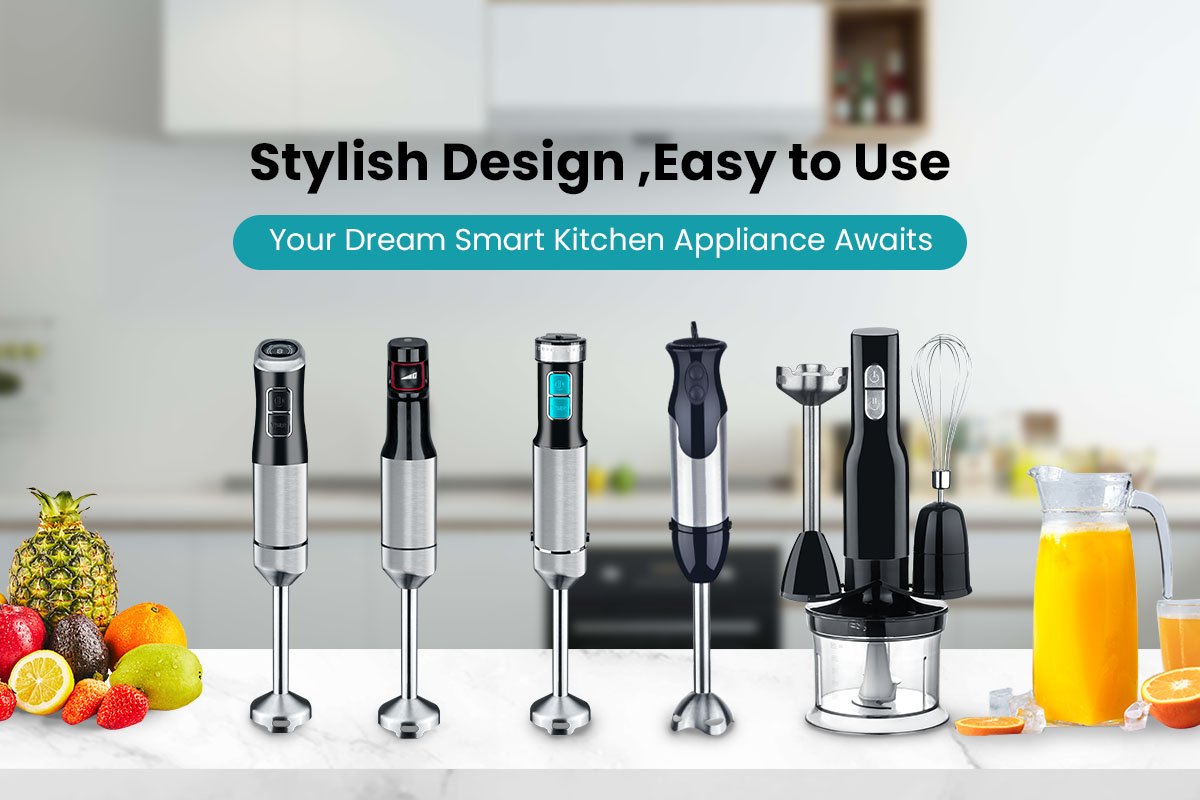
KANGJIA provides different blender solutions, including Electric Blenders, Hand Blenders, Nutrition Blenders, and other kitchen appliances, supporting different product configurations and customization requirements.
Quality Control Checkpoints For Consistent Supply
Stable supply requires stable quality. A supplier that produces large quantities without effective inspection systems may create inconsistent batches.
A professional blender manufacturer should maintain quality control throughout production.
| Quality Stage | Inspection Items |
|---|---|
| Incoming Inspection | Materials and components |
| Assembly Inspection | Production accuracy |
| Motor Testing | Power and stability |
| Function Testing | Blending performance |
| Final Inspection | Appearance and packaging |
Important testing items include:
Motor operation
Speed control
Electrical safety
Noise performance
Continuous working ability
Blender products fall under kitchen machine safety requirements covered by IEC 60335-2-14, which specifies safety requirements for household kitchen machines including blenders. (IEC Webstore)
Strict quality checkpoints help maintain consistent product performance across repeated production batches.
Material Standards And Supply Chain Control
Material management directly affects supply stability.
A reliable manufacturer should have clear standards for:
| Component | Supply Consideration |
|---|---|
| Motor System | Stable component sourcing |
| Blade Assembly | Stainless steel quality |
| Container | Food-contact material requirements |
| Housing | Engineering plastic performance |
| Electronics | Reliable component supply |
Material shortages or substitutions without approval can affect product quality. Therefore, manufacturers need strong supplier management systems.
For export products, food-contact materials and electrical components also need to meet market requirements.
Bulk Supply Considerations For Long-Term Orders
For large-volume orders, supply planning becomes more important.
A reliable bulk blender supplier should provide:
Production schedules
Material preparation plans
Capacity planning
Quality records
Shipment arrangements
Before confirming cooperation, important questions include:
| Evaluation Area | Check Point |
|---|---|
| Lead Time | Is production scheduling reliable? |
| Capacity | Can future demand increases be supported? |
| Components | Are materials continuously available? |
| Quality | Are inspection standards consistent? |
| Delivery | Can shipment dates be maintained? |
A supplier with strong internal management can respond faster to changes in demand.
Project Sourcing Checklist For Supply Security
Before starting a blender project, manufacturers recommend confirming:
| Project Item | Information Needed |
|---|---|
| Product Type | Blender model and application |
| Specifications | Power, voltage, functions |
| Quantity | Initial order and future demand |
| Customization | Logo, color, packaging |
| Certification | Target market requirements |
| Delivery Plan | Production and shipping schedule |
Clear project planning allows factories to prepare materials and production resources in advance.
Export Market Compliance Management
Stable supply also depends on export compliance capability.
A professional export kitchen appliance supplier should understand:
Electrical safety standards
Product labeling requirements
Material regulations
Certification procedures
Common requirements include:
CE certification
CB certification
GS certification
RoHS compliance
LFGB requirements
REACH regulations
Planning certification requirements before production helps prevent delays caused by compliance issues.
KANGJIA supports international market requirements through quality management and certification systems, helping products meet different export standards.
Building A Reliable Blender Supply System
Ensuring stable blender supply requires evaluating the complete manufacturing system, not only product pricing.
A reliable supplier should have:
Strong production capability
Professional OEM and ODM experience
Stable material management
Strict quality control
Export compliance knowledge
As an experienced blender manufacturer, KANGJIA combines integrated manufacturing resources with professional production management. Through controlled processes, reliable quality systems, and flexible customization support, KANGJIA provides stable kitchen appliance solutions for global markets.