




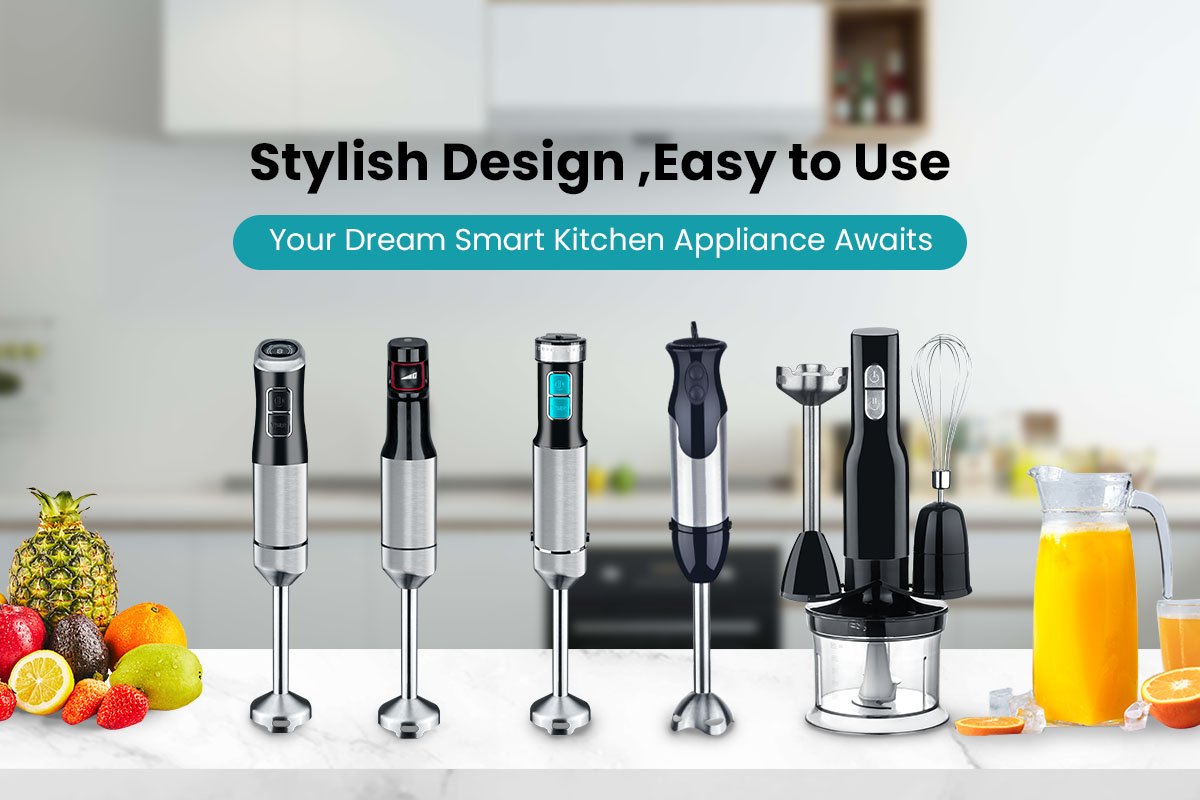
Custom Multifunction Blender vs Existing Model: Which Is Better for New Product Development?
Custom Multifunction blender provides stronger product differentiation and brand control, while Existing Model offers faster launch speed and lower development investment for new product development.
What Is the Difference Between Custom Multifunction blender and Existing Model?
For kitchen appliance brands developing new products, the main difference between Custom Multifunction Blender and Existing Model is the development approach, customization level, product uniqueness, investment requirements, and market strategy.
A Custom Multifunction Blender is developed according to brand requirements. Manufacturers adjust product design, functions, materials, accessories, and packaging based on specific market needs.
An Existing Model uses a manufacturer’s developed product platform. Brands can usually make limited adjustments such as logo application, color changes, packaging updates, or minor configuration modifications.
From an OEM manufacturing perspective, choosing between these two approaches affects product competitiveness, development timeline, production investment, and long-term brand value.
| Comparison | Custom Multifunction Blender | Existing Model |
|---|---|---|
| Development Method | Brand-specific development | Ready product platform |
| Customization Level | High | Limited |
| Launch Speed | Longer | Faster |
| Product Differentiation | Stronger | Moderate |
| Development Investment | Higher | Lower |
Why Do Brands Choose Existing Multifunction Blender Models?
Existing Multifunction Blender models provide an efficient way for brands to enter the market quickly.
Main advantages include:
Shorter product preparation time
Lower initial investment
Reduced development risk
Faster sample availability
Easier production arrangement
Existing models are suitable for brands that need:
Quick market testing
Fast product expansion
Lower development complexity
Immediate product availability
Common applications include:
Online marketplace products
Distributor product lines
New kitchen appliance categories
Short-term market validation
For brands entering the blender category, existing models can provide a practical starting point.
Why Do Brands Develop Custom Multifunction Blender Products?
Custom Multifunction Blender development allows brands to create products that better match their target market.
Customization opportunities include:
Product structure
Motor specifications
Speed control
Accessory combinations
Material selection
Product appearance
Packaging design
Main advantages include:
Unique product identity
Better market differentiation
Stronger brand recognition
More control over customer experience
For brands building long-term product portfolios, custom development provides more opportunities to create competitive products.
Which Option Provides Better Product Differentiation?
Product differentiation is important in competitive kitchen appliance markets.
Existing Model Advantages:
Existing models provide:
Faster market entry
Proven product structure
Lower development requirements
However, limitations may include:
Similar appearance to other products
Fewer customization options
Less control over product features
Custom Multifunction Blender Advantages:
Custom development allows brands to create:
Exclusive designs
Specific functions
Unique accessory combinations
Targeted user experiences
This helps brands compete through product value instead of only pricing.
Which Option Is Faster for New Product Development?
Development speed depends on the level of customization required.
Existing Model Development Advantages:
Product structure already available
Manufacturing process established
Faster sampling
Shorter preparation period
Custom Multifunction Blender Development Process:
Custom projects usually include:
Product requirement discussion
Design confirmation
Prototype development
Function testing
Production preparation
Although custom development requires more time, it provides greater control over the final product.
How Does Development Method Affect Cost?
Cost structure differs between custom and existing products.
Existing Model Cost Advantages:
Lower engineering investment
Reduced design cost
Faster production preparation
Lower development risk
Custom Multifunction Blender Cost Considerations:
Product engineering
Prototype production
Customized components
Additional testing
For brands planning long-term development, customized products may create additional value through stronger market positioning.
Which Option Provides Better OEM Opportunities?
Both approaches can support OEM cooperation.
Existing Model OEM Options:
Common customization includes:
Brand logo
Product colors
Packaging design
User manual
Minor appearance adjustments
Suitable for brands requiring efficient product introduction.
Custom Multifunction Blender OEM Options:
Additional customization includes:
Product structure
Function configuration
Materials
Accessories
Complete product design
Suitable for brands seeking unique market solutions.
How Does Supplier Capability Affect Product Development?
The manufacturer’s capability plays an important role in successful product development.
Important supplier capabilities include:
Product engineering
Prototype development
Testing capability
Quality management
Production experience
For custom projects, strong engineering communication is especially important.
For existing models, stable production capability and consistent quality control are key factors.
Which Development Method Fits Different Brand Stages?
Different business stages require different product strategies.
Existing Multifunction Blender Fits:
New brands
Businesses testing market demand
Companies with limited development budgets
Brands needing quick launch
Custom Multifunction Blender Fits:
Established brands
Companies seeking differentiation
Brands developing long-term product lines
Businesses requiring specific solutions
The suitable development method depends on brand goals, resources, and market strategy.
How Should Brands Choose Between Custom and Existing Multifunction Blender?
Brands can evaluate:
Choose Existing Model When:
Fast launch is the priority
Development cost needs control
Market testing is required
Existing products meet customer needs
Choose Custom Multifunction Blender When:
Product uniqueness is important
Brand differentiation is required
Specific functions are needed
Long-term product development is planned
The right choice depends on product strategy, target customers, and future business goals.
How Can a Multifunction Blender Manufacturer Support New Product Development?
A professional Multifunction Blender manufacturer can support brands through:
Product planning
OEM customization
Existing product solutions
Prototype development
Function testing
Quality inspection
Packaging development
Mass production support
Manufacturers with both customized development and standard product capabilities can provide flexible solutions for different brand requirements.
Conclusion: Custom Multifunction Blender or Existing Model, Which Is Better for New Product Development?
Custom Multifunction Blender provides stronger product differentiation, greater development control, and better long-term brand value. Existing Model provides faster market entry, lower investment requirements, and simpler product introduction.
For kitchen appliance brands, the better choice depends on development goals, market positioning, budget planning, and long-term product strategy.